 Rhynchospora inexpansa (Michaux) Vahl. Nodding Beaksedge. Phen: Jul-Sep. Hab: Wet pine savannas, streamhead pocosins where frequently burned, usually in peaty situations, often weedy, colonizing disturbances. Dist: Se. VA south to ne. FL, FL Panhandle, and west to e. TX, AR, and se. OK (Singhurst, Mink, & Holmes 2012); West Indies.
ID notes:Rhynchospora inexpansa is often noticed because it may form large and dense colonies. Individual stems are normally 5-11 dm tall, but the upper halves of the stems almost always arch over, causing some or most spikelet clusters to droop. The seeds are unique in having a narrowly elliptical body and a long tapering beak. It is likely to be found in disturbed places as opposed to pristine natural areas.
Origin/Endemic status: Native
Synonymy: = Ar, C, ETx1, F, FNA23, G, GW1, K1, K3, K4, RAB, Tat, Tx, Va, WH3, Bridges & Orzell (2023) in Weakley et al (2023), Gale (1944), McMillan (2007); = Rynchospora inexpansa – S, S13
Wetland Indicator Status:
- Atlantic and Gulf Coastal Plain: FACW
- Eastern Mountains and Piedmont: FACW
- Great Plains: FACW
Heliophily: 8
Hover over a shape, letter, icon, or arrow on the map for definition or see the legend.
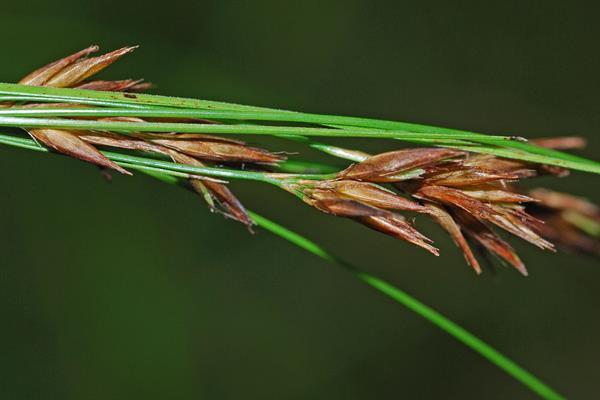 © Gary P. Fleming | Original Image ⭷
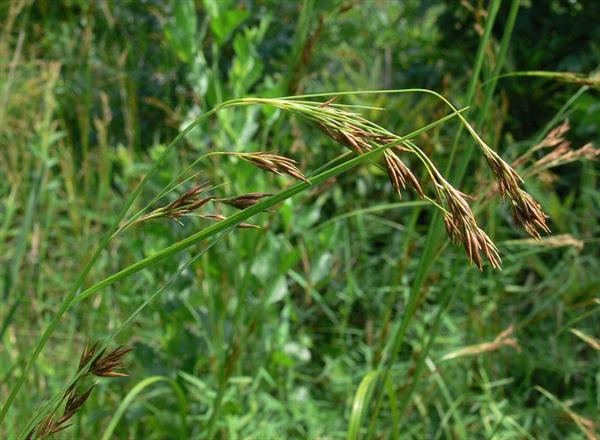 © Bruce A. Sorrie | Original Image ⭷
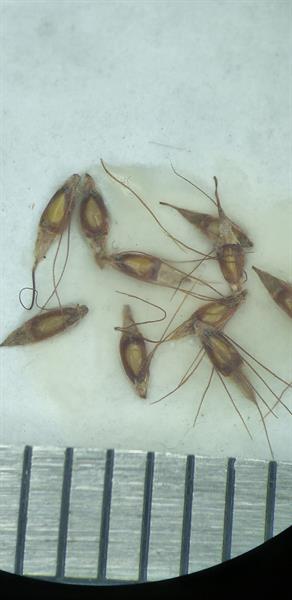 © Scott Ward | Original Image ⭷
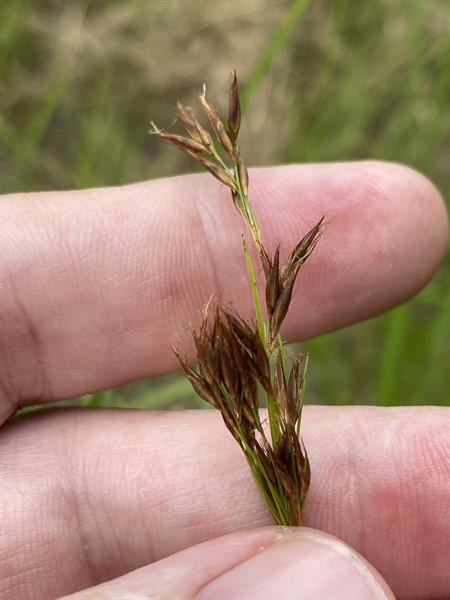 © Alan Weakley source | Original Image ⭷
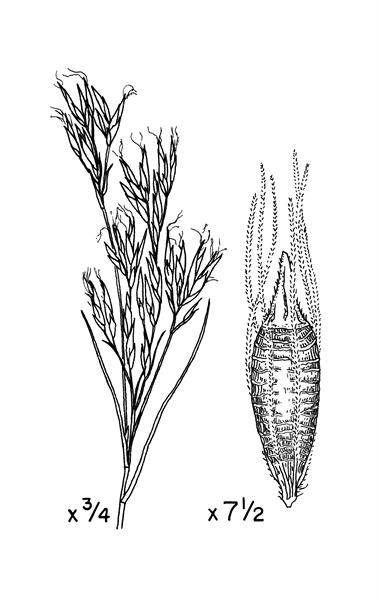 © Radford, Ahles and Bell | Original Image ⭷
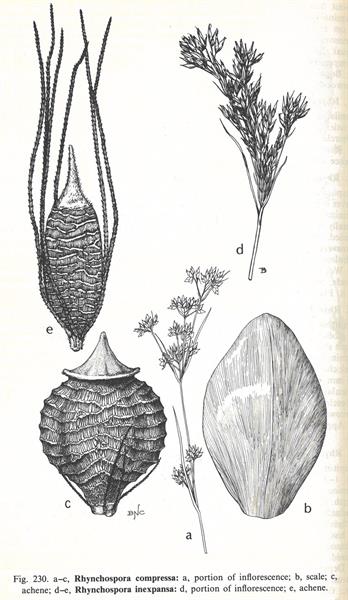 © Godfrey and Wooten 1979 | Original Image ⭷
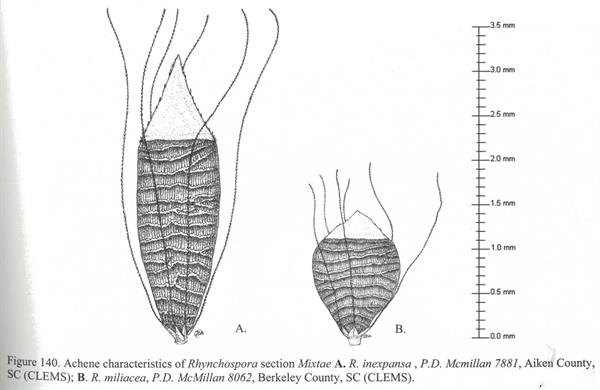 © Patrick McMillan | Original Image ⭷
Feedback
See something wrong or missing on about Rhynchospora inexpansa? Let us know here: (Please include your name and email if at all complicated so we can clarify if needed.)
Cite as...