 Asemeia grandiflora (Walter) Small. Showy Milkwort. Phen: (Dec-) May-Jul. Hab: Longleaf pine sandhills, especially in mesic flats and transition areas; dry sandy soils of roadsides and fields. Dist: S. NC south to s. FL, west to s. MS; West Indies; Mexico to Central America.
Origin/Endemic status: Native
Taxonomy Comments: Sometimes included in the neotropical P. violacea Aublet (Nicaragua to Paraguay) (as by Bernardi 2000), or alternatively subdivided into varieties or species (see synonymy); some at least of Small’s species merit recognition, but are listed here as synonyms until additional studies are done. At a minimum, separation of Asemeia grandiflora from the "violacea entity" seems warranted, based on Pastore & Abbott’s (2012) rangewide study.
Synonymy: = FNA10, K3, Abbott (2011), Pastore & Abbott (2012); = Polygala grandiflora Walter – Bah, RAB; > Asemeia cumulicola Small – S; > Asemeia grandiflora (Walter) Small var. angustifolia – S; > Asemeia grandiflora (Walter) Small var. grandiflora – S; > Asemeia leiodes (Blake) Small – S; > Asemeia miamiensis Small – S; < Asemeia violacea (Aubl.) J.F.B.Pastore & J.R.Abbott – Fl3, K4; > Polygala corallicola Small; > Polygala grandiflora Walter var. angustifolia Torr. & A.Gray – S13; > Polygala grandiflora Walter var. grandiflora – K1, S13; < Polygala violacea Aubl. – Mex, WH3, WI, Bernardi (2000)
Heliophily: 8
Hover over a shape, letter, icon, or arrow on the map for definition or see the legend.
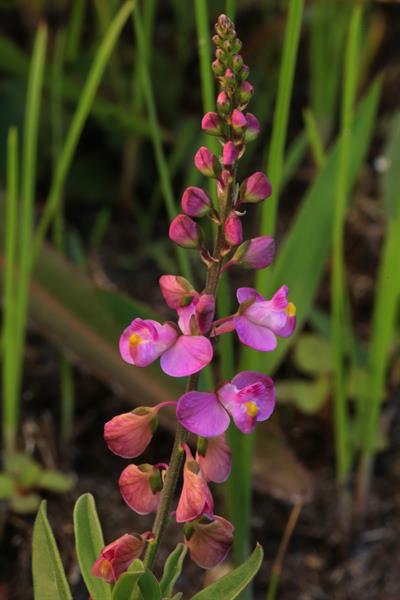 © Alan M. Cressler | Original Image ⭷
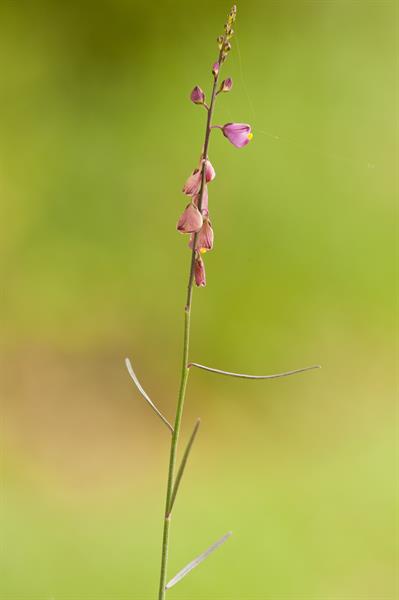 © Keith Bradley | Original Image ⭷
 © Scott Ward | Original Image ⭷
 © Scott Ward | Original Image ⭷
 © Bruce A. Sorrie | Original Image ⭷
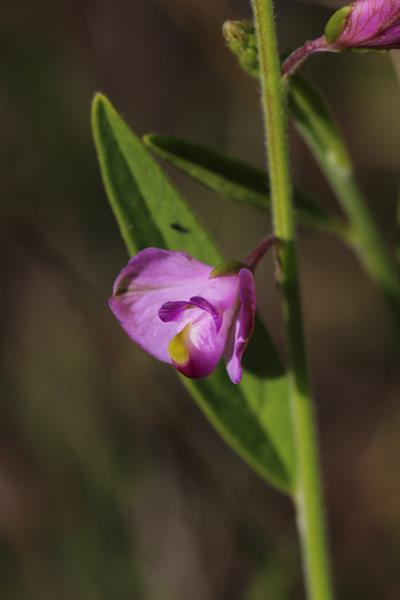 © Scott Ward | Original Image ⭷
 © Richard & Teresa Ware CC-BY-NC, permission granted to NCBG | Original Image ⭷
 © Jay Horn source | Original Image ⭷
Feedback
See something wrong or missing on about Asemeia grandiflora? Let us know here: (Please include your name and email if at all complicated so we can clarify if needed.)
Cite as...