 Rhexia alifanus Walter. Smooth Meadow-beauty. Phen: May-Sep. Hab: Pine flatwoods and savannas, pocosin borders, more able to tolerate merely moist soils than other Rhexia species. Dist: A Southeastern Coastal Plain species: e. NC south to n. peninsular FL and west to se. Texas (Singhurst, Mink, & Holmes 2010).
ID notes:Our tallest and showiest Rhexia: the unbranched (unless injured), wand-like stems, with strongly ascending, bluish-green, waxy-smooth, and generally entire leaves make this species unmistakable.
Origin/Endemic status: Endemic
Synonymy: = Fl4, FNA10, GW2, K1, K3, K4, RAB, S, S13, WH3, Kral & Bostick (1969), Nesom (2012a); = Rhexia glabella Michx.
Wetland Indicator Status:
- Atlantic and Gulf Coastal Plain: FACW
Heliophily: 8
Hover over a shape, letter, icon, or arrow on the map for definition or see the legend.
 © Keith Bradley | Original Image ⭷
 © Floyd A. Griffith | Original Image ⭷
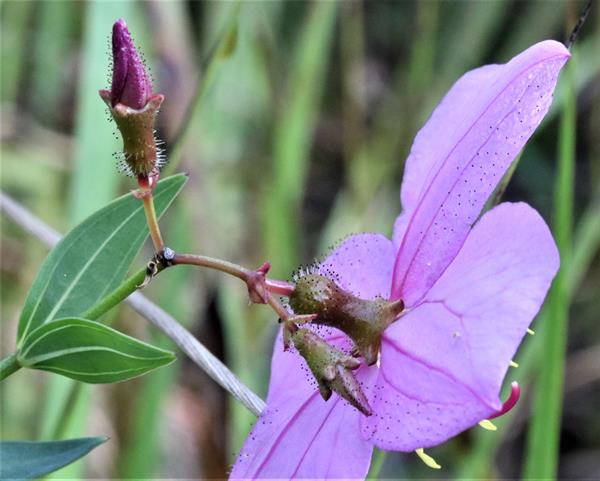 © Floyd A. Griffith | Original Image ⭷
 © Richard & Teresa Ware CC-BY-NC, permission granted to NCBG | Original Image ⭷
 © Bruce A. Sorrie | Original Image ⭷
 © Floyd A. Griffith | Original Image ⭷
 © Bruce A. Sorrie | Original Image ⭷
 © Alan Cressler: rhexia alifanus, tattnall county, georgia 1 by Alan Cressler source | Original Image ⭷
 © Richard & Teresa Ware CC-BY-NC, permission granted to NCBG | Original Image ⭷
Feedback
See something wrong or missing on about Rhexia alifanus? Let us know here: (Please include your name and email if at all complicated so we can clarify if needed.)
Cite as...