Copy permalink to share
Cistaceae
Lechea

not marked as a favorite taxon Lechea racemulosa Michaux. Common name: Appalachian Pinweed. Phenology: Jun-Aug; Jul-Oct. Habitat: Dry pine woodlands, other woodlands, forest edges, old fields. Distribution: Se. New York west to s. Ohio and s. Illinois, south to se. Virginia, North Carolina, c. Georgia, and Alabama, with a few disjunct occurrences west to Missouri; the range is centered on the Appalachian Mountains.

Glossary (beta!)

Origin/Endemic status: Native

Synonymy : = C, F, FNA6, G, K1, K4, NS, NY, Pa, POWO, RAB, S, S13, Tat, Tn, Va, W, WV, Hodgdon (1938), Wilbur & Daoud (1961). Basionym: Lechea racemulosa Michx. 1803

Links to other floras: = Lechea racemulosa - FNA6

Show in key(s)

Show parent genus | Show parent in key(s)

Heliophily : 8

Your browser does not support SVGs

Hover over a shape, letter, icon, or arrow on the map for definition or see the legend.
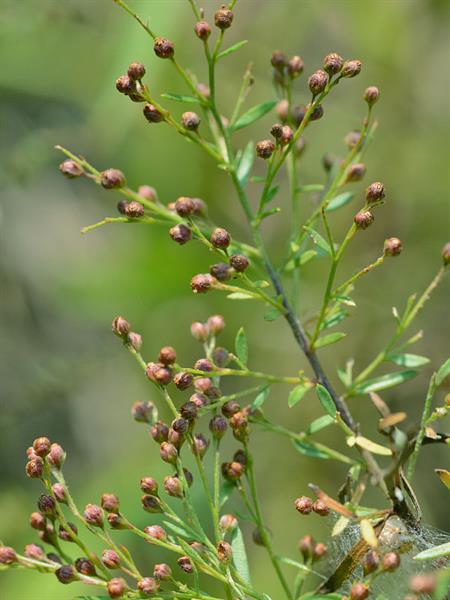
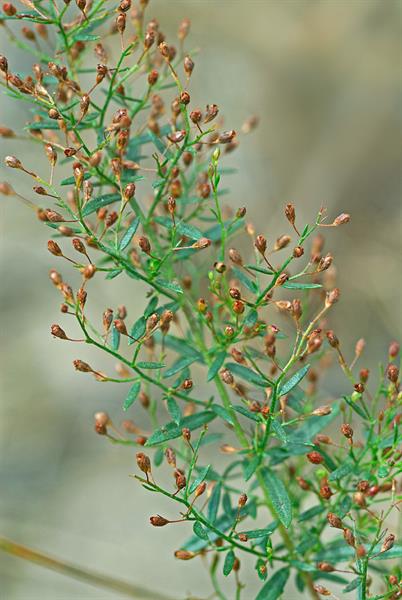
image #1 of Lechea racemulosa© Gary P. Fleming | Original Image ⭷
image #2 of Lechea racemulosa© Dan Spaulding, some rights reserved (CC BY-NC), uploaded by Dan Spaulding source CC-BY-NC, permission granted to NCBG | Original Image ⭷
image #3 of Lechea racemulosa© Dan Spaulding, some rights reserved (CC BY-NC), uploaded by Dan Spaulding source CC-BY-NC, permission granted to NCBG | Original Image ⭷
image #4 of Lechea racemulosa© Michael J. Papay, some rights reserved (CC BY), uploaded by Michael J. Papay source CC-BY | Original Image ⭷
image #5 of Lechea racemulosa© Alaina Krakowiak, some rights reserved (CC BY), uploaded by Alaina Krakowiak source CC-BY | Original Image ⭷
image #6 of Lechea racemulosa© Bryan England | Original Image ⭷
image #7 of Lechea racemulosa© Nate Hartley, some rights reserved (CC BY-NC), uploaded by Nate Hartley source CC-BY-NC, permission granted to NCBG | Original Image ⭷
image #8 of Lechea racemulosa© Gary P. Fleming | Original Image ⭷
image #9 of Lechea racemulosa© Steven Daniel, all rights reserved, uploaded by Steven Daniel source | Original Image ⭷
image #10 of Lechea racemulosa© Steven Daniel, all rights reserved, uploaded by Steven Daniel source | Original Image ⭷
image #11 of Lechea racemulosa© Alan Weakley source | Original Image ⭷
image #12 of Lechea racemulosa© Nate Hartley, some rights reserved (CC BY-NC), uploaded by Nate Hartley source CC-BY-NC, permission granted to NCBG | Original Image ⭷
image #13 of Lechea racemulosa© theo_witsell, some rights reserved (CC BY-NC), uploaded by theo_witsell source CC-BY-NC, permission granted to NCBG | Original Image ⭷
image #14 of Lechea racemulosa© theo_witsell, some rights reserved (CC BY-NC), uploaded by theo_witsell source CC-BY-NC, permission granted to NCBG | Original Image ⭷
image #15 of Lechea racemulosa© Michael J. Papay, some rights reserved (CC BY), uploaded by Michael J. Papay source CC-BY | Original Image ⭷
image #16 of Lechea racemulosa© Shaun Pogacnik, some rights reserved (CC BY-NC), uploaded by Shaun Pogacnik source CC-BY-NC, permission granted to NCBG | Original Image ⭷
image #17 of Lechea racemulosa© Michael J. Papay, some rights reserved (CC BY), uploaded by Michael J. Papay source CC-BY | Original Image ⭷

Feedback

See something missing or incorrect about Lechea racemulosa? Let us know here:
  1. Please include your name and if possible, email in case when need to clarify what you wrote.
  2. If you opt out of including email, please be as specific as possible (e.g., which photo is incorrect?)
  3. Please do not submit questions asking to identify plants or about horticultural topics (e.g., how do I control an invasive plant in my garden?). Instead, those questions can be submitted here for the Carolinas region only.
  4. Please do not send us feedback about unkeyed species as this work is ongoing.
  5. Please allow time for flora edits to show in our next data release. We greatly appreciate your feedback but may require extra time to research complicated taxonomic issues.

Horticultural Information

NCBG trait

Intro: Erect perennial of dry pine woodlands, other woodlands, forest edges and old fields.

Stems: Stems loosely to compactly branched in upper half of plant, with short pressed-in hairs; older stems prostrate and forming a basal rosette.

Leaves: Stem leaves opposite to sub-opposite, short-petiolate to sessile, linear-lance-shaped, 1/4-3/4 in. long, smooth except for short hairs on margins and midrib beneath. Leaves on basal shoots often whorled and a little wider and shorter.

Inforescence:

Flowers: Flowers in a loose panicle with ascending branches occupying the upper 1/2 of the plant, reddish, tiny, consisting of 3 petals that are mostly concealed by the sepals and rarely spreading.

Fruits: Fruit a slender ellipsoid to narrowly pear-shaped capsule partially enclosed by the persistent calyx.

Comments:

Height: 4-32 in.

plant sale text:

bloom table text:

description: Erect perennial of dry pine woodlands, other woodlands, forest edges and old fields.

stems: Stems loosely to compactly branched in upper half of plant, with short pressed-in hairs; older stems prostrate and forming a basal rosette.

leaves: Stem leaves opposite to sub-opposite, short-petiolate to sessile, linear-lance-shaped, 1/4-3/4 in. long, smooth except for short hairs on margins and midrib beneath. Leaves on basal shoots often whorled and a little wider and shorter.

inflorescence:

flowers: Flowers in a loose panicle with ascending branches occupying the upper 1/2 of the plant, reddish, tiny, consisting of 3 petals that are mostly concealed by the sepals and rarely spreading.

fruits: Fruit a slender ellipsoid to narrowly pear-shaped capsule partially enclosed by the persistent calyx.

comments:

cultural notes:

germination code:

native range: