 Carphephorus bellidifolius (Michaux) Torrey & A. Gray. Sandhill Chaffhead. Phen: Aug-Oct. Hab: Longleaf pine sandhills, rarely in other xeric sandy forests and woodlands. Dist: Se. VA to extreme e. GA.
ID notes:The leaf apices are generally blunt, giving the leaves a nearly spatulate shape. At 10× magnification, the upper leaf surface can be seen to have minute circular depressions (glands), looking like beaten into the surface with a tiny ball hammer.
Origin/Endemic status: Endemic
Other Comments: Although often occurring with other species of Carphephorus, C. bellidifolius ranges into drier habitats than its congeners.
Synonymy: = C, F, FNA21, G, K1, K3, K4, RAB, S, SE1, Va, Correa & Wilbur (1969), Schilling (2011b)
Heliophily: 8
Hover over a shape, letter, icon, or arrow on the map for definition or see the legend.
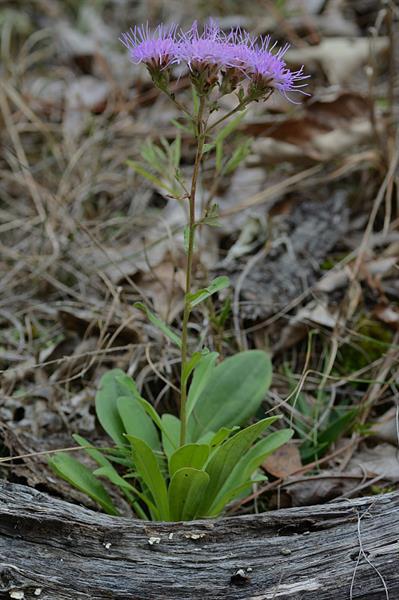 © Gary P. Fleming | Original Image ⭷
 © Alan Cressler: carphephorus bellidifolius, berzelia rock, columbia county, georgia 3 by Alan Cressler source | Original Image ⭷
 © Gary P. Fleming | Original Image ⭷
 © Bruce A. Sorrie | Original Image ⭷
 © Bruce A. Sorrie | Original Image ⭷
 © Gary P. Fleming | Original Image ⭷
 © Keith Bradley | Original Image ⭷
 © Gary P. Fleming | Original Image ⭷
 © Scott Ward | Original Image ⭷
 © Gary P. Fleming | Original Image ⭷
Feedback
See something wrong or missing on about Carphephorus bellidifolius? Let us know here: (Please include your name and email if at all complicated so we can clarify if needed.)
Cite as...