Copy permalink to share
Asteraceae
Solidago

not marked as a favorite taxon Solidago puberula Nuttall. Common name: Downy Goldenrod. Phenology: Aug-Oct. Habitat: Bogs, wet meadows, and wet pastures, often in wet soils but also occurring in dry acidic habitats, rocky uplands and ridges, and dry open woodlands and woodland margins. Distribution: NS west to ON, south to GA, nw. AL, and TN.

Glossary (beta!)

Subgenus: Solidago. Section: Erectae. Series: Puberulae.

Origin/Endemic status: Native

Synonymy : = NY, S, Tn, LeBlond (2000); = Solidago puberula Nutt. ssp. puberula — FNA20, POWO; = Solidago puberula Nutt. var. puberula — C, F, G, K4, NE, RAB, SE1, Va, Johnson (1995); < Solidago puberula Nutt. — Pa, Tat, W, WV. Basionym: Solidago puberula Nutt. 1818

Links to other floras: = Solidago puberula ssp. puberula - FNA20

Show in key(s)

Show parent genus | Show parent in key(s)

Wetland Indicator Status:

  • Atlantic and Gulf Coastal Plain: FACU
  • Eastern Mountains and Piedmont: FACU
  • Northcentral & Northeast: FACU

Heliophily : 8

Your browser does not support SVGs

Hover over a shape, letter, icon, or arrow on the map for definition or see the legend.
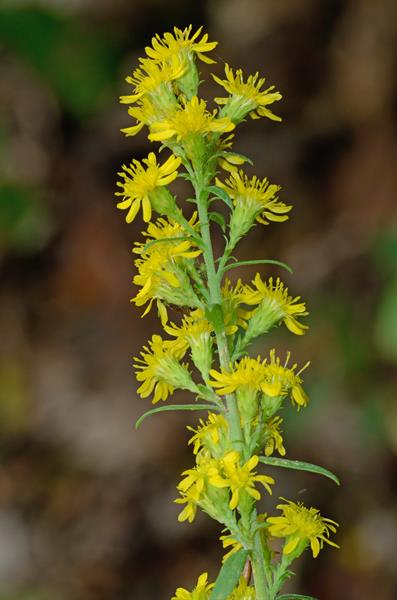
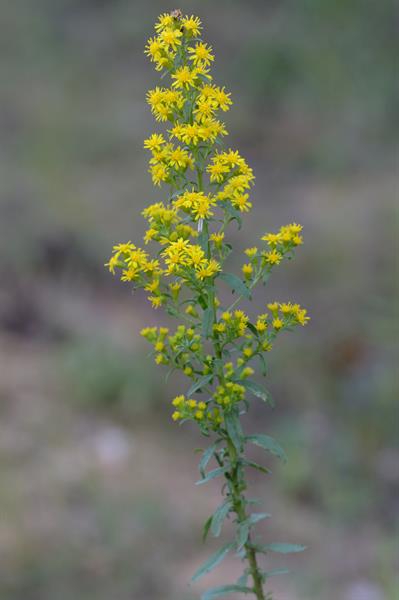
image #1 of Solidago puberula© Gary P. Fleming | Original Image ⭷
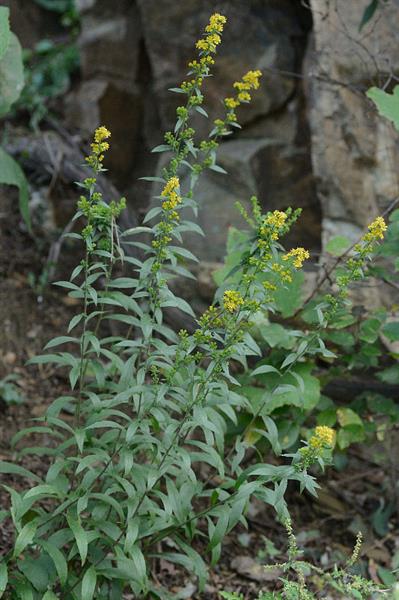
image #2 of Solidago puberula© Eric M Powell, some rights reserved (CC BY-NC), uploaded by Eric M Powell source CC-BY-NC, permission granted to NCBG | Original Image ⭷
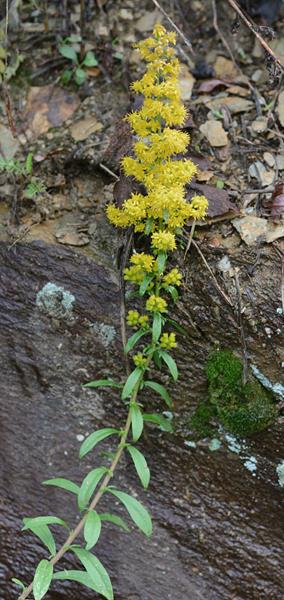
image #3 of Solidago puberula© Scott Ward | Original Image ⭷
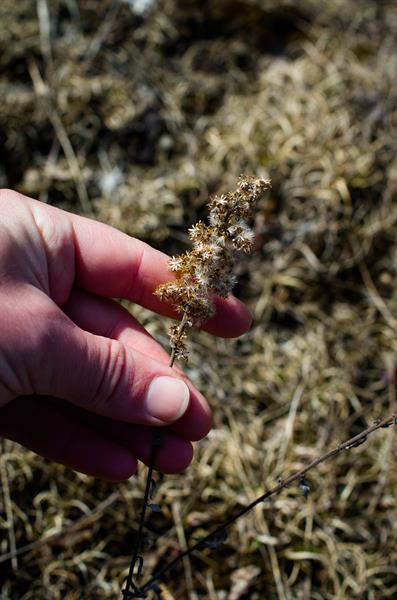
image #4 of Solidago puberula© J. Burke Korol, some rights reserved (CC BY-NC), uploaded by J. Burke Korol source CC-BY-NC, permission granted to NCBG | Original Image ⭷
image #5 of Solidago puberula© Scott Ward, some rights reserved (CC BY), uploaded by Scott Ward source CC-BY | Original Image ⭷
image #6 of Solidago puberula© Scott Ward, some rights reserved (CC BY), uploaded by Scott Ward source CC-BY | Original Image ⭷
image #7 of Solidago puberula© Eric M Powell, some rights reserved (CC BY-NC), uploaded by Eric M Powell source CC-BY-NC, permission granted to NCBG | Original Image ⭷
image #8 of Solidago puberula© Scott Ward | Original Image ⭷
image #9 of Solidago puberula© Scott Ward, some rights reserved (CC BY), uploaded by Scott Ward source CC-BY | Original Image ⭷
image #10 of Solidago puberula© Gary P. Fleming | Original Image ⭷
image #11 of Solidago puberula© Gary P. Fleming | Original Image ⭷
image #12 of Solidago puberula© Gary P. Fleming | Original Image ⭷
image #13 of Solidago puberula© Erik Danielson source | Original Image ⭷

Feedback

See something missing or incorrect about Solidago puberula? Let us know here:
  1. Please include your name and if possible, email in case when need to clarify what you wrote.
  2. If you opt out of including email, please be as specific as possible (e.g., which photo is incorrect?)
  3. Please do not submit questions asking to identify plants or about horticultural topics (e.g., how do I control an invasive plant in my garden?). Instead, those questions can be submitted here for the Carolinas region only.
  4. Please do not send us feedback about unkeyed species as this work is ongoing.
  5. Please allow time for flora edits to show in our next data release. We greatly appreciate your feedback but may require extra time to research complicated taxonomic issues.

Horticultural Information

NCBG trait

Intro: Erect, rhizomatous perennial of bogs, wet meadows and wet pastures as well as dry acidic soils of woodlands, barrens and clearings.

Stems: Stems with longitudinal lines, often purplish-red, unbranched, finely hairy.

Leaves: Leaves mostly basal, tapered to a winged petiole, spoon-shaped to oblong-oval, 2-6 in. long, toothed, finely hairy; stem leaves alternate, reduced upward, usually entire and often with clustered, tiny bract-like leaves in the axils.

Inforescence:

Flowers: Composite flowers (heads) densely clustered on short, ascending branches forming a narrow terminal array; heads 1/4 in. long, consisting of 9-16 yellow ray florets encircling a center disk of 6-15 small, yellow tubular florets. 3-4 series of tiny bracts surround the bell-shaped base of each head.

Fruits:

Comments: The similar S. pulverulenta is found in savannas, streamhead pocosins, flatwoods and seepages in the Coastal Plain and differs in being leafier and having mid-stem leaves that are shorter (1 1/2 or less in. long as opposed to 1 1/2-2 in.).

Height: 1-3 ft.

plant sale text: Downy Goldenrod is discovered along the edges of deciduous and pine woods or roadsides, in clearings, or at the margins of ponds and streams. In late summer, the yellow, fuzzy looking blooms can be seen from northern Canada down to the mountains and piedmont of Georgia. Pair Downy Goldenrod with low-growing warm season grasses or fall asters for a late summer display.

bloom table text:

description: Erect, rhizomatous perennial of bogs, wet meadows and wet pastures as well as dry acidic soils of woodlands, barrens and clearings.

stems: Stems with longitudinal lines, often purplish-red, unbranched, finely hairy.

leaves: Leaves mostly basal, tapered to a winged petiole, spoon-shaped to oblong-oval, 2-6 in. long, toothed, finely hairy; stem leaves alternate, reduced upward, usually entire and often with clustered, tiny bract-like leaves in the axils.

inflorescence:

flowers: Composite flowers (heads) densely clustered on short, ascending branches forming a narrow terminal array; heads 1/4 in. long, consisting of 9-16 yellow ray florets encircling a center disk of 6-15 small, yellow tubular florets. 3-4 series of tiny bracts surround the bell-shaped base of each head.

fruits:

comments: The similar S. pulverulenta is found in savannas, streamhead pocosins, flatwoods and seepages in the Coastal Plain and differs in being leafier and having mid-stem leaves that are shorter (1 1/2 or less in. long as opposed to 1 1/2-2 in.).

cultural notes:

germination code:

native range:


0 unsaved edits on this page.