| Family | Scientific Name | Common Name | Habitat | Distribution | Image |
|---|---|---|---|---|---|
| Fabaceae | Sesbania drummondii | Rattlebox, Poisonbean, Siene Bean | Disturbed areas, spoil, marsh edges, ditches. | Native on the Gulf Coast west to s. TX and Mexico (TAM), the exact eastern edge of the native range uncertain, perhaps w. FL Panhandle. First reported for GA and SC by Townsend et al. (2000), where clearly introduced. | 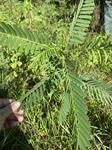 |
| Fabaceae | Sesbania grandiflora | Vegetable-hummingbird, Agati, Flamingo-bill | Disturbed areas. | Probably native of tropical Asia. | |
| Fabaceae | Sesbania herbacea | Sesban, Coffee-weed, Indigo-weed, Peatree, Bequilla | Ditches, wet fields, disturbed moist and wet areas, perhaps native only in the deeper South. | Native distribution uncertain, perhaps e. NC south to s. FL, west on the Coastal Plain and Mississippi Embayment to TX, south into Mexico, but expanding its distribution northwards. | 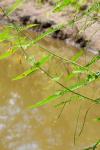 |
| Fabaceae | Sesbania punicea | Rattlebox, Scarlet Wisteria-tree, Red Sesban | Ditches, wet fields, marshes, ponded wetlands, wet pinelands. | Native of South America. | 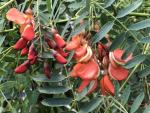 |
| Fabaceae | Sesbania sericea | Silky Sesban | Wet, disturbed areas. | Native of s. Asia. | |
| Fabaceae | Sesbania vesicaria | Bladderpod, Bagpod | Ditches, marshes, disturbed wet areas. | The original native distribution of S. vesicaria is uncertain; its distribution is from ne. NC south to s. FL, west to e. OK and se. TX, and Isely (1998) states that it is unknown from outside the United States; occurrences in provinces inland of the Coastal Plain seem to represent introductions into artificial wetlands (such as ditches). | 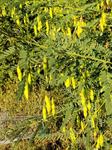 |
| Fabaceae | Sesbania virgata | Wand River-hemp | Disturbed areas. | Native of South America. |
Cite as...