 Huperzia appressa (Desvaux) Á. Löve & D. Löve. Appalachian Firmoss. Phen: Jun-Aug. Hab: Rock outcrops at high elevations (very rarely at middle elevations), rarely also in seepage or along banks of small streams at high elevations, and in fens (on hummocks). Dist: QC and NL (Newfoundland) west to ON, MI, and MN and south along the Appalachians to w. NC, e. TN, and ne. GA. Previous reports of this Huperzia appressa from Greenland, Europe, and e. Asia are based on misidentifications of Huperzia continentalis, Huperzia selago, and other species (Testo, Haines, & Gilman 2016). Previous reports of Huperzia selago from the Central and Southern Appalachians re based on this species.
ID notes:This is the smallest of our Huperzia species, usually occurring on rock in exposed situations at moderate to high elevations (>3000 feet).
Origin/Endemic status: Native
Taxonomy Comments: This species was named in 1992 as H. appalachiana (Beitel & Mickel 1992), but H. appressa (Desvaux) A. Löve & D. Löve is an older combination that seemingly applies to the same species (Haines 2003a), though there remain some questions about that, as discussed by Björk (2020). Though morphologically only subtly differentiated from the circumboreal Huperzia selago (for distinctions see Beitel & Mickel 1992; Brunton, Wagner, & Beitel 1992; Haines 2003a), the case for the distinctness of Huperzia appressa is confirmed by the production of sterile (abortive-spored) hybrids where it co-occurs with Huperzia selago. Testo (pers.comm., 2020) considers there to be questions remaining about the correct taxonomic treatment of the "Appalachian Firmoss" and the name to apply to it, but he and I agree that Björk's (2020) decision to retreat to a broad Huperzia selago (including Huperzia appressa and Huperzia appalachiana) is retrograde and does not help us towards a truer solution.
Synonymy: = K3, K4, NE, NY, Tn, Va, Haines (2003a), Testo, Haines, & Gilman (2016); = Huperzia appalachiana Beitel & Mickel – FNA2, K1; < Huperzia selago (Linnaeus) Bernhardi ex Martius & Schrank – Björk (2020); < Lycopodium selago Linnaeus – RAB, S13, Sf, W; >< Lycopodium selago Linnaeus var. appressum Desvaux – C, F; >< Lycopodium selago var. selago – C, G
Wetland Indicator Status:
- Midwest: FACU (taxonomic split from wetland indicator species)
- Northcentral & Northeast: FACU (taxonomic split from wetland indicator species)
Heliophily: 5
Hover over a shape, letter, icon, or arrow on the map for definition or see the legend.
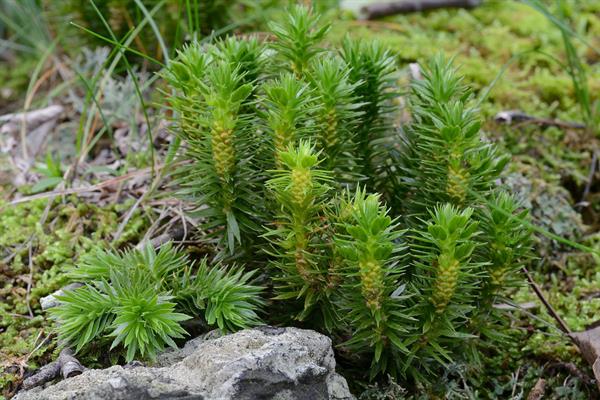 © Gary P. Fleming | Original Image ⭷
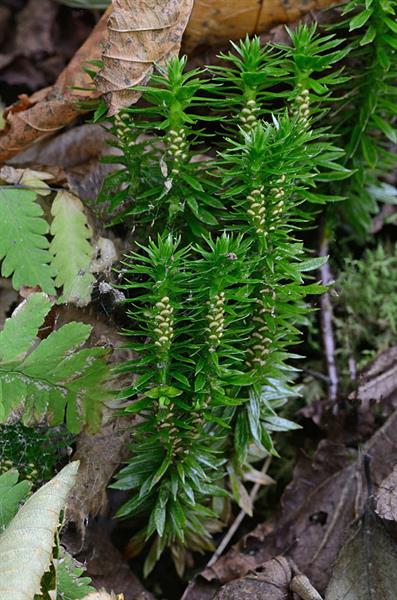 © Gary P. Fleming | Original Image ⭷
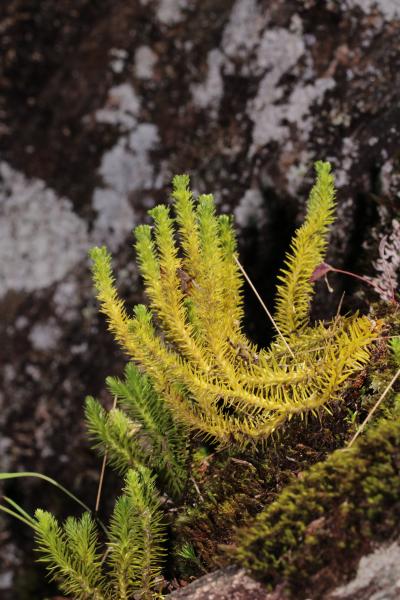 © Scott Ward | Original Image ⭷
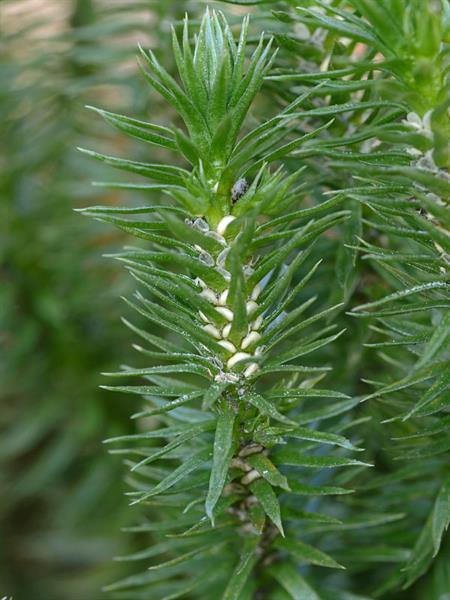 © Gary P. Fleming | Original Image ⭷
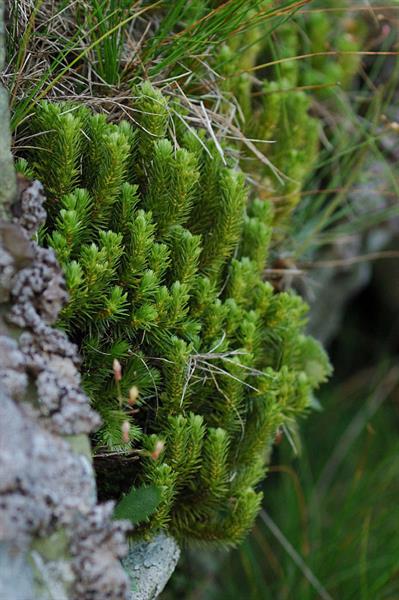 © Gary P. Fleming | Original Image ⭷
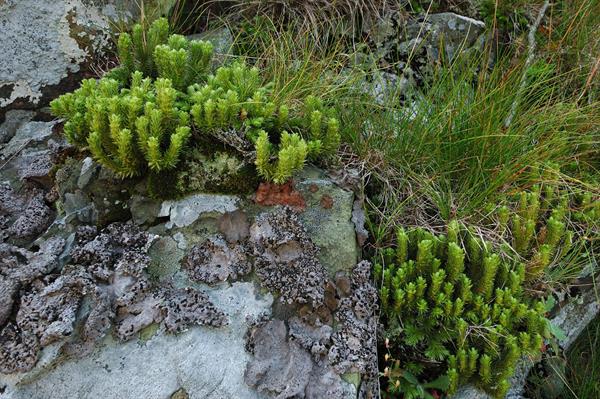 © Gary P. Fleming | Original Image ⭷
 © Scott Ward | Original Image ⭷
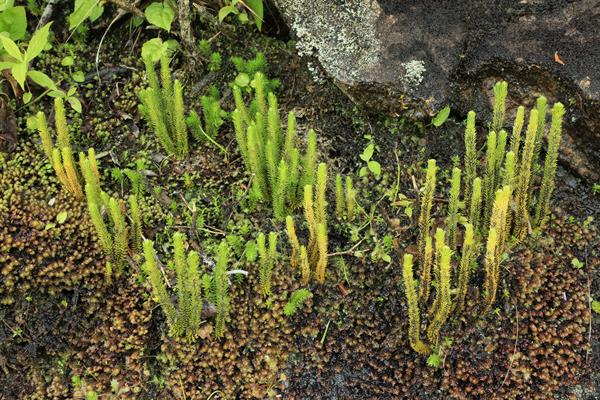 © Alan Cressler: Huperzia appressa, Blue Ridge Parkway, Haywood County, North Carolina 2 by Alan Cressler source | Original Image ⭷
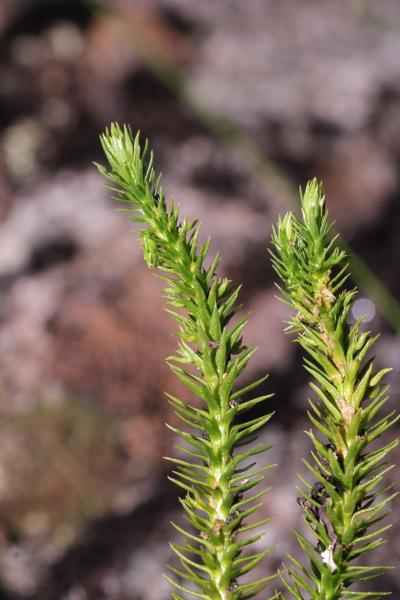 © Scott Ward | Original Image ⭷
Feedback
See something wrong or missing on about Huperzia appressa? Let us know here: (Please include your name and email if at all complicated so we can clarify if needed.)
Cite as...