 Carex meadii Dewey. Section: [26aa] Section 18 Paniceae. Mead's Sedge. Phen: May-Jun. Hab: Mesic to wet prairies, loess prairies, limestone barrens and glades, open woodlands and savannas over calcareous substrates, on low, moist clayey or loamy soils over mafic or ultramafic rocks (such as diabase or serpentine) or calcareous rocks. Dist: S. NY, NJ, MI, and SK, south to nc. SC, nw. GA, sw. LA, se. TX, and CHI.
ID notes:The species forms large clonal patches with a distinctive bluish cast at the time of flowering and fruiting.
Origin/Endemic status: Native
Taxonomy Comments: Naczi (1999b) reported a chromosome number of n = 28.
Synonymy: = Ar, C, ETx1, F, FNA23, G, GrPl, Il, K1, K3, K4, Mi, Mo1, NcTx, NE, NY, Pa, RAB, S, Tat, Tn, Tx, Va, W, Mackenzie (1931-1935)
Wetland Indicator Status:
- Atlantic and Gulf Coastal Plain: FAC
- Eastern Mountains and Piedmont: FAC
- Great Plains: FAC
- Midwest: FAC
- Northcentral & Northeast: FAC
Heliophily: 8
Hover over a shape, letter, icon, or arrow on the map for definition or see the legend.
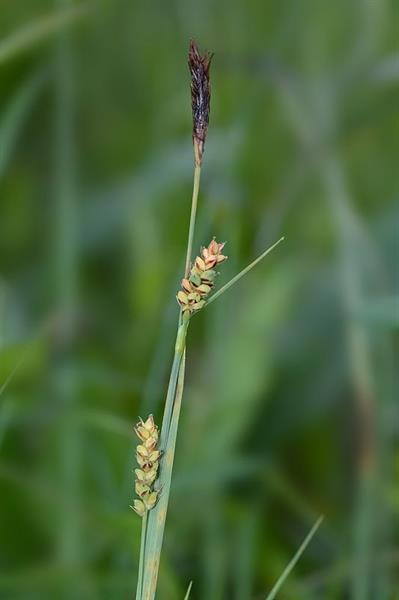 © Gary P. Fleming | Original Image ⭷
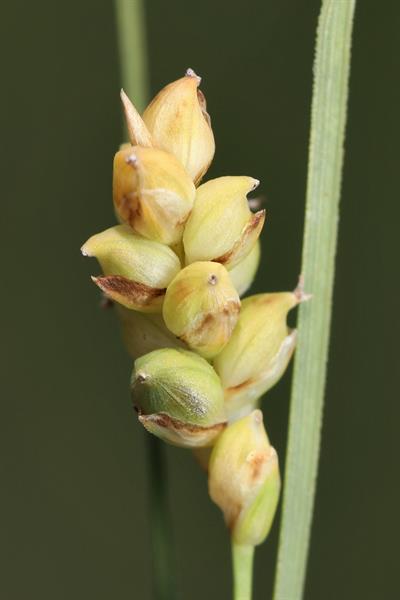 © Paul Marcum source | Original Image ⭷
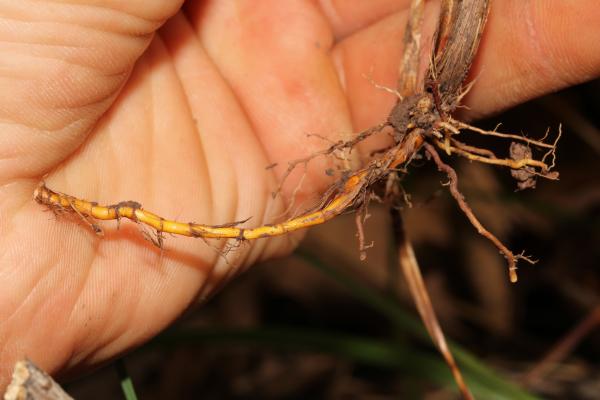 © Scott Ward | Original Image ⭷
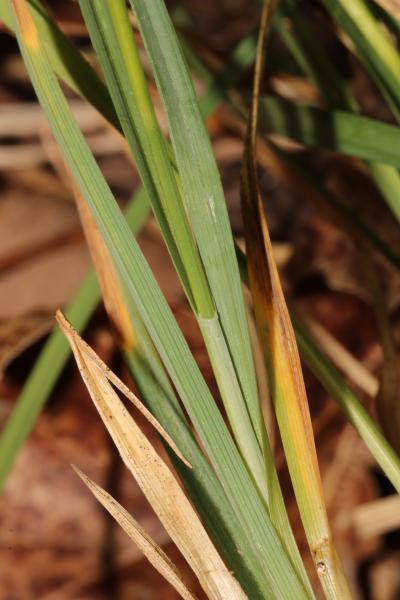 © Scott Ward | Original Image ⭷
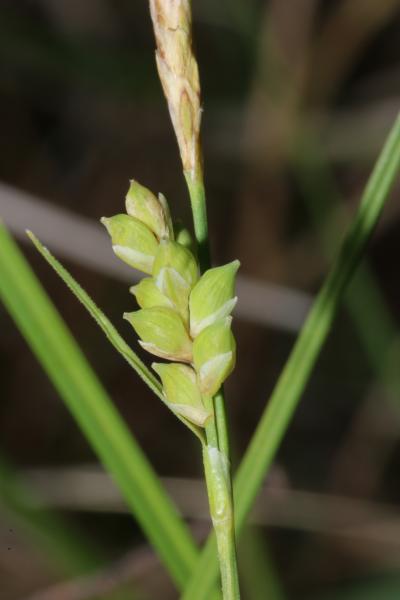 © Scott Ward | Original Image ⭷
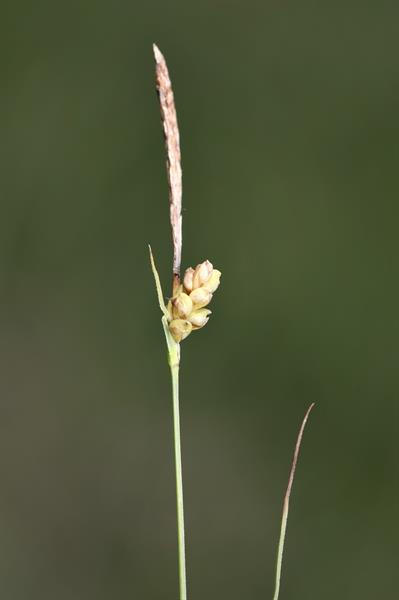 © Paul Marcum source | Original Image ⭷
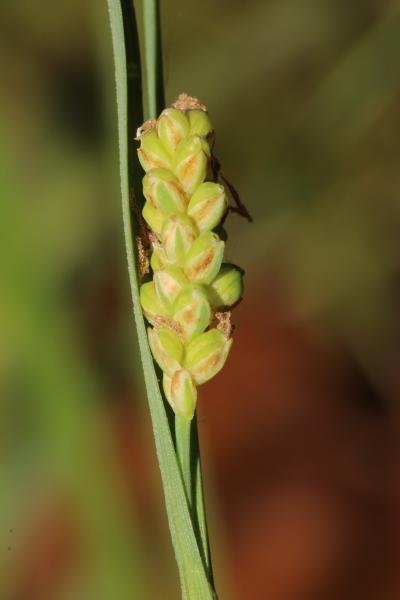 © Scott Ward | Original Image ⭷
Feedback
See something wrong or missing on about Carex meadii? Let us know here: (Please include your name and email if at all complicated so we can clarify if needed.)
Cite as...