 Andropogon ternarius Michaux. Splitbeard Bluestem. Phen: Sep-Oct. Hab: Longleaf pine sandhills, dry to moist soils of woodlands and openings. Dist: DE and s. NJ west to KY and s. MO, south to FL and TX.
Origin/Endemic status: Native
Taxonomy Comments: Andropogon cabinisii Hackel, sometimes treated as A. ternarius var. cabanisii (Hackel) Fernald & Griscom, is endemic in s. and c. peninsular FL.
Synonymy: = HC, K4, S, Tat, Tx; = Anatherum ternarium (Michx.) Voronts. & E.A.Kellogg – Vorontsova et al (2023); = Andropogon ternarius Michx. var. ternarius – Ar, FlGr, FNA25, K1, Mo1, Va, Campbell (1983); > Andropogon argyraeus Schult. – S13; > Andropogon scribnerianus Nash – S13; < Andropogon ternarius Michx. – C, ETx1, G, Il, K3, NcTx, RAB, Tn, W, WH3; > Andropogon ternarius Michx. var. glaucescens (Scribn.) Fernald & Griscom – F; > Andropogon ternarius Michx. var. ternarius – F
Wetland Indicator Status:
- Atlantic and Gulf Coastal Plain: FACU (taxonomic split from wetland indicator species)
- Eastern Mountains and Piedmont: FACU
- Great Plains: FACU (taxonomic split from wetland indicator species)
- Midwest: FACU (taxonomic split from wetland indicator species)
Heliophily: 9
Hover over a shape, letter, icon, or arrow on the map for definition or see the legend.
 © Gary P. Fleming | Original Image ⭷
 © Bruce A. Sorrie | Original Image ⭷
 © Richard & Teresa Ware CC-BY-NC, permission granted to NCBG | Original Image ⭷
 © Aidan Campos source | Original Image ⭷
 © Aidan Campos source | Original Image ⭷
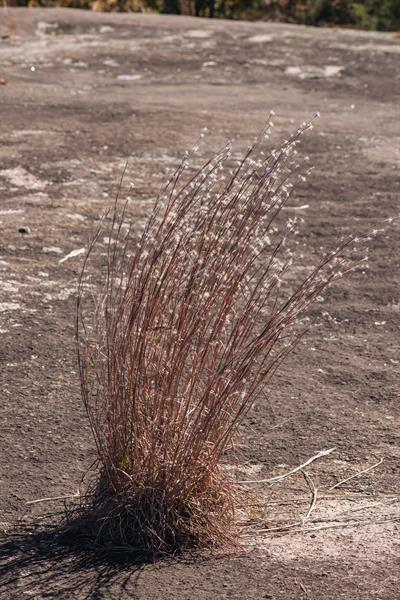 © Keith Bradley | Original Image ⭷
 © Radford, Ahles and Bell | Original Image ⭷
Feedback
See something wrong or missing on about Andropogon ternarius? Let us know here: (Please include your name and email if at all complicated so we can clarify if needed.)
Cite as...