 Thuja occidentalis Linnaeus. American Arborvitae, Northern White Cedar, Flat Cedar. Phen: Mar-Apr. Hab: Dry limestone, dolostone, and calcareous sandstone cliffs, talus, and boulderfields, rarely in our area in calcareous swamps, also planted and persisting around old homesites and cemeteries (mainly in the Mountains). Dist: NS, Hudson Bay, and MB south to PA (where considered strictly introduced by Rhoads & Block 2007), OH, n. IN, n. IL, and in the mountains to WV, w. VA, and e. TN. This species is alleged by various authors to have occurred as a native species in nw. NC on limestone bluffs in Alleghany, Ashe, and/or Burke counties, but it has not been relocated in this century, and little apparently suitable habitat occurs in NC.
Origin/Endemic status: Native
Taxonomy Comments: Thuja occidentalis is apparently sister to Thuja koraiensis Nakai of e. Asia, from which it diverged about 20 MYA (Li et al. 2022).
Synonymy: = AqW, C, F, FNA2, G, Il, K1, K3, K4, Mi, NY, Pa, RAB, S, S13, Tn, Va, W, WV, Li et al (2021)
Wetland Indicator Status:
- Atlantic and Gulf Coastal Plain: FACW
- Eastern Mountains and Piedmont: FACW
- Great Plains: FACW
- Midwest: FACW
- Northcentral & Northeast: FACW
Heliophily: 7
Hover over a shape, letter, icon, or arrow on the map for definition or see the legend.
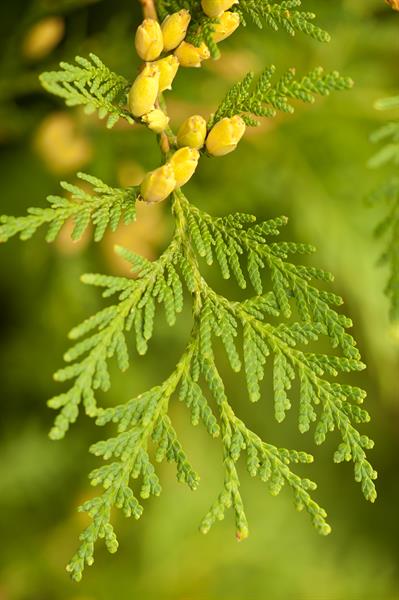 © Keith Bradley | Original Image ⭷
 © Keith Bradley | Original Image ⭷
 © Gary P. Fleming | Original Image ⭷
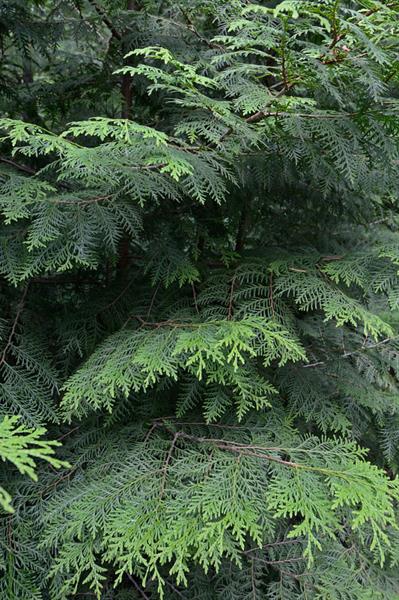 © Gary P. Fleming | Original Image ⭷
 © Gary P. Fleming | Original Image ⭷
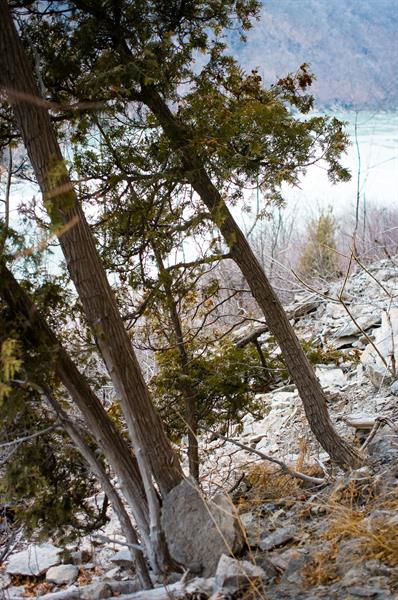 © Erik Danielson source | Original Image ⭷
 © Erik Danielson source | Original Image ⭷
 © Erik Danielson source | Original Image ⭷
 © Erik Danielson source | Original Image ⭷
 © Scott Ward, Bruce Peninsula, ON, CA | Original Image ⭷
Feedback
See something wrong or missing on about Thuja occidentalis? Let us know here: (Please include your name and email if at all complicated so we can clarify if needed.)
Cite as...