Copy permalink to share

Lespedeza violacea (Linnaeus) Persoon. Subgenus: Lespedeza. Section: Lespedeza. clade: E. Common name: Wand Lespedeza. Phenology: Jul-Sep; Aug-Nov. Habitat: Woodlands and woodland borders. Distribution: S. ME and s. ON west to MI and se. MN, south to ne. FL, Panhandle FL, and e. TX.

Origin/Endemic status: Native

Taxonomy Comments: Known in many floras as L. intermedia, this species is actually correctly named L. violacea, which has nomenclatural priority (see Reveal & Barrie 1991).

Synonymy : = Ar, Can, Fl3, FNA11.1, K4, Mi, Mo3, NE, NS, NY, POWO, S, Va; = Lespedeza intermedia (S.Watson) Britton — C, F, G, Il, Pa, RAB, SE3, Tat, Tn, Tx, W, WV, Clewell (1966a), Clewell (1966b), Isely (1998), later (superfluous) name; > Lespedeza prairea (Mack. & Bush) Britton — S13; > Lespedeza violacea (L.) Pers. — S13; Hedysarum violaceum Linnaeus. Basionym: Hedysarum violaceum L. 1753

Links to other floras: = Lespedeza violacea - FNA11.1

Show in key(s)

Show parent genus | Show parent in key(s)

Heliophily : 7

Your browser does not support SVGs

Hover over a shape, letter, icon, or arrow on the map for definition or see the legend.
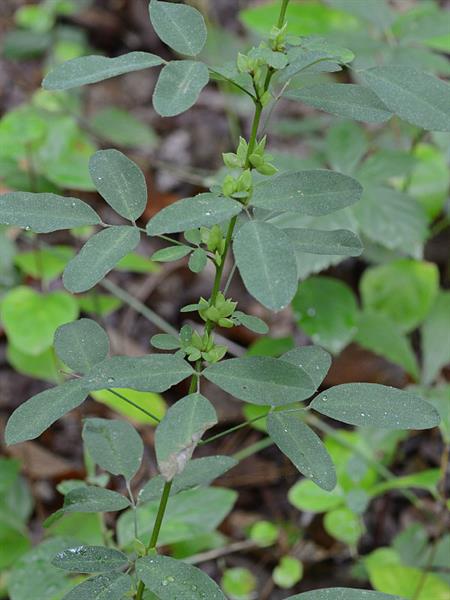
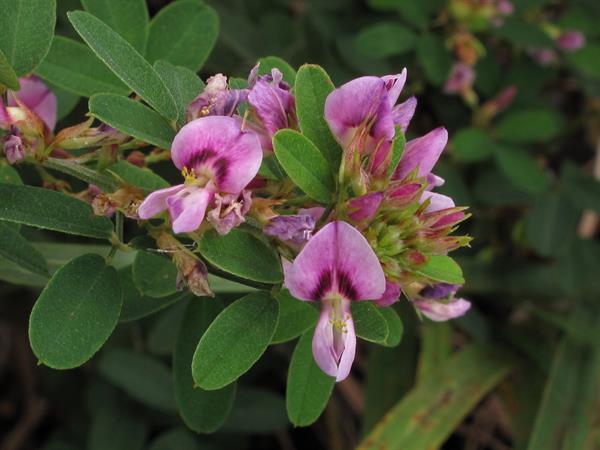
image of plant© Gary P. Fleming | Original Image ⭷
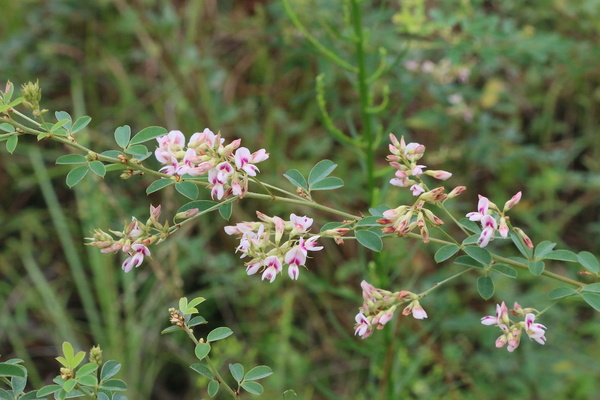
image of plant© Alan M. Cressler | Original Image ⭷
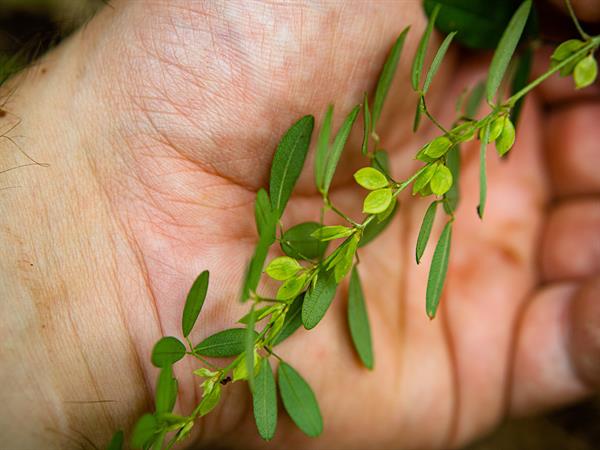
image of plant© Bruce Sorrie | Original Image ⭷
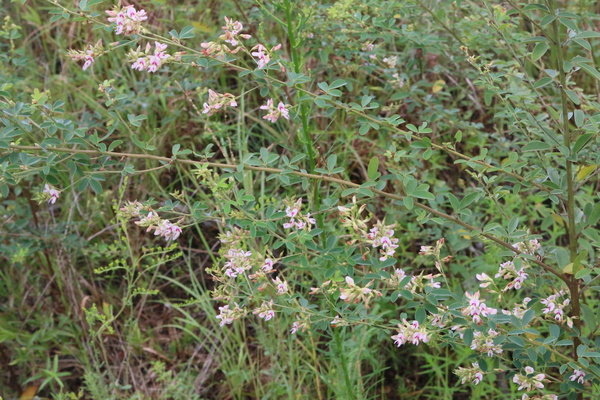
image of plant© Erik Danielson source | Original Image ⭷
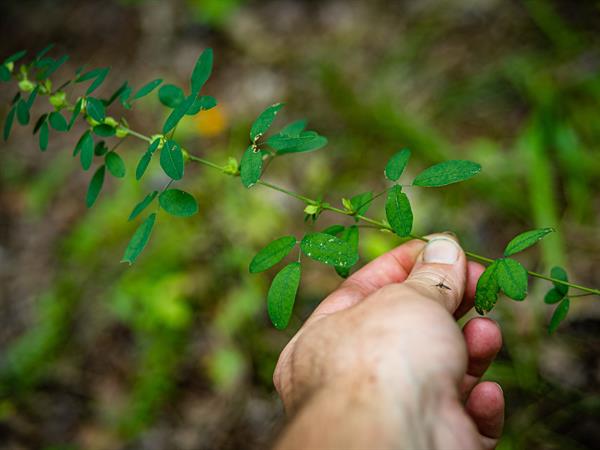
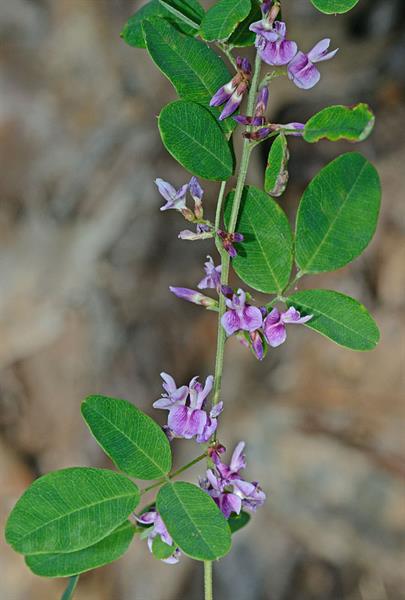
image of plant© Gary P. Fleming | Original Image ⭷
image of plant© Bruce Sorrie | Original Image ⭷

Feedback

See something missing or incorrect about Lespedeza violacea? Let us know here:

  1. Please include your name and if possible, email in case when need to clarify what you wrote.
  2. If you opt out of including email, please be as specific as possible (e.g., which photo is incorrect?)
  3. Please do not submit questions asking to identify plants or about horticultural topics (e.g., how do I control an invasive plant in my garden?). Instead, those questions can be submitted here for the Carolinas region only.
  4. Please do not send us feedback about unkeyed species as this work is ongoing.
  5. Please allow time for flora edits to show in our next data release. We greatly appreciate your feedback but may require extra time to research complicated taxonomic issues.

Horticultural Information

NCBG trait

Intro: Erect perennial of dry woodlands and woodland borders.

Stems: Stems with a few branches, light green to brown, usually with flattened hairs.

Leaves: Leaves alternate, petiolate, divided into 3 oval to oblong leaflets, each 1/2-1 1/2 in. long and smooth above and hairy beneath.

Inforescence:

Flowers: Flowers in dense racemes of 4-14 on stalks from upper leaf axils; violet; about 1/4 in. long; bilaterally symmetric and with typical pea-flower shape, including an erect banner-petal bearing a streaked, arch-shaped patch of dark rosy-purple.

Fruits: Fruit a minutely hairy, flattened, broadly oval pod containing a single seed.

Comments:

Height: 8-24 in.

plant sale text:

bloom table text:

description: Erect perennial of dry woodlands and woodland borders.

stems: Stems with a few branches, light green to brown, usually with flattened hairs.

leaves: Leaves alternate, petiolate, divided into 3 oval to oblong leaflets, each 1/2-1 1/2 in. long and smooth above and hairy beneath.

inflorescence:

flowers: Flowers in dense racemes of 4-14 on stalks from upper leaf axils; violet; about 1/4 in. long; bilaterally symmetric and with typical pea-flower shape, including an erect banner-petal bearing a streaked, arch-shaped patch of dark rosy-purple.

fruits: Fruit a minutely hairy, flattened, broadly oval pod containing a single seed.

comments:

cultural notes:

germination code:

native range:


0 unsaved edits on this page.