Copy permalink to share

Passiflora incarnata Linnaeus. Common name: Maypops, Purple Passionflower, Pasionaria. Phenology: May-Jul (-later); Jul-Oct. Habitat: Roadsides, fencerows, thickets, fields. Distribution: S. NJ, DE, MD, sw. PA, OH, and OK, south to s. FL and s. TX.

Origin/Endemic status: Native

Other Comments: Certainly one of our most interesting and beautiful flowers.

Synonymy : = Ar, C, F, Fl2, FNA6, G, GrPl, Il, K4, NcTx, NS, POWO, RAB, S, S13, Tat, Tn, Tx, Va, W, WH3, WV, Ulmer & MacDougal (2004); = Granadilla incarnata (L.) Medik.; = n/a — Pa; >< Passiflora edulis Sims, misapplied. Basionym: Passiflora incarnata L. 1753

Links to other floras: = Passiflora incarnata - FNA6

Show in key(s)

Show parent genus | Show parent in key(s)

Wetland Indicator Status:

  • Atlantic and Gulf Coastal Plain: FACU (taxonomic split from wetland indicator species)

Heliophily : 8

Your browser does not support SVGs

Hover over a shape, letter, icon, or arrow on the map for definition or see the legend.
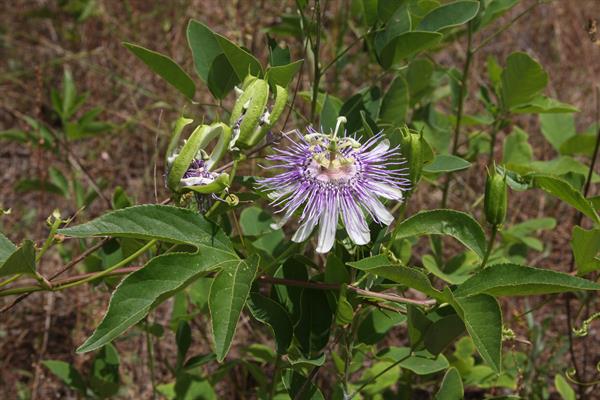
image of plant© Bruce A. Sorrie | Original Image ⭷
image of plant© Gary P. Fleming | Original Image ⭷
image of plant© J.W. Hardin | Original Image ⭷
image of plant© Scott Ward | Original Image ⭷
image of plant© J.W. Hardin | Original Image ⭷
image of plant© Joey Shaw source | Original Image ⭷
image of plant© J.W. Hardin | Original Image ⭷
image of plant© Scott Ward | Original Image ⭷
image of plant© Gary P. Fleming | Original Image ⭷
image of plant© Scott Ward | Original Image ⭷

Feedback

See something missing or incorrect about Passiflora incarnata? Let us know here:

  1. Please include your name and if possible, email in case when need to clarify what you wrote.
  2. If you opt out of including email, please be as specific as possible (e.g., which photo is incorrect?)
  3. Please do not submit questions asking to identify plants or about horticultural topics (e.g., how do I control an invasive plant in my garden?). Instead, those questions can be submitted here for the Carolinas region only.
  4. Please do not send us feedback about unkeyed species as this work is ongoing.
  5. Please allow time for flora edits to show in our next data release. We greatly appreciate your feedback but may require extra time to research complicated taxonomic issues.

Horticultural Information

NCBG trait

Intro: An herbaceous perennial vine of roadsides, fencerows, thickets and fields.

Stems: Erect, trailing or climbing by tightly coiled tendrils; smooth or with short, soft hairs.

Leaves: Leaves alternate, petiolate, palmately 3-lobed (rarely 5-lobed), 2 1/2 to 8 in. long, toothed, thick and leathery, and smooth or with short, soft hairs beneath.

Inforescence:

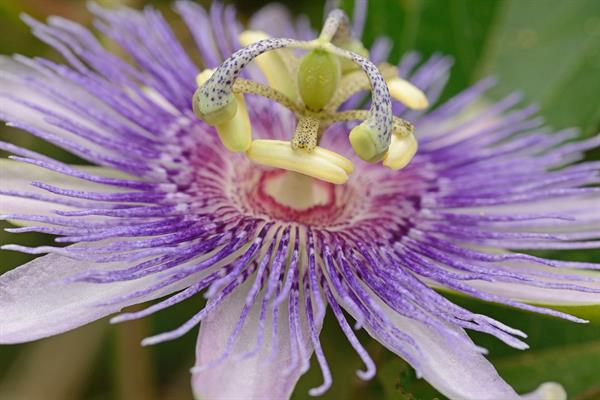
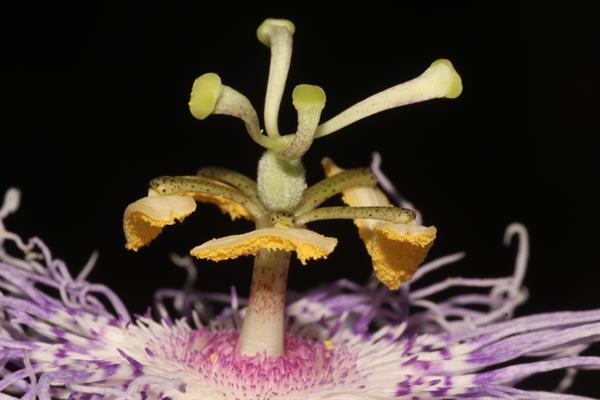
Flowers: Flowers solitary (rarely 2) on short stalks from leaf axils, about 2 1/2 in. wide, showy and with a complex structure: 5 oblong sepals with hornlike extensions, green outside, white inside; 5 petals resembling the sepals except white or purplish and lacking horns; a "crown" of purple and white thread-like segments that mostly obscures petals and sepals; and a central stalk supporting 5 stamens and a fleshy, green, 3-parted style.

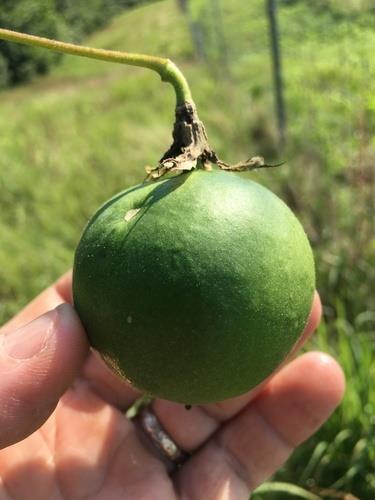
Fruits: Fruit a yellowish-green, oval berry.

Comments:

Height: to 12 ft.

plant sale text: Purple Passion-flower produces detailed flowers of lavender and white that later ripen into pale green egg-like fruits. A common name used for this species is "May-pop," referring to its (edible) fruits. The lovely blooms make this vine attractive to people and the foliage and nectar make it attractive to butterflies and their larvae (Frittilaries). It can be a vigorous spreader. The Cherokees used this plant both for food and various medicinal purposes.

bloom table text:

description: An herbaceous perennial vine of roadsides, fencerows, thickets and fields.

stems: Erect, trailing or climbing by tightly coiled tendrils; smooth or with short, soft hairs.

leaves: Leaves alternate, petiolate, palmately 3-lobed (rarely 5-lobed), 2 1/2 to 8 in. long, toothed, thick and leathery, and smooth or with short, soft hairs beneath.

inflorescence:

flowers: Flowers solitary (rarely 2) on short stalks from leaf axils, about 2 1/2 in. wide, showy and with a complex structure: 5 oblong sepals with hornlike extensions, green outside, white inside; 5 petals resembling the sepals except white or purplish and lacking horns; a "crown" of purple and white thread-like segments that mostly obscures petals and sepals; and a central stalk supporting 5 stamens and a fleshy, green, 3-parted style.

fruits: Fruit a yellowish-green, oval berry.

comments:

cultural notes:

germination code:

native range: eastern United States


0 unsaved edits on this page.