Copy permalink to share
Brassicaceae
Nasturtium

*Nasturtium officinale W.T. Aiton. Common name: Watercress. Phenology: Apr-Jul. Habitat: Streams, springs, seepages. Distribution: Native of Eurasia.

Glossary (beta!)

Origin/Endemic status: Europe

Synonymy : = Fl4, FNA7, GrPl, GW2, Il, K4, Mi, NE, NY, Pa, Tat, Tn, Va, WH3, WV, Al-Shehbaz & Price (1998); = Roripa nasturtium (L.) Rusby — S13; = Rorippa nasturtium-aquaticum (L.) Hayek — C, NcTx, Tx, Al-Shehbaz (1988a), Green (1962), Rollins (1993); = Sisymbrium nasturtium-aquaticum L. — S; < Nasturtium officinale W.T.Aiton — G, RAB, W; > Nasturtium officinale W.T.Aiton var. officinale — F; > Nasturtium officinale W.T.Aiton var. siifolium (Rchb.) W.D.J.Koch — F; Nasturtium officinale W.T.Aiton. Basionym: Nasturtium officinale W.T.Aiton 1812 "Urbasionym:" Sisymbrium nasturtium (Moench) Willd. 1800 [1801]

Links to other floras: = Nasturtium officinale - FNA7

Show in key(s)

Show parent genus | Show parent in key(s)

Wetland Indicator Status:

  • Atlantic and Gulf Coastal Plain: OBL (taxonomic split from wetland indicator species)
  • Eastern Mountains and Piedmont: OBL (taxonomic split from wetland indicator species)
  • Great Plains: OBL (taxonomic split from wetland indicator species)
  • Midwest: OBL (taxonomic split from wetland indicator species)
  • Northcentral & Northeast: OBL (taxonomic split from wetland indicator species)

Heliophily : 7

Your browser does not support SVGs

Hover over a shape, letter, icon, or arrow on the map for definition or see the legend.
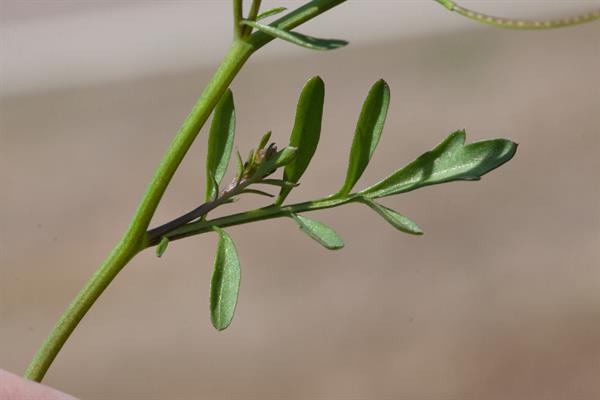
image of plant© John Gwaltney | Original Image ⭷
image of plant© Alan M. Cressler | Original Image ⭷

Feedback

See something missing or incorrect about Nasturtium officinale? Let us know here:

  1. Please include your name and if possible, email in case when need to clarify what you wrote.
  2. If you opt out of including email, please be as specific as possible (e.g., which photo is incorrect?)
  3. Please do not submit questions asking to identify plants or about horticultural topics (e.g., how do I control an invasive plant in my garden?). Instead, those questions can be submitted here for the Carolinas region only.
  4. Please do not send us feedback about unkeyed species as this work is ongoing.
  5. Please allow time for flora edits to show in our next data release. We greatly appreciate your feedback but may require extra time to research complicated taxonomic issues.

Horticultural Information

NCBG trait

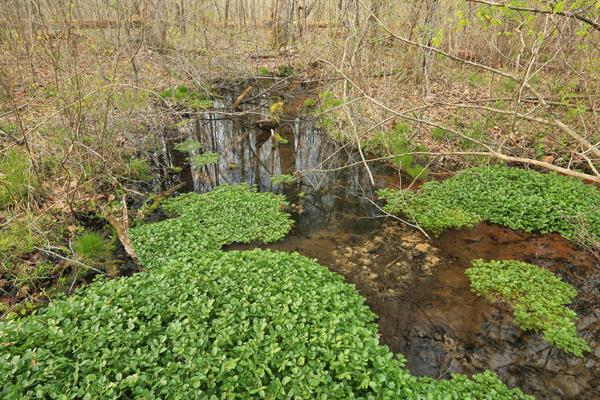
Intro: Reclining, floating, or submerged perennial found in streams, springs and seepages. Native of Eurasia, now found throughout North America.

Stems: Stems grooved, succulent, rooting at nodes.

Leaves: Leaves alternate; petiolate; 2-8 in. long; pinnately divided into 3-11 elliptic to oblong-oval leaflets, the terminal leaflet usually larger than lateral ones; somewhat fleshy.

Inforescence:

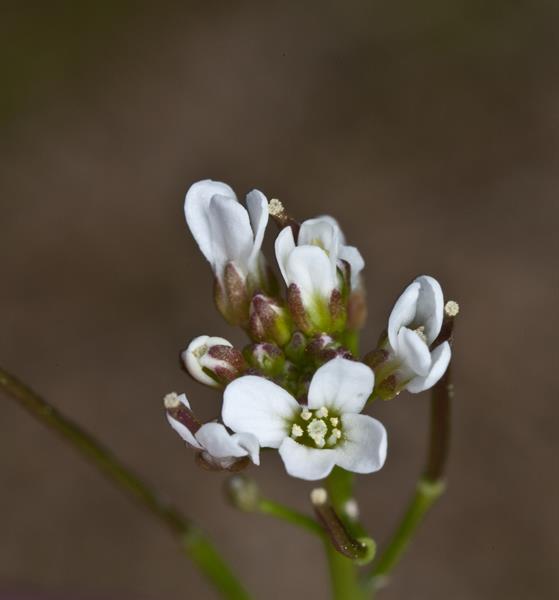
Flowers: Flowers in compact, branching, terminal racemes; white; less than 1/4 in. tall; consisting of 4 tiny, rounded petals.

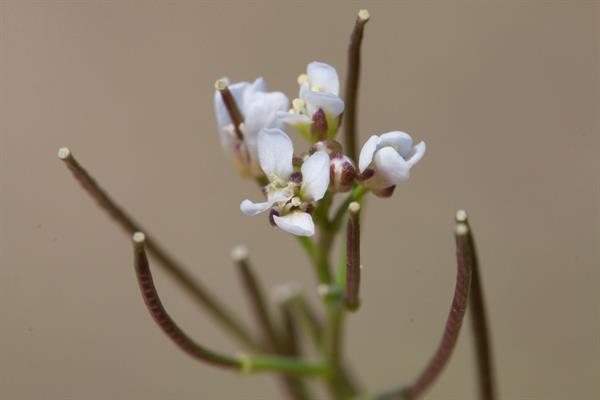
Fruits: Fruit narrow, green, slightly curved and erect pod; seeds have sharp, peppery smell.

Comments:

Height: 6-30 in.

plant sale text:

bloom table text:

description: Reclining, floating, or submerged perennial found in streams, springs and seepages. Native of Eurasia, now found throughout North America.

stems: Stems grooved, succulent, rooting at nodes.

leaves: Leaves alternate; petiolate; 2-8 in. long; pinnately divided into 3-11 elliptic to oblong-oval leaflets, the terminal leaflet usually larger than lateral ones; somewhat fleshy.

inflorescence:

flowers: Flowers in compact, branching, terminal racemes; white; less than 1/4 in. tall; consisting of 4 tiny, rounded petals.

fruits: Fruit narrow, green, slightly curved and erect pod; seeds have sharp, peppery smell.

comments:

cultural notes:

germination code:

native range:


0 unsaved edits on this page.