 Rhododendron atlanticum (Ashe) Rehder. Dwarf Azalea. Phen: Mar-May (sporadically later, particularly in response to fire); Aug-Oct. Hab: Pocosins, pine savannas, pine flatwoods, sandhill-pocosin ecotones. Dist: An Atlantic Coastal Plain endemic: s. NJ and se. PA south to sc. GA.
Origin/Endemic status: Endemic
Synonymy: = C, F, FNA8, G, GW2, K1, K3, K4, Pa, RAB, Tat, Va, Horn (2019), Kron (1993), Luteyn et al (1996), Zhou et al (2008); = Azalea atlantica Ashe – S; > Rhododendron atlanticum (Ashe) Rehder var. atlanticum – Wilson & Rehder (1921); > Rhododendron atlanticum (Ashe) Rehder var. luteo-album Rehder – Wilson & Rehder (1921)
Wetland Indicator Status:
- Atlantic and Gulf Coastal Plain: FAC
Heliophily: 6
Hover over a shape, letter, icon, or arrow on the map for definition or see the legend.
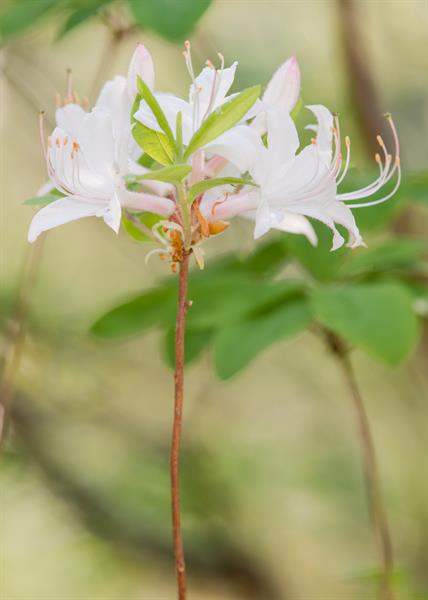 © Keith Bradley | Original Image ⭷
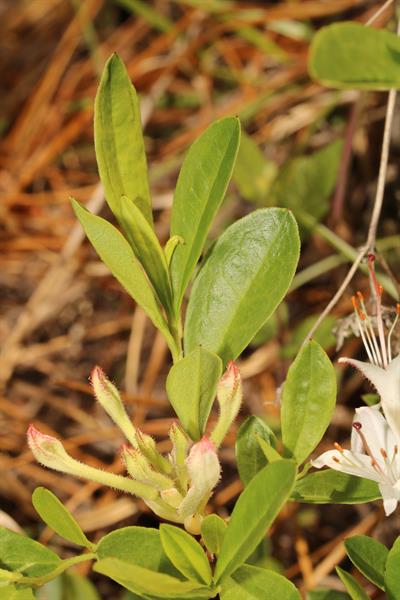 © Scott Ward | Original Image ⭷
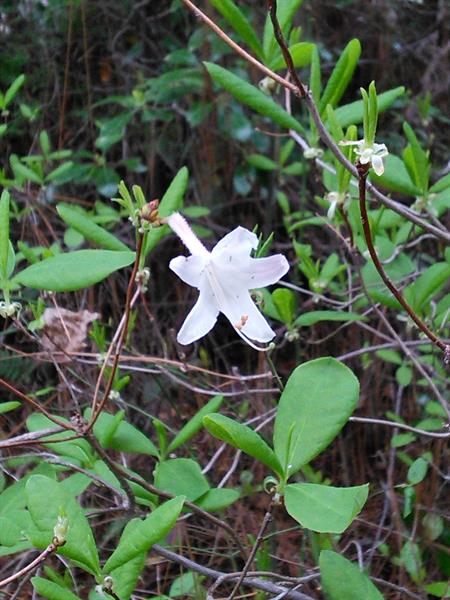 © Grant Morrow Parkins | Original Image ⭷
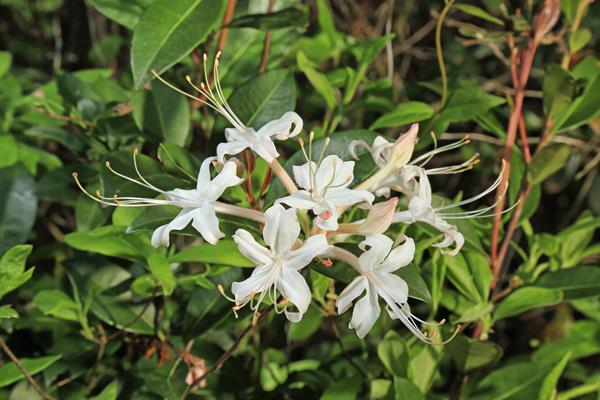 © Alan M. Cressler | Original Image ⭷
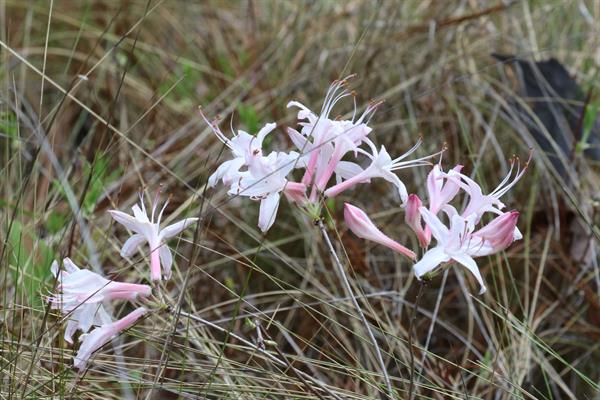 © Will Stuart | Original Image ⭷
Feedback
See something wrong or missing on about Rhododendron atlanticum? Let us know here: (Please include your name and email if at all complicated so we can clarify if needed.)
Cite as...