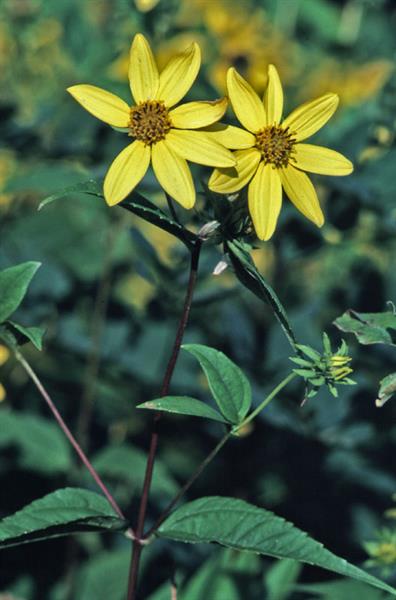
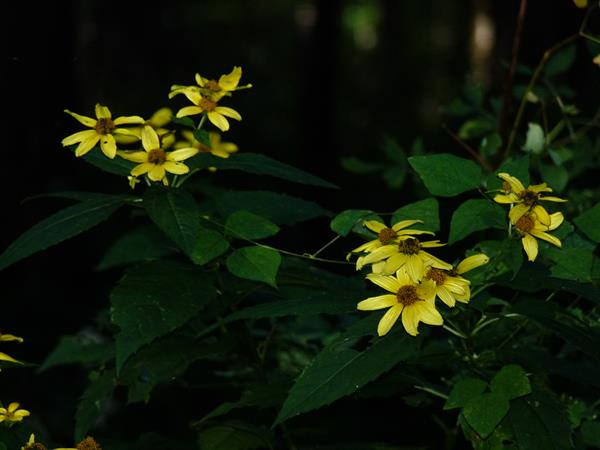
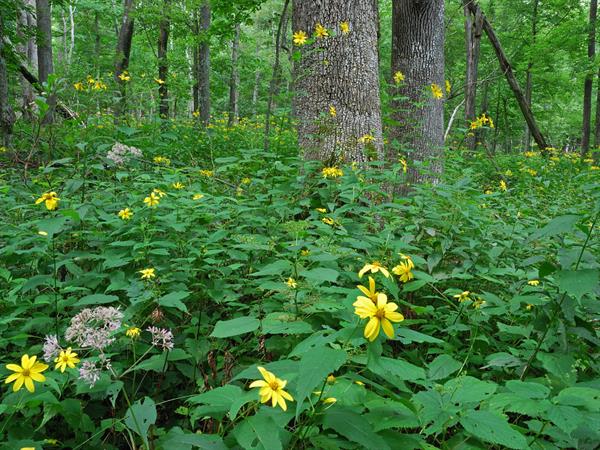
Helianthus decapetalus Linnaeus. Common name: Forest Sunflower. Phenology: Jul-Oct. Habitat: Mesic woodlands and forests, oak savannas. Distribution: ME and QC west to WI and IA, south to GA and MO.
Origin/Endemic status: Native
Synonymy ⓘ: = C, FNA21, G, Il, K4, Mi, NE, NY, Oh3, Pa, RAB, S, SE1, Tat, Tn, Va, W; > Helianthus arenicola E.Watson; > Helianthus decapetalus L. — F, WV; > Helianthus leoninus E.Watson; > Helianthus saxicola Small — S; > Helianthus trachelifolius Mill. — F, WV. Basionym: Helianthus decapetalus L. 1753
Links to other floras: = Helianthus decapetalus - FNA21
Show parent genus | Show parent in key(s)
Wetland Indicator Status:
- Atlantic and Gulf Coastal Plain: UPL
- Eastern Mountains and Piedmont: FACU
- Midwest: UPL
- Northcentral & Northeast: FACU
Heliophily ⓘ: 7
Hover over a shape, letter, icon, or arrow on the map for definition or see the legend.
© Gary P. Fleming
© Richard & Teresa Ware CC-BY-NC, permission granted to NCBG
© Scott Ward | Original Image ⭷
© Gary P. Fleming | Original Image ⭷
© Richard & Teresa Ware CC-BY-NC, permission granted to NCBG | Original Image ⭷
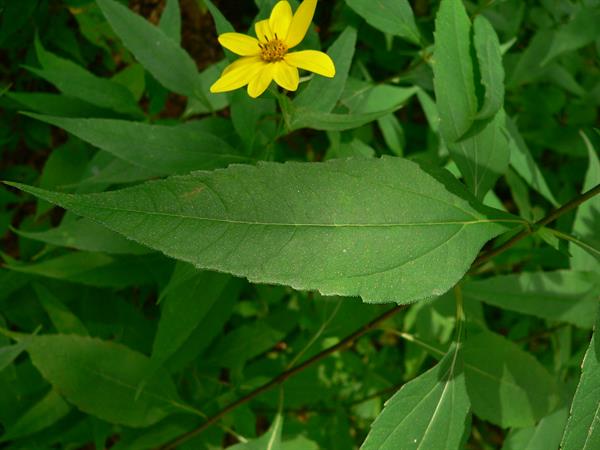
© Alan Cressler: Helianthus decapetalus, Sosebee Cove, Sosebee Cove Scenic Area, Chattahoochee National Forest, Union County, Georgia 1 by Alan Cressler source
© Scott Ward | Original Image ⭷
© Gary P. Fleming | Original Image ⭷
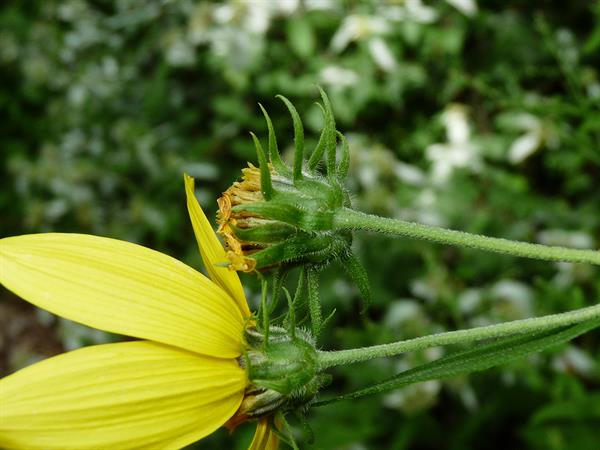
© Grant Morrow Parkins | Original Image ⭷Feedback
See something missing or incorrect about Helianthus decapetalus? Let us know here:
- Please include your name and if possible, email in case when need to clarify what you wrote.
- If you opt out of including email, please be as specific as possible (e.g., which photo is incorrect?)
- Please do not submit questions asking to identify plants or about horticultural topics (e.g., how do I control an invasive plant in my garden?). Instead, those questions can be submitted here for the Carolinas region only.
- Please do not send us feedback about unkeyed species as this work is ongoing.
- Please allow time for flora edits to show in our next data release. We greatly appreciate your feedback but may require extra time to research complicated taxonomic issues.
Horticultural Information
Intro: Erect, rhizomatous perennial of floodplain forests, moist upland woodlands and forests, and oak savannas.
Stems: Stems simple or only branched below, smooth.
Leaves: Leaves opposite (uppermost leaves sometimes alternate), on narrowly winged petioles, broadly lance-shaped or oval, 3-8 in. long, thin or membranous, sharply toothed, rough above and light green and nearly hairless beneath.
Inforescence:
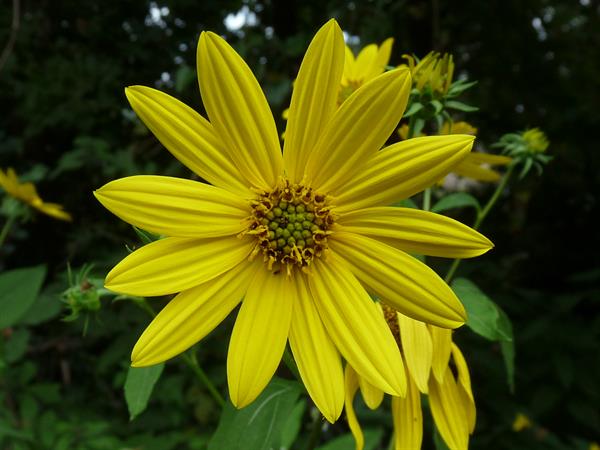
Flowers: Composite flowers (heads) solitary or in open clusters, 1 1/2-3 1/2 in. wide, consisting of 8-15 yellow ray florets encircling a center disk of yellow tubular florets. Overlapping, spreading, long and slender bracts surround the base of each head.
Fruits: Fruit a dark, flattened, oblong achene.
Comments:
Height: 2-5 ft. (occasionally to 8 ft.)
plant sale text:
bloom table text:
description: Erect, rhizomatous perennial of floodplain forests, moist upland woodlands and forests, and oak savannas.
stems: Stems simple or only branched below, smooth.
leaves: Leaves opposite (uppermost leaves sometimes alternate), on narrowly winged petioles, broadly lance-shaped or oval, 3-8 in. long, thin or membranous, sharply toothed, rough above and light green and nearly hairless beneath.
inflorescence:
flowers: Composite flowers (heads) solitary or in open clusters, 1 1/2-3 1/2 in. wide, consisting of 8-15 yellow ray florets encircling a center disk of yellow tubular florets. Overlapping, spreading, long and slender bracts surround the base of each head.
fruits: Fruit a dark, flattened, oblong achene.
comments:
cultural notes:
germination code:
native range: eastern North America
0 unsaved edits on this page.