Packera anonyma (Wood) W.A. Weber & Á. Löve. Common name: Appalachian Ragwort, Small's Ragwort. Phenology: May-early Jun. Habitat: Rock outcrops, roadsides, woodlands; hammocks, disturbed areas. Distribution: S. PA, DE, and KY, south to Panhandle FL and c. MS. First reported for LA in Caddo Parsh by Kelley (2020).
Origin/Endemic status: Native
Synonymy ⓘ: = Fl7, FNA20, K4, NY, Pa, Tn, Va, WH3, Barkley (1999), Kowal & Mahoney (2016); = Senecio anonymus Wood — C, Oh3, SE1, Barkley (1978); = Senecio smallii Britton — F, G, RAB, S, Tat, WV. Basionym: Senecio anonymus Wood 1861
Links to other floras: = Packera anonyma - FNA20
Show parent genus | Show parent in key(s)
Wetland Indicator Status:
- Atlantic and Gulf Coastal Plain: FACU
- Eastern Mountains and Piedmont: UPL
- Midwest: UPL
- Northcentral & Northeast: UPL
Heliophily ⓘ: 8
Hover over a shape, letter, icon, or arrow on the map for definition or see the legend.
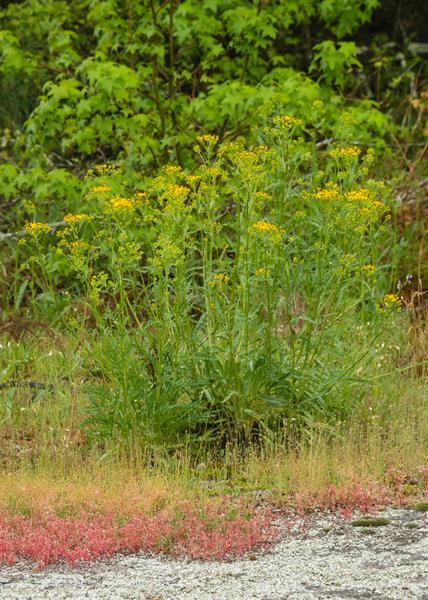
© Gary P. Fleming | Original Image ⭷
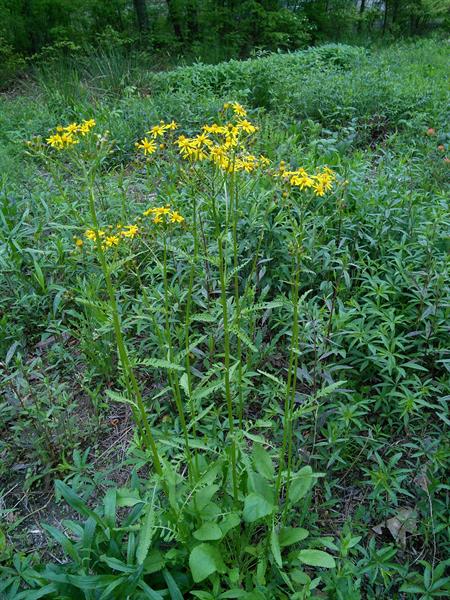
© Joey Shaw source | Original Image ⭷
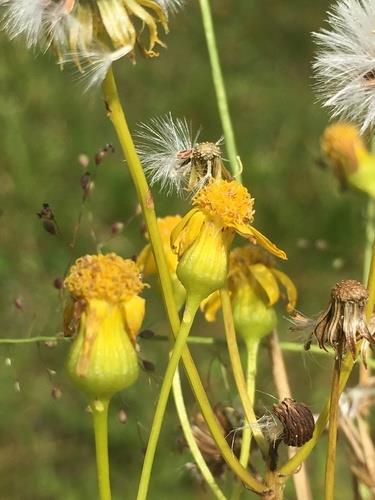
© Keith Bradley | Original Image ⭷
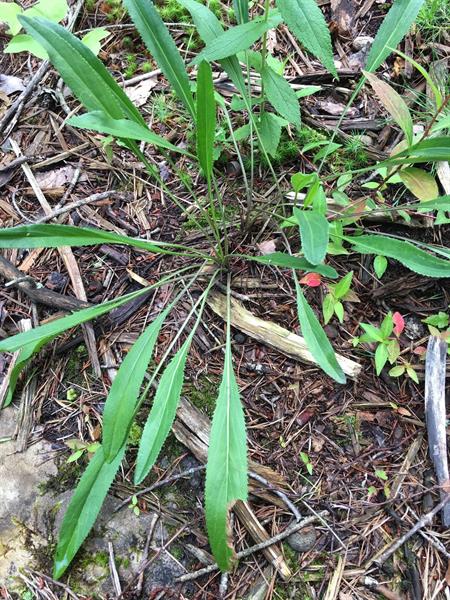
© Grant Morrow Parkins | Original Image ⭷
© Joey Shaw source | Original Image ⭷
© Gary P. Fleming | Original Image ⭷
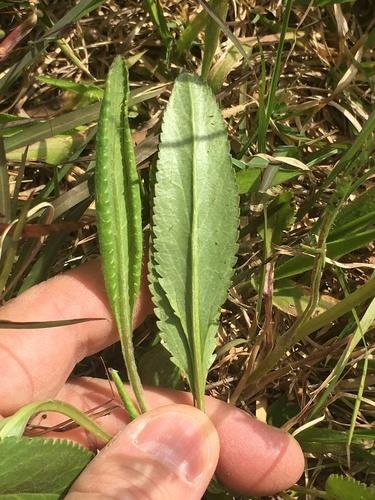
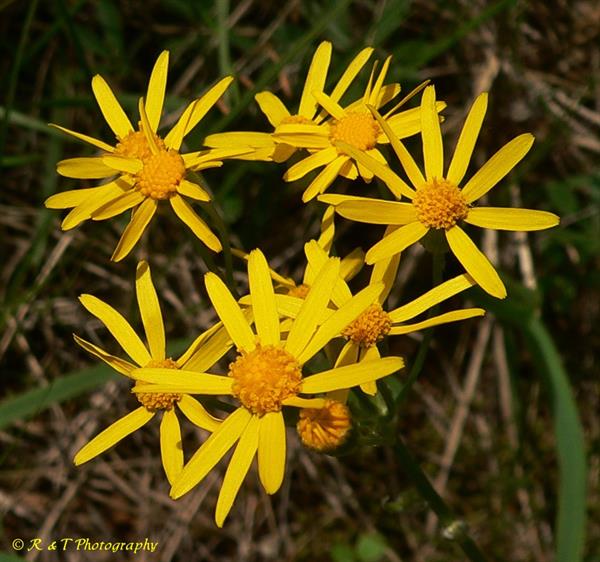
© Richard & Teresa Ware CC-BY-NC, permission granted to NCBG
© Joey Shaw source | Original Image ⭷Feedback
See something missing or incorrect about Packera anonyma? Let us know here:
- Please include your name and if possible, email in case when need to clarify what you wrote.
- If you opt out of including email, please be as specific as possible (e.g., which photo is incorrect?)
- Please do not submit questions asking to identify plants or about horticultural topics (e.g., how do I control an invasive plant in my garden?). Instead, those questions can be submitted here for the Carolinas region only.
- Please do not send us feedback about unkeyed species as this work is ongoing.
- Please allow time for flora edits to show in our next data release. We greatly appreciate your feedback but may require extra time to research complicated taxonomic issues.
Horticultural Information
Intro: Erect, rhizomatous perennial found on rock outcrops, rocky woodlands and roadsides.
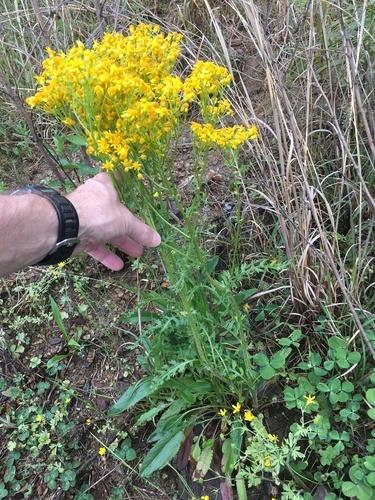
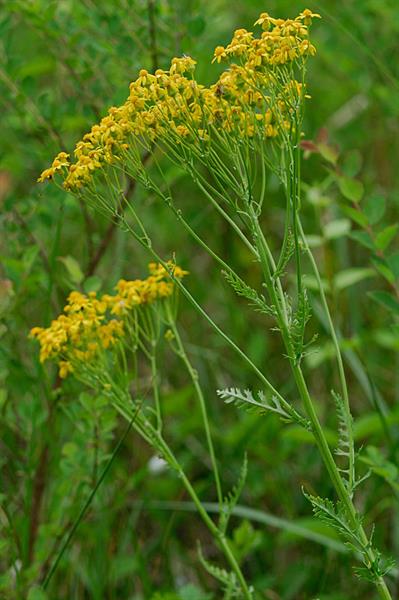
Stems: Stems branched in inflorescence, smooth but hairy at the base and sometimes in leaf axils.
Leaves: Basal and lower (alternate) leaves petiolate, elliptic to lance-shaped, to 3 1/2 in. long and finely toothed; upper stem leaves smaller, mostly sessile and deeply toothed to pinnately lobed.
Inforescence:
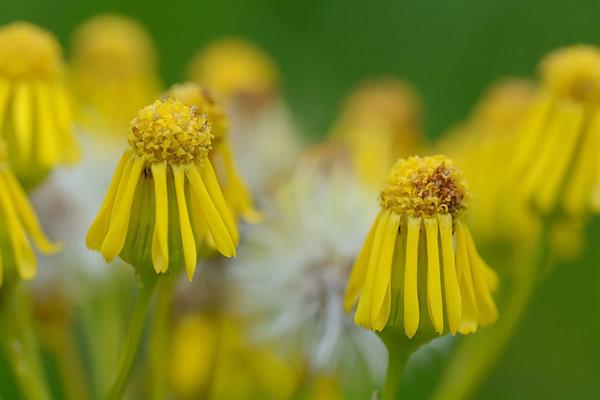
Flowers: Composite flowers (heads) in a branching, terminal cluster; heads about 3/4 in. wide, consisting of 8-13 yellow ray florets encircling a slightly domed center disk of tiny, yellow, tubular florets.
Fruits:
Comments:
Height: 1-2.5 ft.
plant sale text: Small's ragwort closely resembles its relative golden ragwort with its bright yellow cluster of flowers and persistent rosette of green leaves. However, unlike its relative, Small's ragwort thrives in dry, poor soils and is often found on sunny roadsides. Also, the leaves of Small's ragwort are deeply dissected, making it visibly distinct from the round, un-lobed leaves of golden ragwort. Although Small's ragwort does not spread vegetatively, it will readily self-sow in appropriate conditions.
bloom table text: Small's ragwort closely resembles its relative golden ragwort with its bright yellow cluster of flowers and persistent rosette of green leaves. However, unlike its relative, Small's ragwort thrives in dry, poor soils and is often found on sunny roadsides. Also, the leaves of Small's ragwort are deeply dissected, making it visibly distinct from the round, un-lobed leaves of golden ragwort. Although Small's ragwort does not spread vegetatively, it will readily self-sow in appropriate conditions.
description: Erect, rhizomatous perennial found on rock outcrops, rocky woodlands and roadsides.
stems: Stems branched in inflorescence, smooth but hairy at the base and sometimes in leaf axils.
leaves: Basal and lower (alternate) leaves petiolate, elliptic to lance-shaped, to 3 1/2 in. long and finely toothed; upper stem leaves smaller, mostly sessile and deeply toothed to pinnately lobed.
inflorescence:
flowers: Composite flowers (heads) in a branching, terminal cluster; heads about 3/4 in. wide, consisting of 8-13 yellow ray florets encircling a slightly domed center disk of tiny, yellow, tubular florets.
fruits:
comments:
cultural notes:
germination code: 2
native range: central & eastern N. America
0 unsaved edits on this page.