https://fsus.ncbg.unc.edu/main.php?pg=show-taxon-detail.php&lsid=urn:lsid:ncbg.unc.edu:taxon:{7A052621-E05E-46D5-A37E-BAFEFC58EA88}
 Ageratina Spach. Milk-poison, White Snakeroot.
A genus of about 250-290 species, American. The separation of Ageratina from Eupatorium is clearly warranted, on morphological, karyological, and molecular grounds.
Ref: Clewell & Wooten (1971); Cronquist (1980); Lamont (2018); Nesom (2006mm) In Flora of North America Editorial Committee (2006c). Show full citations.
Hover over a shape, letter, icon, or arrow on the map for definition or see the legend. Data for arrows not developed for genera and families which may have species only occurring outside the flora area.
 © Richard & Teresa Ware | Ageratina altissima CC-BY-NC, permission granted to NCBG | Original Image ⭷
 © Gary P. Fleming | Ageratina aromatica | Original Image ⭷
 © Bruce Sorrie | Ageratina roanensis | Original Image ⭷
 © Richard & Teresa Ware | Ageratina altissima CC-BY-NC, permission granted to NCBG | Original Image ⭷
 © Erik Danielson | Ageratina altissima source | Original Image ⭷
 © Alan Weakley | Ageratina roanensis source | Original Image ⭷
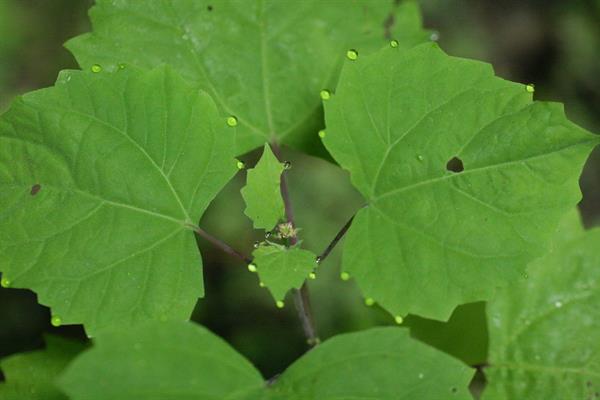 © Sunny Fleming, some rights reserved (CC BY-NC), uploaded by Sunny Fleming | Ageratina luciae-brauniae source | Original Image ⭷
 © Gary P. Fleming | Ageratina aromatica | Original Image ⭷
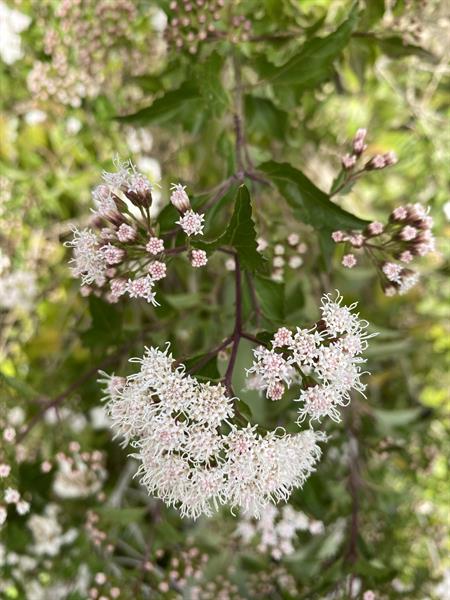 © Alan Weakley | Ageratina havanensis source | Original Image ⭷
Feedback
See something wrong or missing on about Ageratina? Let us know here: (Please include your name and email if at all complicated so we can clarify if needed.)
Cite as...