 Amphicarpaea Elliott ex Nuttall. Hog-peanut.
A genus of 4-5 species, of e. and se. Asia and North America; a species previously included in Amphicarpaea from montane Africa was removed to a monotypic genus by Ohashi & Ohashi (2018). It now appears that 3 (or more?) semi-cryptic taxa should be recognized in what has traditionally been considered a single species of Amphicarpaea (Kartzinel et al. 2016; Callahan 1997; Parker 1996); Delgado-Salinas & Parker (2023) state that it is best to treat them as one species until a better systematic solution is achieved", as the "three taxa co-occur in woodlands or forest edges with high self-pollination rates but without clear-cut phenotypic differences to separate them". The genus name has been corrected to Amphicarpaea from the frequently used Amphicarpa.
ID notes:Producing inflorescences of two types, one with chasmogamous flowers and aerial legumes, the other with cleistogamous flowers and subterranean legumes.
Ref: Callahan (1997); Delgado-Salinas & Parker (2023) In Flora of North America Editorial Committee (2023a); Isely (1998); Kartzinel et al. (2016); Kartzinel et al. (2016); Ohashi & Ohashi (2018); Ohashi & Ohashi (2018); Parker (1996); Parker, Doyle, & Doyle (2004). Show full citations.
Hover over a shape, letter, icon, or arrow on the map for definition or see the legend. Data for arrows not developed for genera and families which may have species only occurring outside the flora area.
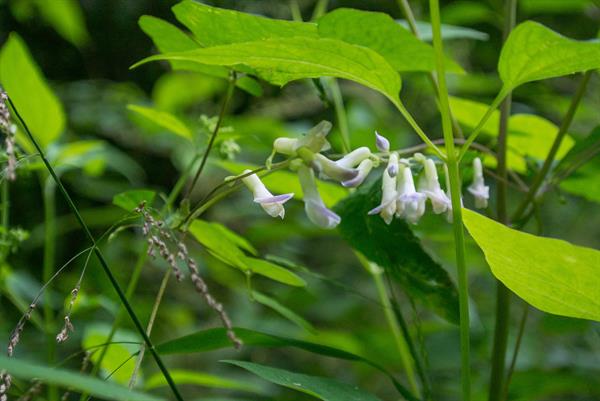 © Erik Danielson | Amphicarpaea bracteata var. bracteata source | Original Image ⭷
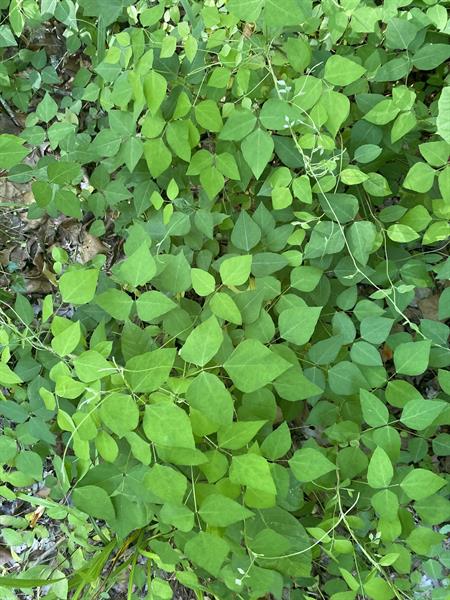 © Alan Weakley | Amphicarpaea bracteata var. comosa source | Original Image ⭷
Feedback
See something wrong or missing on about Amphicarpaea? Let us know here: (Please include your name and email if at all complicated so we can clarify if needed.)
Cite as...