 Ardisia Swartz. Ardisia.
A genus of 400-500, trees and shrubs, of tropical America, Asia, and Australia. Recent studies (Julius et al. 2021; Yang & Hu 2022; Larson et al. 2023) show that Ardisia is polyphyletic and that Asian and Old World clades are not congeneric. As the type species of Ardisia is American, the Asian species in our flora will be moved to other genera, probably Bladhia. The four Asian species introduced in our region fall into three subgenera of Ardisia: subgenus Bladhia (Ardisia japonica), subgenus Crispardisia (Ardisia crenata), and subgenus Tinus (Ardisia elliptica and Ardisia solanacea). These subgenera may be recognized at generic rank or as subgenera under Bladhia.
Ref: Julius et al. (2021); Larson et al. (2023); Pipoly & Ricketson (2009a) In Flora of North America Editorial Committee (2009); Ståhl & Anderberg (2004) In Kubitzki et al. (2004); Yang & Hu (2022). Show full citations.
Hover over a shape, letter, icon, or arrow on the map for definition or see the legend. Data for arrows not developed for genera and families which may have species only occurring outside the flora area.
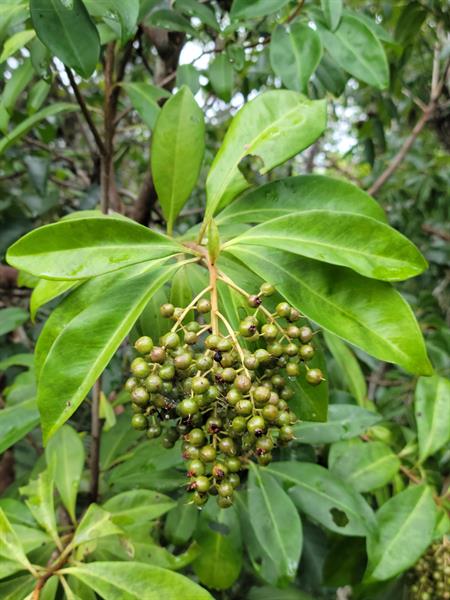 © Jay Horn | Ardisia escallonioides source | Original Image ⭷
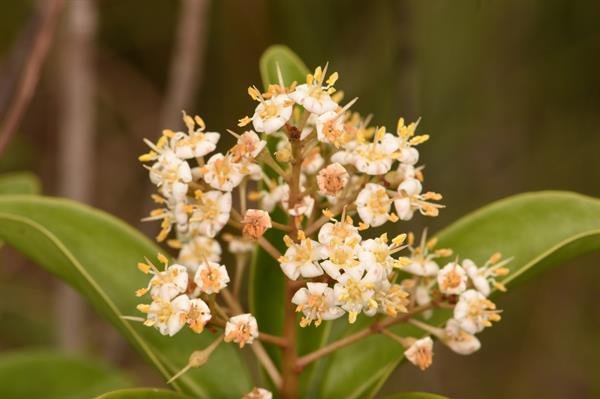 © Aidan Campos | Ardisia escallonioides source | Original Image ⭷
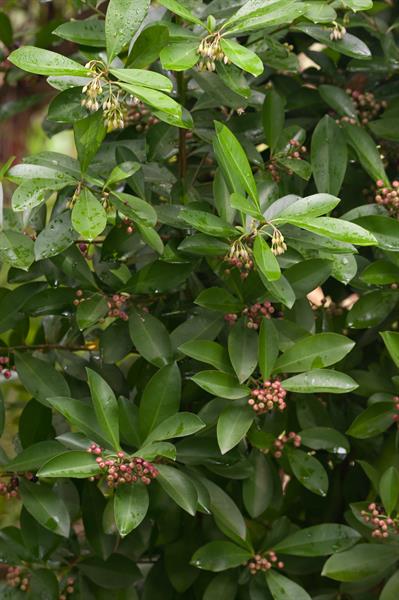 © Keith Bradley | Ardisia elliptica | Original Image ⭷
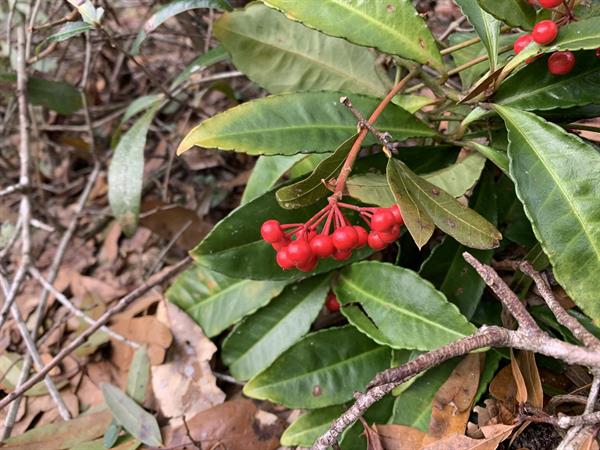 © Brandon Corder | Ardisia crenata source | Original Image ⭷
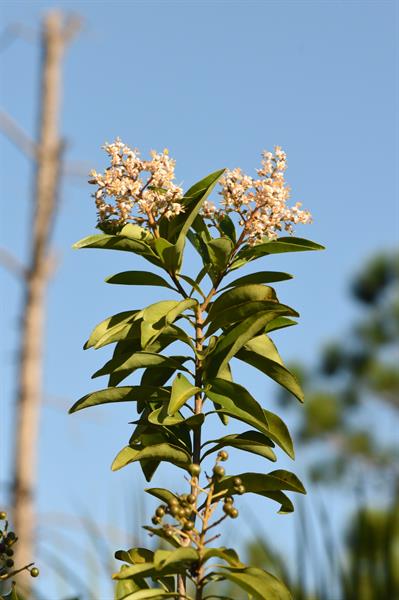 © Aidan Campos | Ardisia escallonioides source | Original Image ⭷
Feedback
See something wrong or missing on about Ardisia? Let us know here: (Please include your name and email if at all complicated so we can clarify if needed.)
Cite as...