 Aristida Linnaeus. Subfamily: Aristidoideae. Tribe: Aristideae. clade: "PACMAD". Three-awn Grass.
A genus of about 250-300 species, widespread in the tropics, subtropics, and warm temperate zones. Cerros-Tlatilpa, Columbus, & Barker (2011) discuss the phylogeny of the genus.
ID notes:The awns must be dry and relatively mature to assume their characteristic positions (immature awns and moist mature awns are erect and parallel). It is sometimes useful to dry a collection unpressed. Beware, however, that drying followed by dispersal can take place very quickly under the right conditions (such as the dashboard of a hot car!).
Ref: Allred (1984); Allred (1985); Allred (1986); Allred (2003d) In Flora of North America Editorial Committee (2003a); Cerros-Tlatilpa, Columbus, & Barker (2011); Henrard (1929); Kesler, Anderson, & Hermann (2003); Peet (1993); Ward (2001); Wilder & McCollum (2023). Show full citations.
Hover over a shape, letter, icon, or arrow on the map for definition or see the legend. Data for arrows not developed for genera and families which may have species only occurring outside the flora area.
 © Keith Bradley | Aristida condensata | Original Image ⭷
 © Richard & Teresa Ware | Aristida tuberculosa CC-BY-NC, permission granted to NCBG | Original Image ⭷
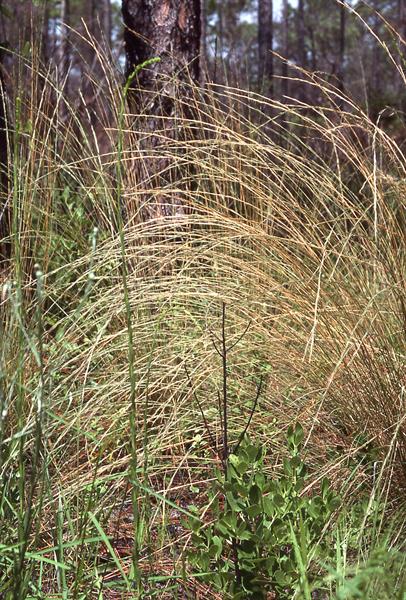 © Bruce Sorrie | Aristida beyrichiana | Original Image ⭷
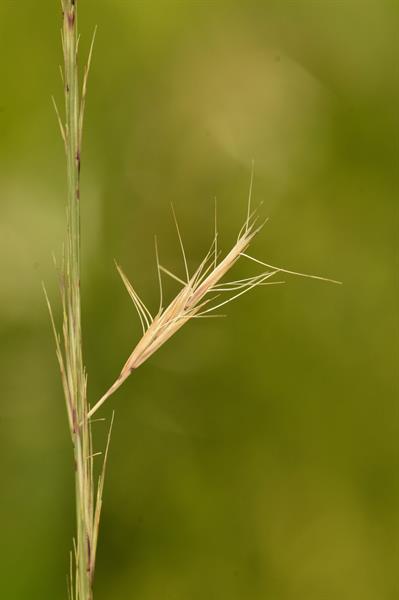 © Aidan Campos | Aristida beyrichiana source | Original Image ⭷
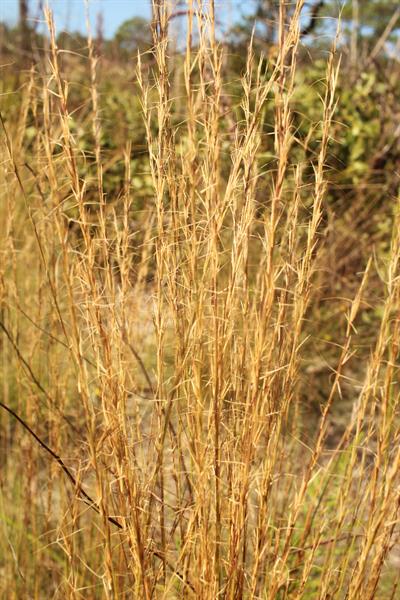 © Scott Ward | Aristida beyrichiana | Original Image ⭷
Feedback
See something wrong or missing on about Aristida? Let us know here: (Please include your name and email if at all complicated so we can clarify if needed.)
Cite as...