 Corylus Linnaeus. Subfamily: Coryloideae. Hazelnut, Filbert.
A genus of about 15-18 species, shrubs and trees, of temperate regions of the Northern Hemisphere. Eurasian species of this genus, Corylus avellana Linnaeus and C. maxima P. Miller, are the sources of commercial filberts or hazelnuts. They are sometimes cultivated in North America, especially in the Pacific Northwest. Our wild species are also excellent eating, but wild animals, especially squirrels, usually harvest them before they are ripe. Subgeneric classification follows Whitcher & Wen (2001).
Ref: Forest & Bruneau (2000); Furlow (1997) In Flora of North America Editorial Committee (1997); Govaerts & Frodin (1998); Kubitzki, Rohwer, & Bittrich (1993); Whitcher & Wen (2001); Wright et al. (2023). Show full citations.
Hover over a shape, letter, icon, or arrow on the map for definition or see the legend. Data for arrows not developed for genera and families which may have species only occurring outside the flora area.
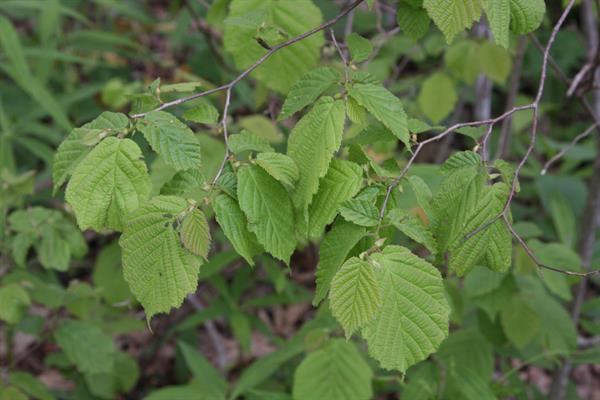 © Bruce A. Sorrie | Corylus americana | Original Image ⭷
 © Emily Oglesby | Corylus americana | Original Image ⭷
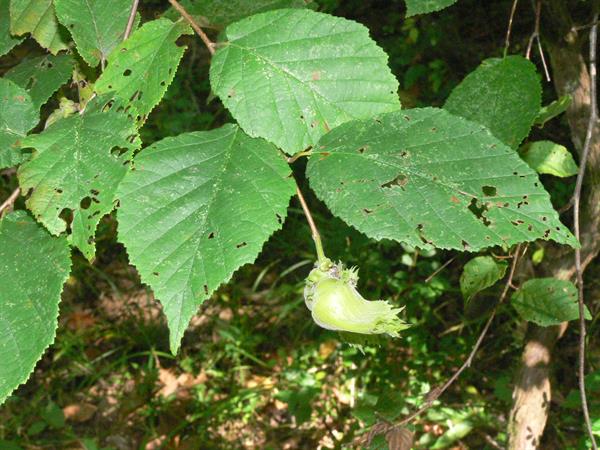 © Bruce A. Sorrie | Corylus americana | Original Image ⭷
 © Keith Bradley | Corylus americana | Original Image ⭷
 © Erik Danielson | Corylus cornuta var. cornuta source | Original Image ⭷
 © Erik Danielson | Corylus cornuta var. cornuta source | Original Image ⭷
 © Richard & Teresa Ware | Corylus cornuta var. cornuta CC-BY-NC, permission granted to NCBG | Original Image ⭷
 © Erik Danielson | Corylus cornuta var. cornuta source | Original Image ⭷
Feedback
See something wrong or missing on about Corylus? Let us know here: (Please include your name and email if at all complicated so we can clarify if needed.)
Cite as...