 Harperella Rose. Harperella.
A monotypic genus, an annual (or perennial) herb, of temperate e. North America (Plunkett et al. 2018a). Harperella should be (re-)separated from Ptilimnium. (Feist & Downie 2008; Feist et al. 2012), as it is sister to a clade comprised of Tiedemannia (formerly the quill-leaved taxa of Oxypolis) and Ptilimnium sensu stricto (with compound leaves). The genus is sometimes considered to contain 3 species, but the characters separating the different populations are not consistent; see additional discussion under H. nodosa.
Ref: Easterly (1957); Feist & Downie (2008); Feist et al. (2012); Feist et al. (2012); Kral (1981a); Kress, Maddox, & Roesel (1994); Maddox & Bartgis (1990); Mathias & Constance (1945); Plunkett et al. (2018a) In Kadereit & Bittrich (2018); Rose (1911). Show full citations.
Hover over a shape, letter, icon, or arrow on the map for definition or see the legend. Data for arrows not developed for genera and families which may have species only occurring outside the flora area.
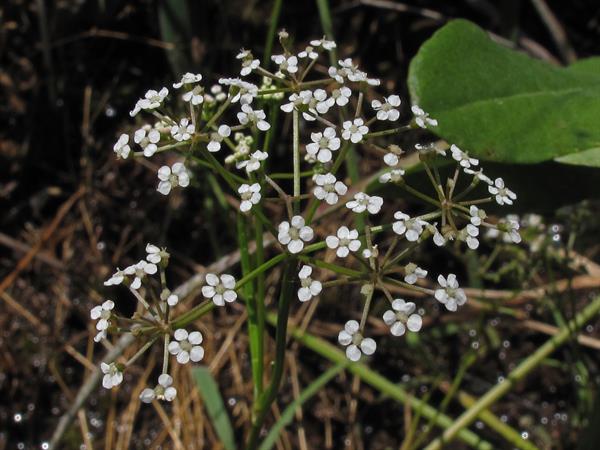 © Alan M. Cressler | Harperella nodosa | Original Image ⭷
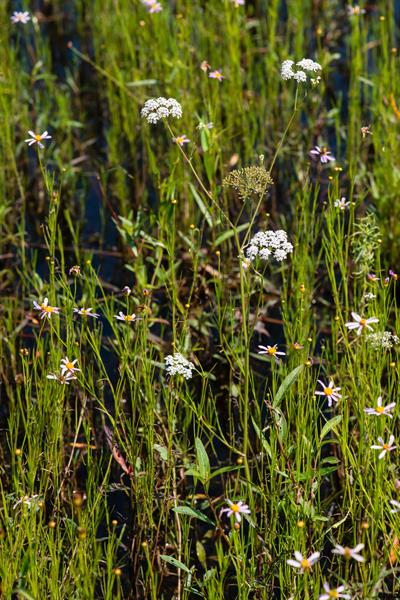 © Keith Bradley | Original Image ⭷
Feedback
See something wrong or missing on about Harperella? Let us know here: (Please include your name and email if at all complicated so we can clarify if needed.)
Cite as...