 Isotria Rafinesque. Whorled Pogonia, Five-leaves, Fiveleaf Orchid.
A genus of 2 species, of e. North America. Cameron & Chase (1999) indicate that Isotria should perhaps be included in a more broadly circumscribed Pogonia (as was often done prior to 1922); Chase et al. (2015) retain it as a separate genus.
ID notes:Sterile Isotria is sometimes confused with Medeola. Medeola has a wiry stem, with floccose hairiness, at least toward the base. Isotria has a fleshier stem, lacking hairs.
Ref: Cameron & Chase (1999); Chase et al. (2015); Correll (1950); Mehrhoff & Homoya (2002) In Flora of North America Editorial Committee (2002a). Show full citations.
Hover over a shape, letter, icon, or arrow on the map for definition or see the legend. Data for arrows not developed for genera and families which may have species only occurring outside the flora area.
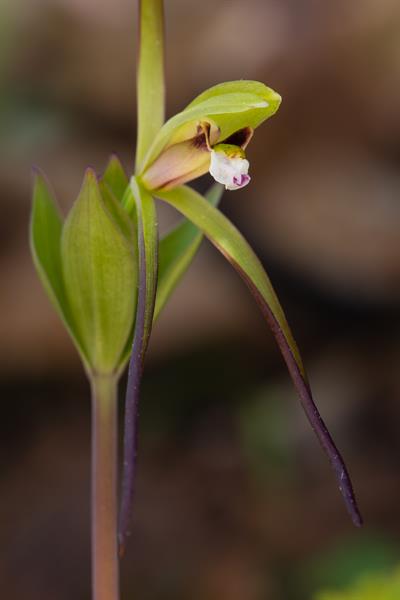 © Keith Bradley | Isotria verticillata | Original Image ⭷
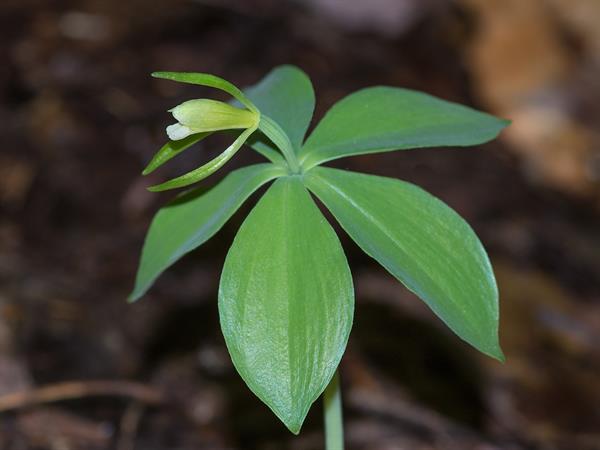 © Jim Fowler | Isotria medeoloides | Original Image ⭷
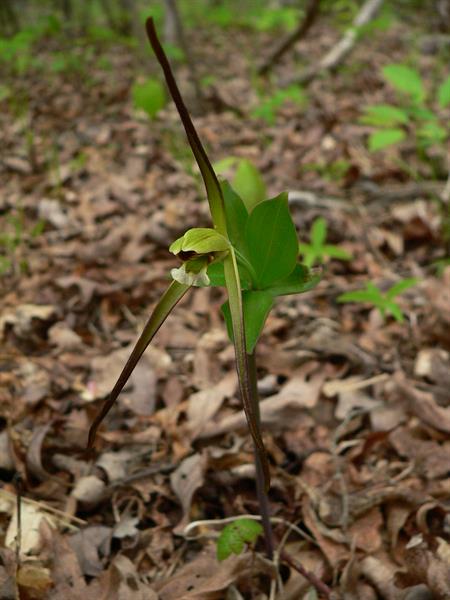 © Richard & Teresa Ware | Isotria verticillata CC-BY-NC, permission granted to NCBG | Original Image ⭷
Feedback
See something wrong or missing on about Isotria? Let us know here: (Please include your name and email if at all complicated so we can clarify if needed.)
Cite as...