 Mimosa Linnaeus. Subfamily: Caesalpinoideae. clade: Mimosoid clade. Mimosa.
A genus of about 530 species, herbs, shrubs, trees, and vines, of tropical, subtropical, and warm temperate areas, especially America. Barneby (1991) and Beard (1963) argued that there are no characters which serve to separate Schrankia from Mimosa.
ID notes:Unmistakable in our flora for its bipinnate leaves, with tiny (2-4 mm long) leaflets, responding to touch by closing.
Ref: Barneby (1991); Beard (1963); Grether (2023) In Flora of North America Editorial Committee (2023a); Grether & Simon (2018); Isely (1973); Isely (1973); Isely (1998); Weakley & Flores-Cruz (2017) In Weakley et al. (2017). Show full citations.
Hover over a shape, letter, icon, or arrow on the map for definition or see the legend. Data for arrows not developed for genera and families which may have species only occurring outside the flora area.
 © Grant Morrow Parkins | Mimosa microphylla | Original Image ⭷
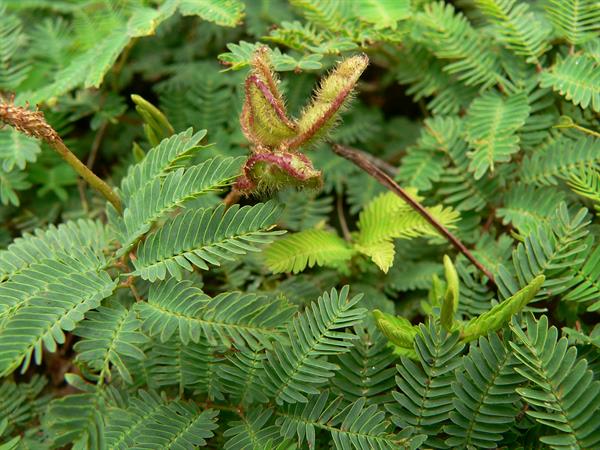 © Richard & Teresa Ware | Mimosa strigillosa CC-BY-NC, permission granted to NCBG | Original Image ⭷
 © Scott Ward | Mimosa microphylla | Original Image ⭷
 © Keith Bradley | Mimosa nuttallii | Original Image ⭷
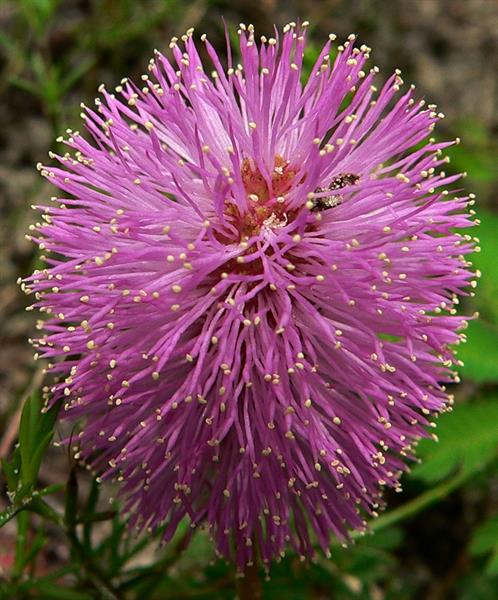 © Richard & Teresa Ware | Mimosa strigillosa CC-BY-NC, permission granted to NCBG | Original Image ⭷
 © Sonnia Hill | Mimosa hystricina | Original Image ⭷
Feedback
See something wrong or missing on about Mimosa? Let us know here: (Please include your name and email if at all complicated so we can clarify if needed.)
Cite as...