 Parthenium Linnaeus. Wild Quinine.
A genus of about 16 species, herbs and shrubs, of North America and the West Indies. The genus should be divided, based on multiple lines of evidence.
ID notes:Parthenium has five ray flowers per head, small scooplike white flowers set at the five radial points of a pentagon superimposed on the head; we key Parthenium as having ray flowers, but also key it as a "failsafe" as a composite lacking ray flowers, as the ray flowers are small and inconspicuous and likely to be overlooked as rays. These five ray flowers are the only flowers in each head that produce cypselas (the disc flowers are functionally staminate). Each cypsela, however, is shed as a unit consisting of the subtending phyllary, the two contiguous disc flowers, and the associated paleae of the two disc flowers.
Ref: Cronquist (1980); Mears (1975); Rollins (1950); Strother (2006ff) In Flora of North America Editorial Committee (2006c). Show full citations.
Hover over a shape, letter, icon, or arrow on the map for definition or see the legend. Data for arrows not developed for genera and families which may have species only occurring outside the flora area.
 © Gary P. Fleming | Parthenium auriculatum | Original Image ⭷
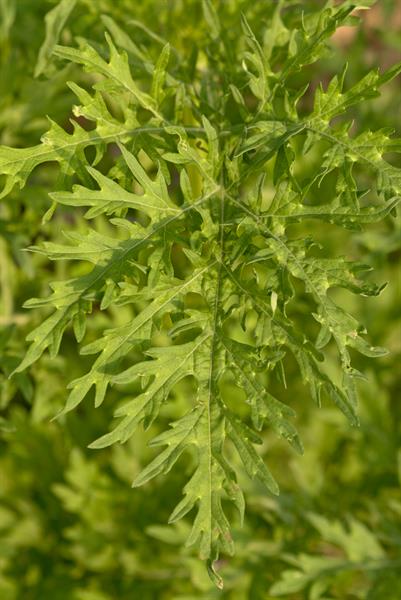 © Keith Bradley | Parthenium hysterophorus | Original Image ⭷
 © Gary P. Fleming | Parthenium auriculatum | Original Image ⭷
 © Scott Ward | Parthenium integrifolium var. integrifolium | Original Image ⭷
 © Sonnia Hill | Parthenium hispidum | Original Image ⭷
Feedback
See something wrong or missing on about Parthenium? Let us know here: (Please include your name and email if at all complicated so we can clarify if needed.)
Cite as...