 Rosa Linnaeus. Subfamily: Rosoideae. Tribe: Roseae. Rose.
A genus of more than 100 species, shrubs or woody vines; mainly of north temperate regions. Many cultivars cannot be readily identified to species.
Ref: Joly & Bruneau (2007); Kalkman In Kubitzki et al. (2004); Lewis (2008); Lewis (2016); Lewis, Ertter, & Bruneau (2014) In Flora of North America Editorial Committee (2014); Robertson (1974). Show full citations.
Hover over a shape, letter, icon, or arrow on the map for definition or see the legend. Data for arrows not developed for genera and families which may have species only occurring outside the flora area.
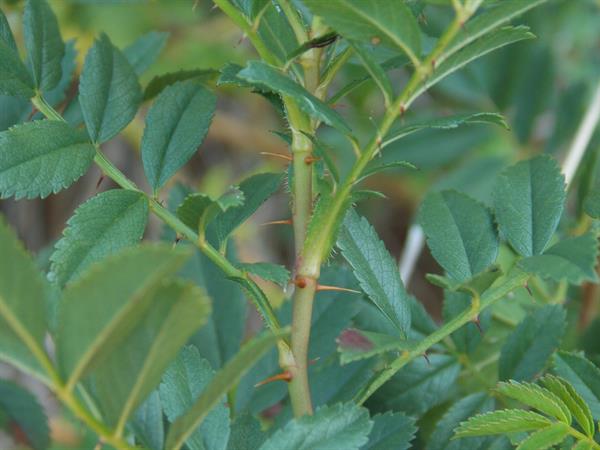 © Aidan Campos | Rosa foliolosa source | Original Image ⭷
 © Bruce A. Sorrie | Rosa rugosa | Original Image ⭷
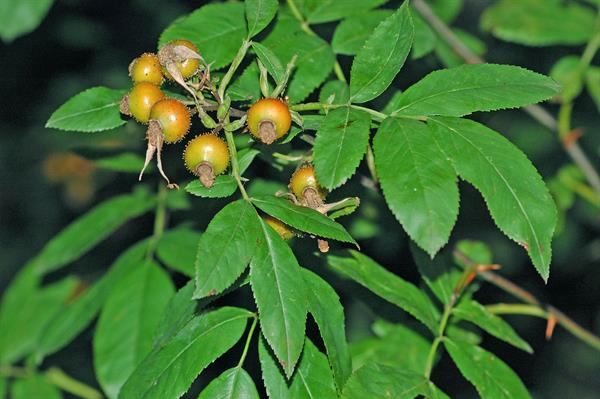 © Gary P. Fleming | Rosa palustris | Original Image ⭷
 © Jacob Dakar | Rosa palustris | Original Image ⭷
 © Aidan Campos | Rosa bracteata source | Original Image ⭷
 © Gary P. Fleming | Rosa multiflora | Original Image ⭷
 © Alan Cressler: Rosa setigera, Cedar Glade, Vesta Cedar Glade State Natural Area, Wilson County, Tennessee 1 by Alan Cressler | Rosa setigera source | Original Image ⭷
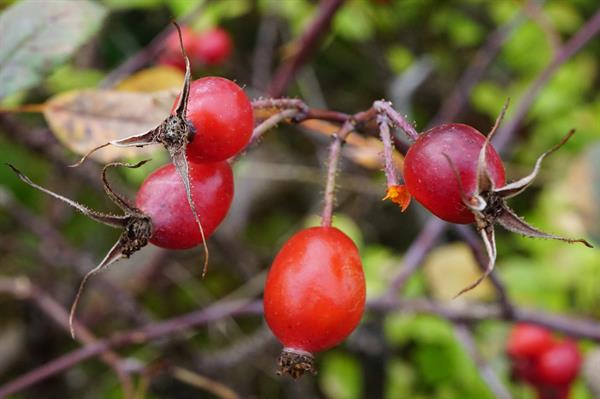 © Patrick Hacker, some rights reserved (CC BY), uploaded by Patrick Hacker | Rosa glauca source | Original Image ⭷ Warning: was NOT research grade.
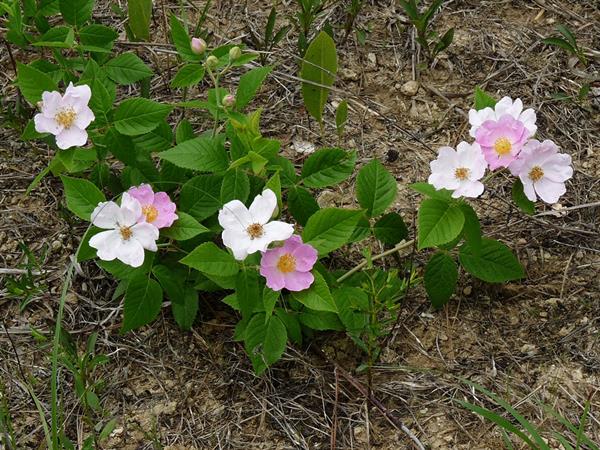 © Richard & Teresa Ware | Rosa setigera CC-BY-NC, permission granted to NCBG | Original Image ⭷
 © Erik Danielson | Rosa rugosa source | Original Image ⭷
 © Will Stuart | Rosa palustris | Original Image ⭷
Feedback
See something wrong or missing on about Rosa? Let us know here: (Please include your name and email if at all complicated so we can clarify if needed.)
Cite as...