 Sericocarpus Nees. White-topped Aster.
A genus of 5 species, herbs, of North America. This group of species, traditionally treated as Sericocarpus, was transferred to Aster by Cronquist, a treatment followed by most (but not all) recent floristic works. It now appears, based on morphological and molecular studies, that the traditional treatment as a separate genus is far superior. Nesom (1993a) argued that a variety of characters indicate that Sericocarpus is more closely allied to Solidago, Euthamia, Bigelowia, Chrysoma, and Gutierrezia than it is to Aster. Noyes & Rieseberg (1999) provided strong support for this contention, based on molecular evidence. See Nesom (1993a), Jones (1980), Semple & Brouillet (1980), and Noyes & Rieseberg (1999) for further discussion about the affinities of this group.
Ref: Cronquist (1980); Leonard, Cook, & Semple (2005); Nesom (1993a); Nesom (2021c); Noyes & Rieseberg (1999); Semple & Leonard (2006) In Flora of North America Editorial Committee (2006b). Show full citations.
Hover over a shape, letter, icon, or arrow on the map for definition or see the legend. Data for arrows not developed for genera and families which may have species only occurring outside the flora area.
 © Keith Bradley | Sericocarpus asteroides | Original Image ⭷
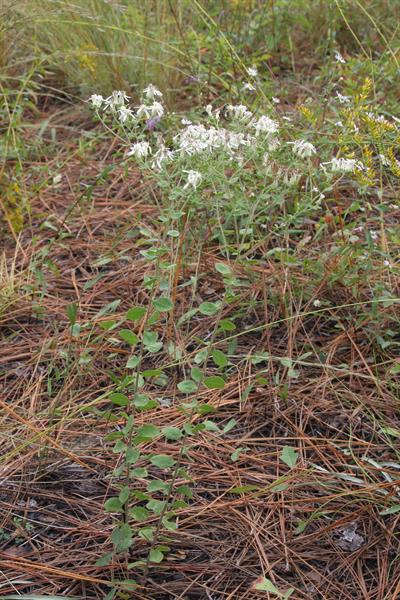 © Bruce A. Sorrie | Sericocarpus tortifolius | Original Image ⭷
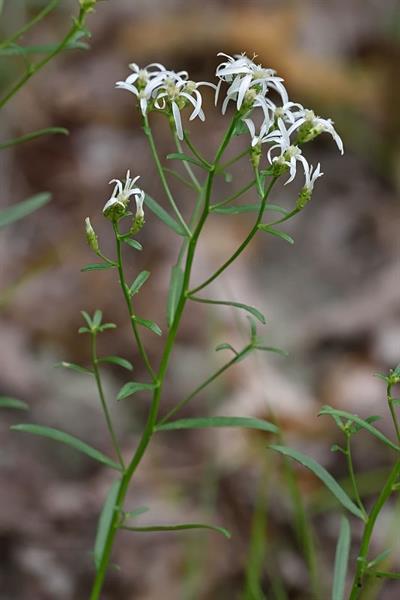 © Gary P. Fleming | Sericocarpus linifolius | Original Image ⭷
 © Gary P. Fleming | Sericocarpus asteroides | Original Image ⭷
Feedback
See something wrong or missing on about Sericocarpus? Let us know here: (Please include your name and email if at all complicated so we can clarify if needed.)
Cite as...