 Taxus Linnaeus. Yew.
The genus consists of about 8 (or more) very closely related species, trees and shrubs, of temperate regions of the Northern Hemisphere. The species have been termed "discouragingly similar" by Hils in FNA (1993b). In e. North America, T. canadensis occurs in ne. North America, and T. floridana Chapman is endemic to Panhandle FL. Taxus brevifolia Nuttall, Pacific Yew, of BC and AB south to MT, ID, OR, and CA, has recently been widely publicized as the source of an anti-cancer drug, present in all species of the genus. Taxus baccata Linnaeus is native to Europe, and 3-4 additional species occur in Japan and e. mainland Asia (Price 1990).
Ref: Farjon (1998); Hils (1993) In Flora of North America Editorial Committee (1993b); Möller et al. (2020); Page In Kramer & Green (1990); Spjut (2007a); Spjut (2007b). Show full citations.
Hover over a shape, letter, icon, or arrow on the map for definition or see the legend. Data for arrows not developed for genera and families which may have species only occurring outside the flora area.
 © Alan Cressler: Taxus floridana, Garden of Eden Trail, The Nature Conservancy, Apalachicola Bluffs and Ravines Preserve, Liberty County, Florida 2 by Alan Cressler | Taxus floridana source | Original Image ⭷
 © Erik Danielson source | Original Image ⭷
 © Alan Cressler: Taxus floridana, originally from Torreya State Park, Florida, Atlanta Botanical Garden, Fulton County, Georgia 2 by Alan Cressler | Taxus floridana source | Original Image ⭷
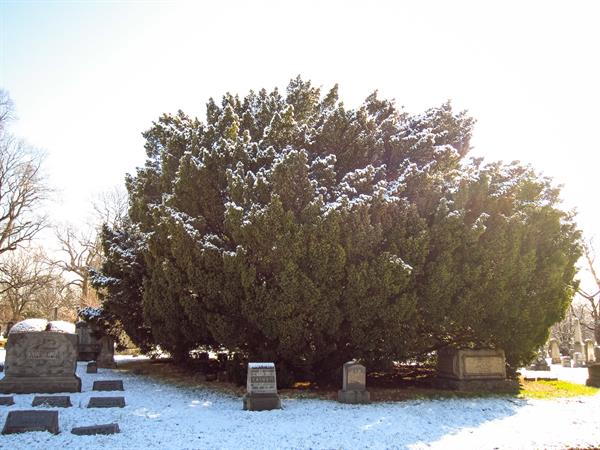 © Erik Danielson | Taxus cuspidata source | Original Image ⭷
Feedback
See something wrong or missing on about Taxus? Let us know here: (Please include your name and email if at all complicated so we can clarify if needed.)
Cite as...