 Thalictrum Linnaeus. Subfamily: Thalictroideae. Meadow-rue.
A genus of about 330 species, perennial herbs, of Eurasia, North America, South America, and Africa. Ro & McPheron (1997) corroborated via molecular phylogeny that Anemonella should be included in Thalictrum; in fact, T. thalictroides appears to form a "basal" subclade in Thalictrum with T. clavatum (and presumably T. mirabile).
ID notes:Thalictrum thalictroides is superficially similar to Enemion biternatum, but can be distinguished by the following characters: fruit an achene (vs. fruit a follicle), petaloid sepals 5-10 (vs. 5).
Ref: Carr (2016); Park (1992); Park & Festerling (1997) In Flora of North America Editorial Committee (1997); Ro & McPheron (1997); Tamura In Kubitzki, Rohwer, & Bittrich (1993). Show full citations.
Hover over a shape, letter, icon, or arrow on the map for definition or see the legend. Data for arrows not developed for genera and families which may have species only occurring outside the flora area.
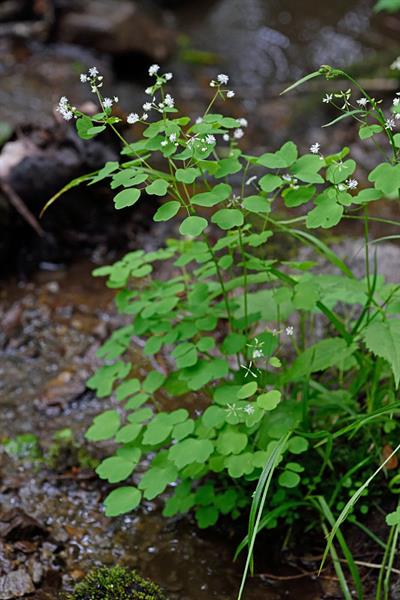 © Gary P. Fleming | Thalictrum clavatum | Original Image ⭷
 © Gary P. Fleming | Thalictrum coriaceum | Original Image ⭷
 © Gary P. Fleming | Thalictrum thalictroides | Original Image ⭷
 © Gary P. Fleming | Thalictrum pubescens | Original Image ⭷
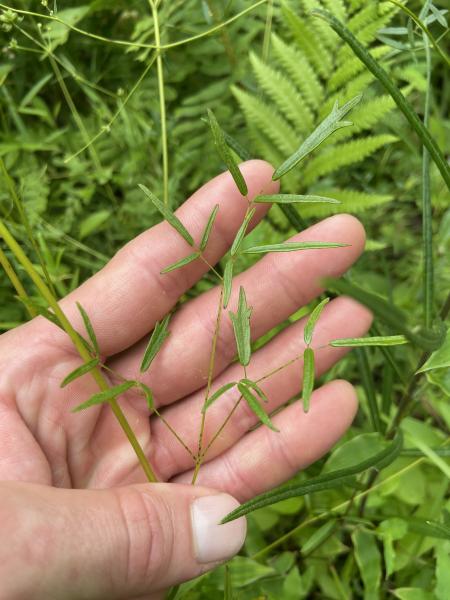 © Scott Ward | Thalictrum cooleyi | Original Image ⭷
Feedback
See something wrong or missing on about Thalictrum? Let us know here: (Please include your name and email if at all complicated so we can clarify if needed.)
Cite as...