 Trilisa Cassini. Tribe: Eupatorieae. Subtribe: Liatrinae. Trilisa.
A genus of 3 species, perennial herbs, endemic to the Southeastern Coastal Plain of North America. The genus name is an anagram of Liatris, as is Litrisa. Schilling (2011b) showed that Trilisa and Litrisa should be separated from Carphephorus, unless an alternate solution is pursued of either additional splitting, or lumping Liatris, Carphephorus, Litrisa, and Trilisa.
ID notes:Trilisa can be distinguished from Carphephorus by its smaller heads (involucres 3.5-6 mm high vs. 6-15 mm high), fewer phyllaries per head (6-12 vs. 15-40), and lack of shining resin dots on the leaves (Carphephorus has numerous resin dots).
Ref: Bridges & Orzell (2017b) In Weakley et al. (2017); Correa & Wilbur (1969); Cronquist (1980); DeLaney, Bissett, & Weidenhamer (1999); Nesom (2006hh) In Flora of North America Editorial Committee (2006c); Orzell & Bridges (2002); Schilling (2011b); Ward (2022) In Weakley et al. (2022). Show full citations.
Hover over a shape, letter, icon, or arrow on the map for definition or see the legend. Data for arrows not developed for genera and families which may have species only occurring outside the flora area.
 © Scott Ward | Trilisa paniculata | Original Image ⭷
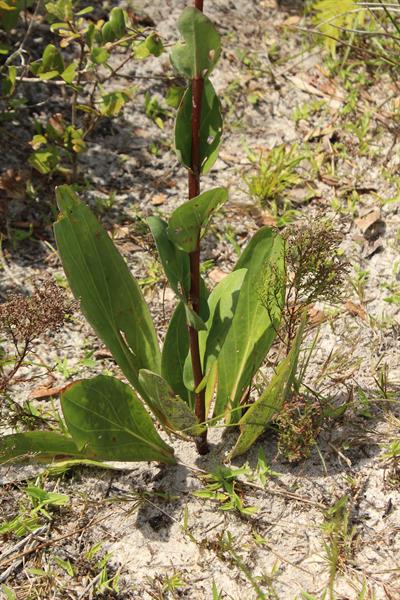 © Scott Ward | Trilisa odoratissima | Original Image ⭷
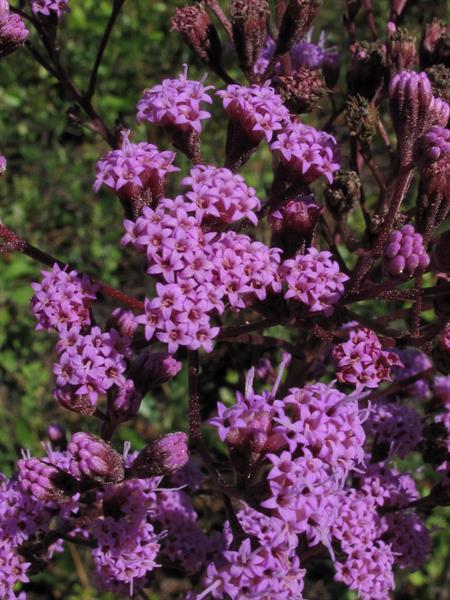 © Alan M. Cressler | Trilisa odoratissima | Original Image ⭷
 © Scott Ward | Trilisa paniculata | Original Image ⭷
 © Scott Ward | Trilisa subtropicana | Original Image ⭷
 © Scott Ward | Trilisa subtropicana | Original Image ⭷
 © Scott Ward | Trilisa subtropicana | Original Image ⭷
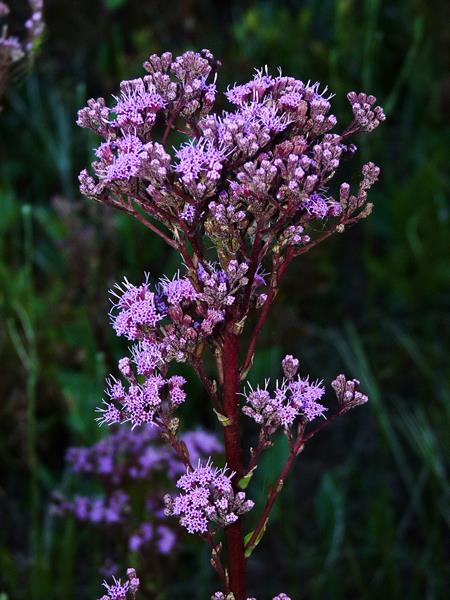 © Richard & Teresa Ware | Trilisa odoratissima CC-BY-NC, permission granted to NCBG | Original Image ⭷
 © Scott Ward | Trilisa subtropicana | Original Image ⭷
Feedback
See something wrong or missing on about Trilisa? Let us know here: (Please include your name and email if at all complicated so we can clarify if needed.)
Cite as...