 Utricularia Linnaeus. Bladderwort.
As monographed by Taylor (1989), Utricularia consists of 214 species in 35 sections, with a nearly cosmopolitan distribution.
Other Comments: Key based in part on Taylor (1989) and Godfrey & Wooten (1981).
Ref: Baleeiro et al. (2022); Baleeiro, Jobson, & Sano (2016); Baleeiro, Sano, & Jobson (2019); Fischer et al. In Kadereit (2004); Guedes et al. (2021); Müller & Borsch (2005); Schnell (2002b); Silva et al. (2018); Taylor (1989). Show full citations.
Hover over a shape, letter, icon, or arrow on the map for definition or see the legend. Data for arrows not developed for genera and families which may have species only occurring outside the flora area.
 © Gary P. Fleming | Utricularia subulata | Original Image ⭷
 © Keith Bradley | Utricularia resupinata | Original Image ⭷
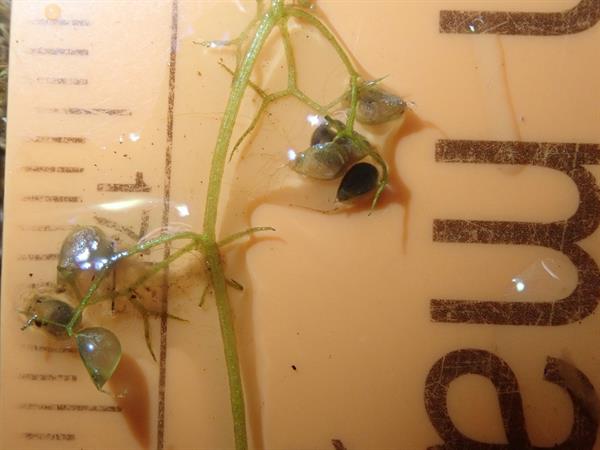 © Nolan Exe, some rights reserved (CC BY), uploaded by Nolan Exe | Utricularia minor source | Original Image ⭷
 © Scott Ward | Utricularia radiata | Original Image ⭷
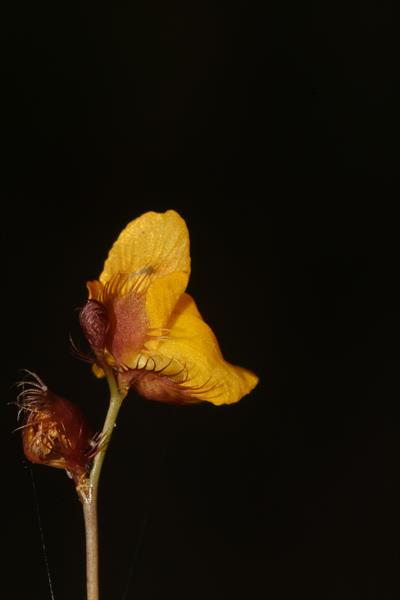 © Scott Ward | Utricularia simulans | Original Image ⭷
 © Alan M. Cressler | Utricularia resupinata | Original Image ⭷
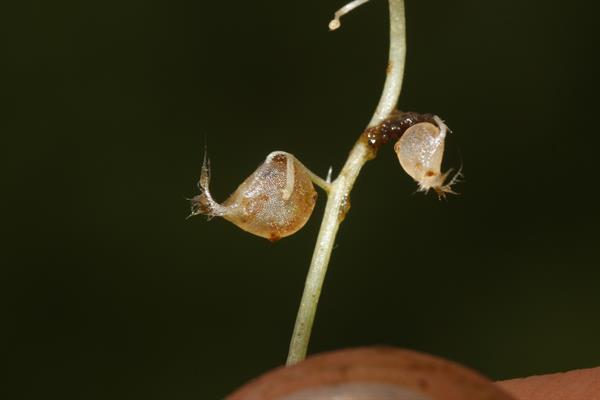 © Scott Ward | Utricularia minor | Original Image ⭷
 © Keith Bradley | Utricularia purpurea | Original Image ⭷
 © Bruce A. Sorrie | Utricularia inflata | Original Image ⭷
 © Richard & Teresa Ware | Utricularia purpurea CC-BY-NC, permission granted to NCBG | Original Image ⭷
 © Richard & Teresa Ware | Utricularia cornuta CC-BY-NC, permission granted to NCBG | Original Image ⭷
 © Alan M. Cressler | Utricularia cornuta | Original Image ⭷
Feedback
See something wrong or missing on about Utricularia? Let us know here: (Please include your name and email if at all complicated so we can clarify if needed.)
Cite as...