 Simaroubaceae A.P. de Candolle. Quassia Family.
A family of about 13-22 genera and 110-115 species, trees and shrubs of primarily tropical areas of the New World and Old World. The Leitneriaceae has been traditionally considered to be a monotypic family, endemic to se. North America; a variety of recent studies have suggested its inclusion in the Simaroubaceae (Angiosperm Phylogeny Group 2009, 2016; Bogle in FNA 1997).
Ref: APG III (2009); APG IV (2016); Bogle (1997) In Flora of North America Editorial Committee (1997); Clayton In Kubitzki (2011). Show full citations.
Hover over a shape, letter, icon, or arrow on the map for definition or see the legend. Data for arrows not developed for genera and families which may have species only occurring outside the flora area.
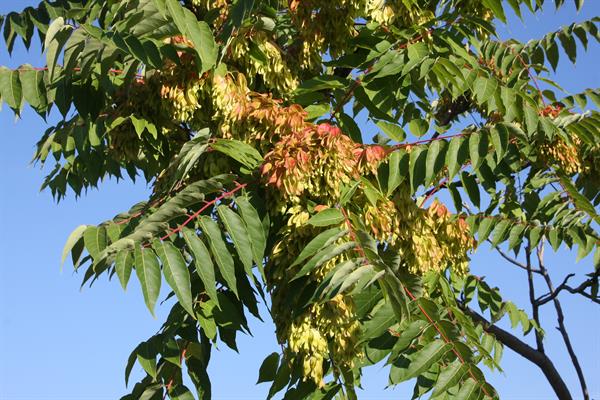 © Bruce A. Sorrie | Ailanthus | Original Image ⭷
 © Alan Cressler: Leitneria floridana (male catkin), St. Marks National Wildlife Refuge, St. Marks Unit, Wakulla County, Florida 1 by Alan Cressler | Leitneria source | Original Image ⭷
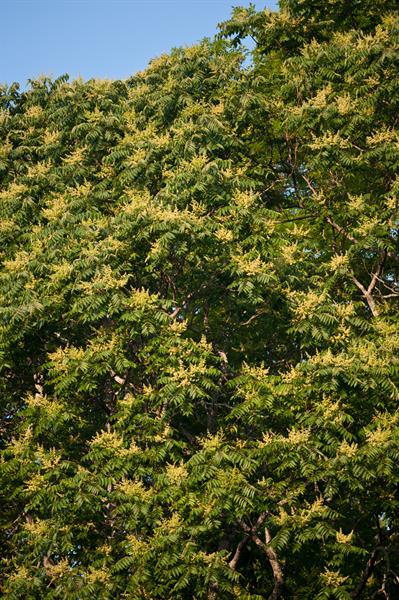 © Keith Bradley | Ailanthus | Original Image ⭷
 © Alan Cressler: Leitneria floridana, fruit, conservation garden, Atlanta, Fulton County, Georgia 1 by Alan Cressler | Leitneria source | Original Image ⭷
 © Samuel Brinker, some rights reserved (CC BY-NC), uploaded by Samuel Brinker | Simarouba glauca var. latifolia source | Original Image ⭷
 © Joe MDO, some rights reserved (CC BY-NC), uploaded by Joe MDO | Simarouba glauca var. latifolia source | Original Image ⭷
Feedback
See something wrong or missing on about Simaroubaceae? Let us know here: (Please include your name and email if at all complicated so we can clarify if needed.)
Cite as...