 Thaspium trifoliatum (Linnaeus) A. Gray var. aureum (Linnaeus) Britton. Phen: Apr-May; Jul-Aug. Hab: Moist forests. Dist: NY west to MN, south to SC, AL, AR, and se. KS.
Origin/Endemic status: Native
Taxonomy Comments: Various workers have differed on the characters used to separate two varieties in T. trifoliatum. RAB and C separate the two strictly on petal color; F, however, allows var. aureum to sometimes have purple petals, seeming to regard the critical differences to be var. aureum's generally more robust size and larger fruits (4.5 mm long vs. 3-4 mm long). It is presently not clear how two varieties should be separated, or, indeed, if varieties are warranted. Though the ranges overlap, var. aureum is generally more northern and western, var. trifoliatum more southern and eastern.
Synonymy: = Ar, K1, K3, K4, S, Coulter & Rose (1900); = Thaspium trifoliatum (L.) A.Gray var. flavum Blake – C, F, GrPl, Il, MC, Mo2, Pa, RAB, Tn, W, WV, Cooperrider (1985); < Thaspium trifoliatum (L.) A.Gray – G, Mi, Ok, Va, Floden (2019)
Heliophily: 5
Hover over a shape, letter, icon, or arrow on the map for definition or see the legend.
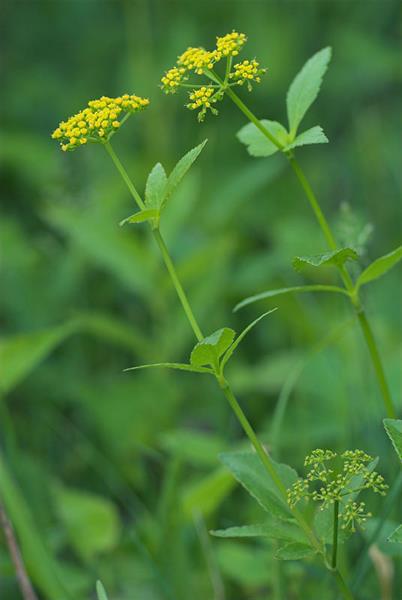 © Gary P. Fleming | Original Image ⭷
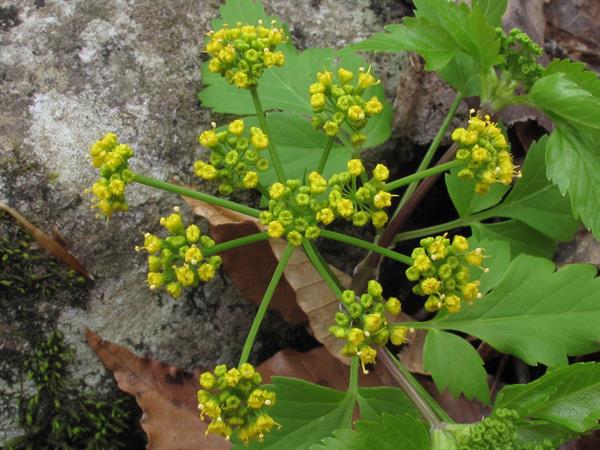 © Alan M. Cressler | Original Image ⭷
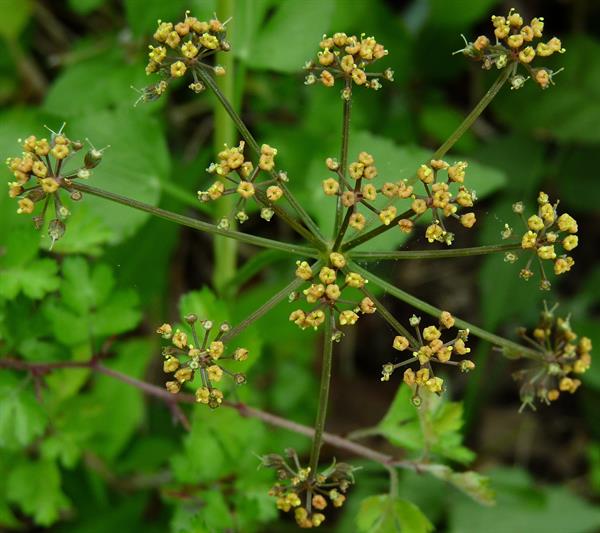 © Richard & Teresa Ware CC-BY-NC, permission granted to NCBG | Original Image ⭷
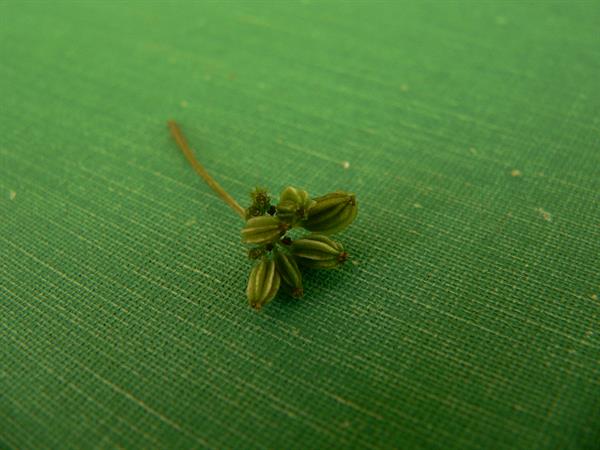 © Richard & Teresa Ware CC-BY-NC, permission granted to NCBG | Original Image ⭷
Feedback
See something wrong or missing on about Thaspium trifoliatum var. aureum? Let us know here: (Please include your name and email if at all complicated so we can clarify if needed.)
Cite as...