 Sitobolium Desvaux. Subfamily: Dennstaedtioideae. Hay-scented Fern.
A genus of about 5 species, of e. Asia and e. North America. Phylogenetic studies show that Dennstaedtia as traditionally interpreted is polyphyletic; our temperate, eastern North American species is related to Asian, temperate species, and should be placed in Sitobolium (Triana-Moreno et al. 2022, 2023).
ID notes:Sitobolium punctilobulum can be distinguished from other woodland ferns with deciduous fronds of generally similar size and shape (such as Athyrium, Dryopteris, and Amauropelta noveboracensis) by the following characteristics: leaves yellow-green or pale-green in color, with whitish-gray glandular trichomes, petioles silvery-pilose and lacking any scales, leaves borne scattered (as clonal patches) from long-creeping rhizomes, sori tiny (< 0.5 mm in diameter), with a whitish cup-like indusium, and borne near the margin of the leaf segments.
Ref: Kramer & Green (1990); Nauman & Evans (1993) In Flora of North America Editorial Committee (1993b); Schwartsburd et al. (2020); Triana-Moreno et al. (2022); Triana-Moreno et al. (2023). Show full citations.
Hover over a shape, letter, icon, or arrow on the map for definition or see the legend. Data for arrows not developed for genera and families which may have species only occurring outside the flora area.
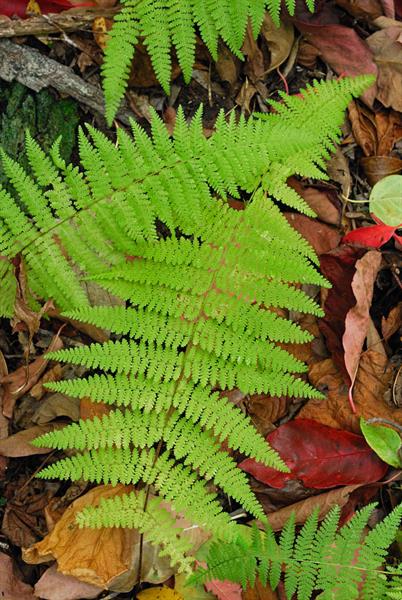 © Gary P. Fleming | Sitobolium punctilobulum | Original Image ⭷
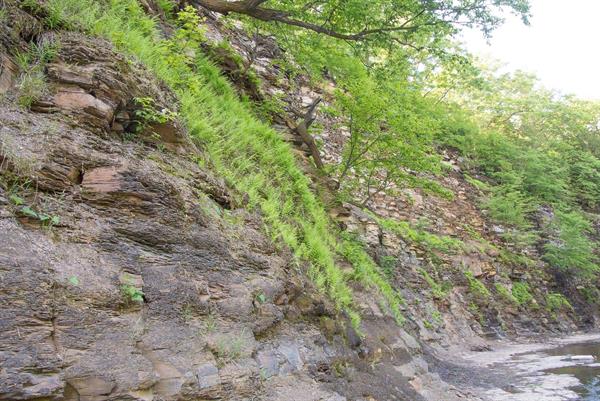 © Erik Danielson | Sitobolium punctilobulum source | Original Image ⭷
Feedback
See something wrong or missing on about Sitobolium? Let us know here: (Please include your name and email if at all complicated so we can clarify if needed.)
Cite as...