 Opuntia lindheimeri Engelmann. Texas Prickly-pear. Phen: May-Jun; Aug-Nov (-Feb). Hab: Disturbed areas, where persistent or spreading from cultivation (Majure et al. 2011), but also apparently early introduced by native Americans or early settlers on coastal dunes and sand barrens on barrier islands. Dist: Native of sc. United States south into Mexico. Although found along the coast in NC (New Hanover Co., where it grows with O. drummondii), SC, and VA (Henrico, Isle of Wight, and Hanover cos. [Wright et al. 2023]), the origin(s) of those populations is unknown. The native range of O. engelmannii var. lindheimeri is the western US (although occurring in coastal w LA) and Mexico, so it seems unlikely that the coastal Atlantic populations are native; however, certain populations along the SC coast can be found in quite isolated locations (P. McMillan, pers. comm.). Small (1933) reported O. cantabrigiensis Lynch from dunes near Beaufort, NC, based on a fragmentary 1930 collection accompanied by a photograph. Similar plants were apparently seen near Beaufort by Engelmann, prior to 1856. Benson (1982) refers the collection tentatively to O. lindheimeri Engelmann var. cuija (Griffiths & Hare) L.D. Benson, treated in K as O. engelmannii Salm-Dyck ex Engelmann var. cuija Griffiths & Hare, a native of Mexico. Benson (1982) also stated, however, that it could also be var. lindheimeri (primarily of TX and Mexico), or, indeed, O. tuna (Linnaeus) P. Miller (native to the West Indies). Benson (1982) failed to relocate the plant in the field in 1956, but stated there was "insufficient time for a thorough search." Unless relocated, the identity of the plant will probably remain a mystery, as well as whether it represents a native species, an established population from aboriginal use, or a more recent introduction or adventive.
Origin/Endemic status: Native
Synonymy: = GrPl, K4, S13; = n/a – C, RAB; = Opuntia engelmannii Salm-Dyck ex Engelm. var. lindheimeri (Engelm.) B.D.Parfitt & Pinkava – FNA4, NcTx, Tx; > Opuntia cantabrigiensis – S; < Opuntia engelmannii Salm-Dyck ex Engelm. – Mex; > Opuntia engelmannii var. cacanapa (Griffiths) Weniger – Weniger (1984); > Opuntia engelmannii var. texana (Griffiths) Weniger – Weniger (1984); > Opuntia engemannii var. alta (Griffiths) Weniger – Weniger (1984); > Opuntia lindheimeri Engelm. – S; > Opuntia tardospina Griffiths – Weniger (1984)
Heliophily: 9
Hover over a shape, letter, icon, or arrow on the map for definition or see the legend.
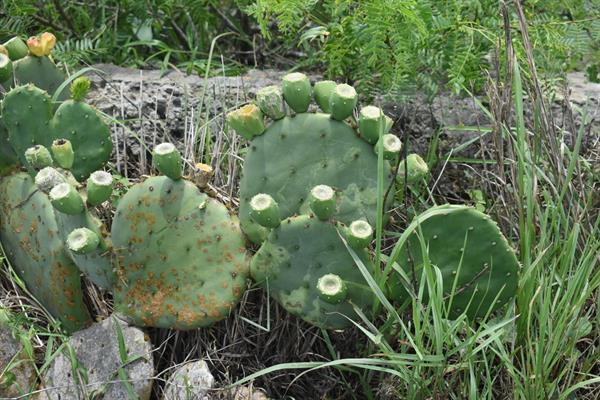 © Aidan Campos source | Original Image ⭷
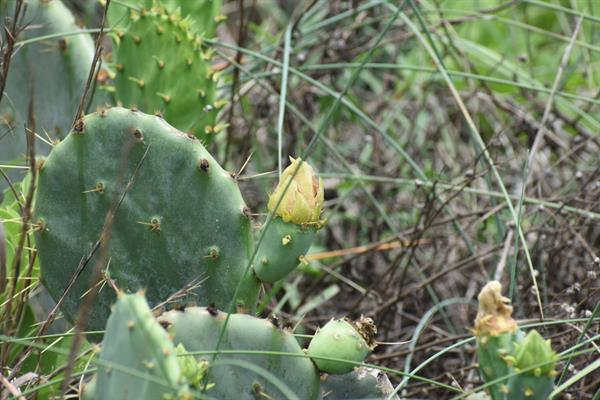 © Aidan Campos source | Original Image ⭷
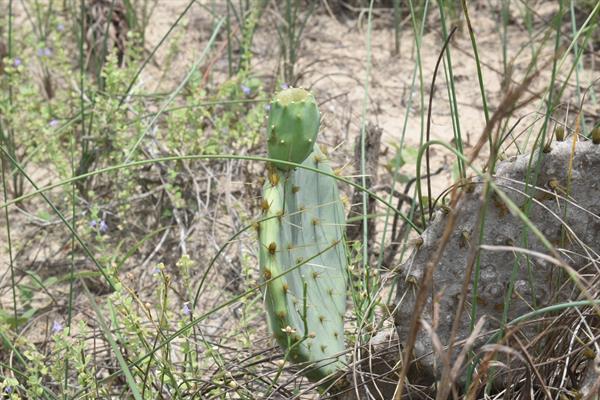 © Aidan Campos source | Original Image ⭷
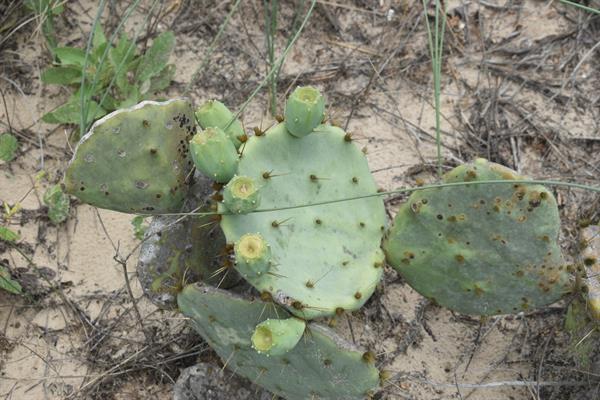 © Aidan Campos source | Original Image ⭷
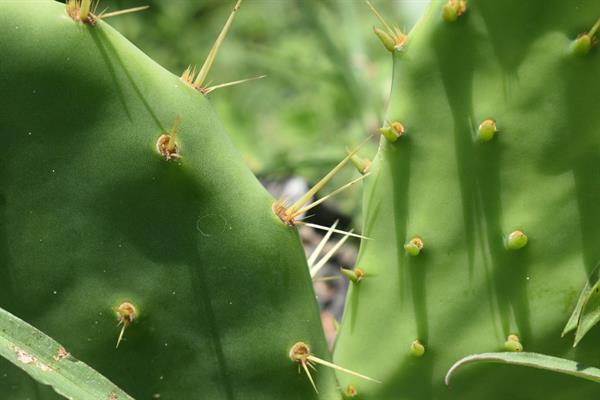 © Aidan Campos source | Original Image ⭷
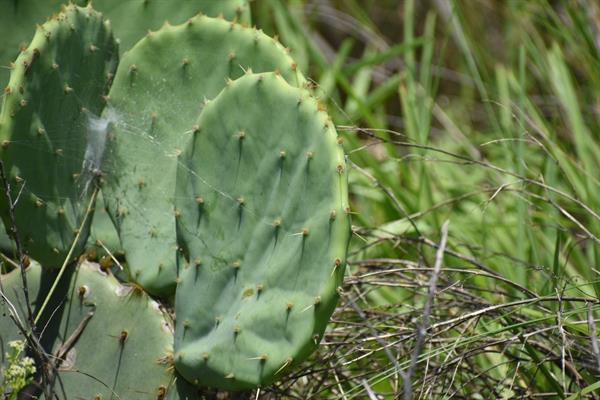 © Aidan Campos source | Original Image ⭷
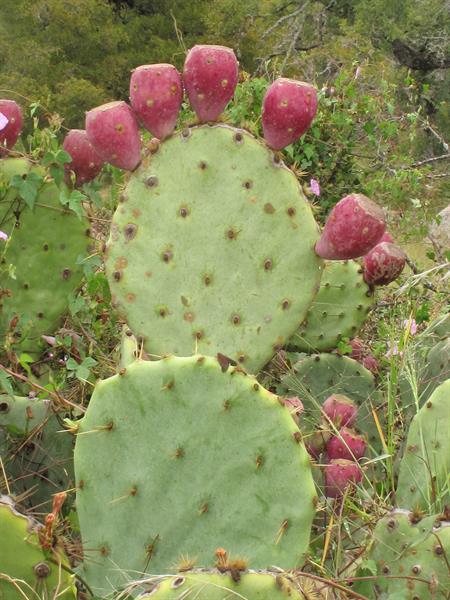 © Alan Cressler: Opuntia engelmannii var. lindheimeri, fruit, Enchanted Rock, Enchanted Rock State Natural Area, Llano County, Texas 2 by Alan Cressler source | Original Image ⭷
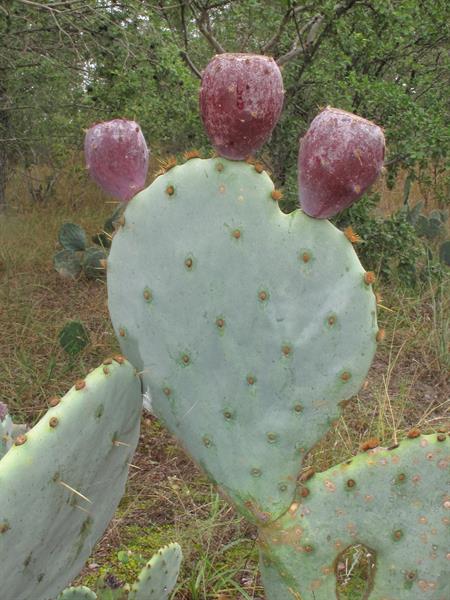 © Alan Cressler: Opuntia engelmannii var. lindheimeri, fruit, Enchanted Rock, Enchanted Rock State Natural Area, Llano County, Texas 1 by Alan Cressler source | Original Image ⭷
Feedback
See something wrong or missing on about Opuntia lindheimeri? Let us know here: (Please include your name and email if at all complicated so we can clarify if needed.)
Cite as...