 Epidendrum conopseum W.T. Aiton. Green-fly Orchid. Phen: Jul-Nov. Hab: Epiphytic on limbs of trees, especially Magnolia grandiflora, Quercus virginiana, and Taxodium spp., in blackwater river swamps, tidal freshwater swamps, and mesic hardwood hammocks, usually on relatively horizontal limbs mixed with Pleopeltis michauxiana, also rarely in crevices of Altamaha Grit outcrops. Dist: The northernmost epiphytic orchid: se. NC south to c. peninsular FL, west to w. LA; disjunct in ne. Mexico (Nuevo León, San Luis Potosí, Tamaulipas). All other species of Epidendrum in the flora are limited to c. and s. FL. It is locally rather common, but rarely seen as it occurs primarily in blackwater swamps, on upper limbs of Taxodium, Nyssa, Planera, and other trees, typically mixed with Pleopeltis. See Correll (1936) for additional discussion of this species at its northern limit.
Origin/Endemic status: Native
Taxonomy Comments: Hágsater (2000) argued that E. magnoliae Muhlenberg has nomenclatural priority over E. conopseum R. Brown; Franck in Weakley et al. (2018a) rebutted that argument. Two varieties are sometimes recognized (Brown 2002): var. conopseum, with green or yellow flowers fragrant during the day, and var. mexicanum, with yellow flowers with bronze and green tints fragrant at night. They need additional study.
Synonymy: = K3, K4, RAB, S13, WH3, Correll (1950), Franck (2018a) in Weakley et al (2018a), Luer (1972); = Amphiglottis conopsea (W.T.Aiton) Small – S; = Epidendrum magnoliae Muhl. – FNA26; > Epidendrum conopseum W.T.Aiton var. conopseum – K1; > Epidendrum conopseum W.T.Aiton var. mexicanum L.O.Williams – K1; > Epidendrum magnoliae Muhl. var. magnoliae – Brown (2002); > Epidendrum magnoliae Muhl. var. mexicanum (L.O.Williams) P.M.Br. – Brown (2002)
Heliophily: 4
Hover over a shape, letter, icon, or arrow on the map for definition or see the legend.
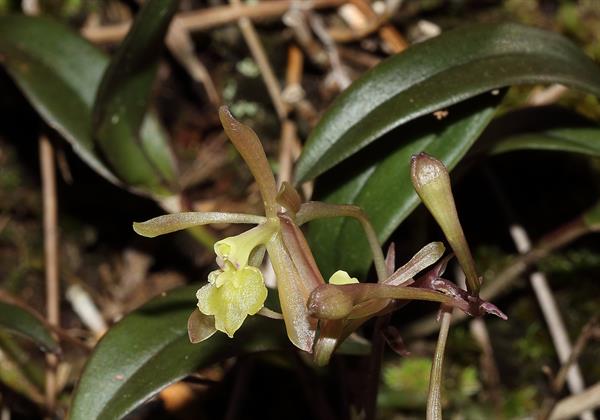 © Floyd A. Griffith | Original Image ⭷
 © Scott Ward | Original Image ⭷
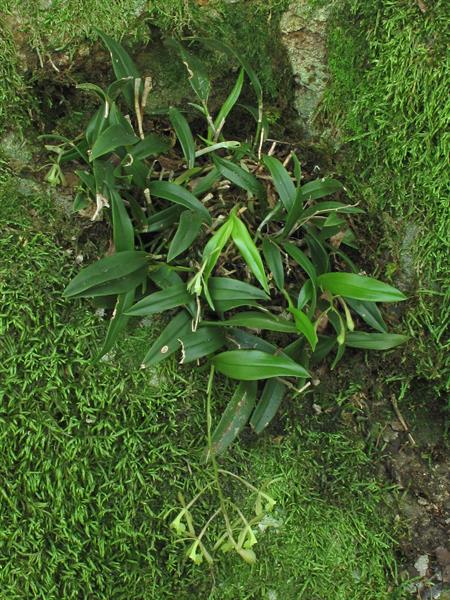 © Alan Cressler: Epidendrum magnoliae var. magnoliae, indurated sandstone, middle Miocene age, Altamaha Formation, Broxton Rocks Preserve, The Nature Conservancy, Coffee County, Georgia 7 by Alan Cressler source | Original Image ⭷
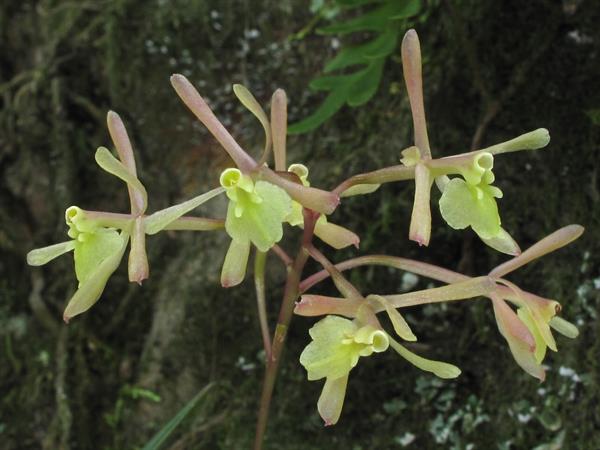 © Alan M. Cressler | Original Image ⭷
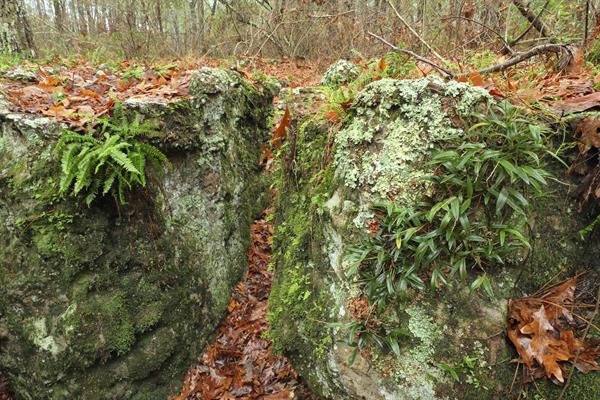 © Alan Cressler: Asplenium platyneuron (left), and Epidendrum magnoliae (right), Altamaha Formation Outcrop, Rocky Creek Canyon, Broxton Rocks Preserve, The Nature Conservancy, Coffee County, Georgia 1 by Alan Cressler source | Original Image ⭷
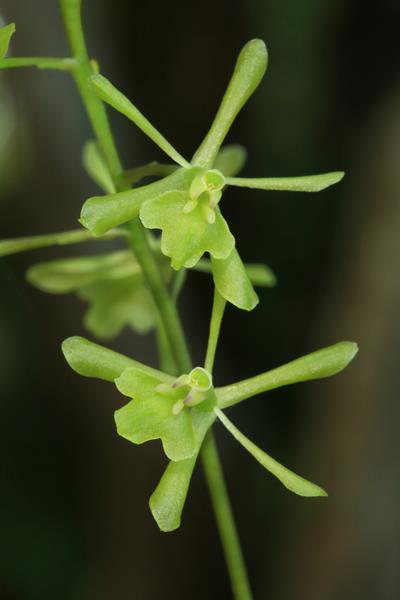 © Alan Cressler: Epidendrum magnoliae var. magnoliae, originally from Weaselworld, Alachua County, Florida 1 by Alan Cressler source | Original Image ⭷
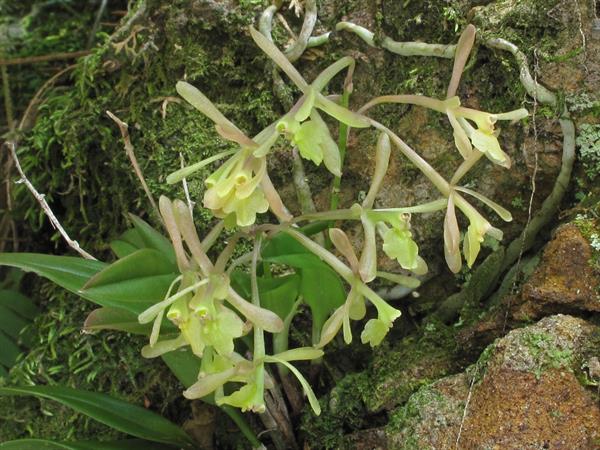 © Alan Cressler: Epidendrum magnoliae var. magnoliae, indurated sandstone, middle Miocene age, Altamaha Formation, Broxton Rocks Preserve, The Nature Conservancy, Coffee County, Georgia 3 by Alan Cressler source | Original Image ⭷
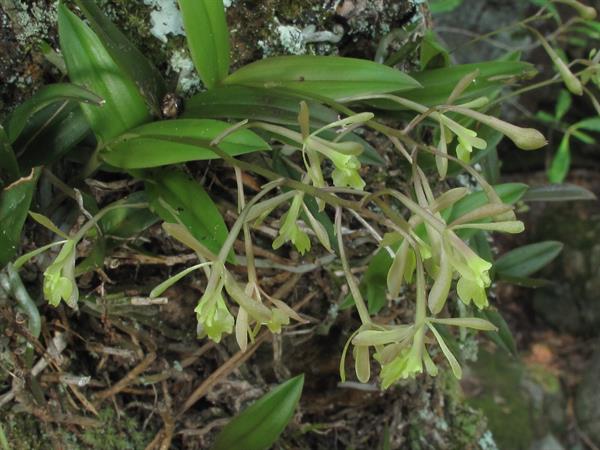 © Alan M. Cressler | Original Image ⭷
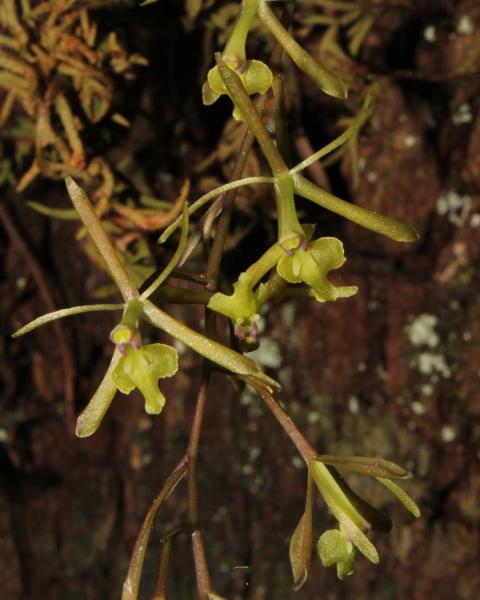 © Scott Ward | Original Image ⭷
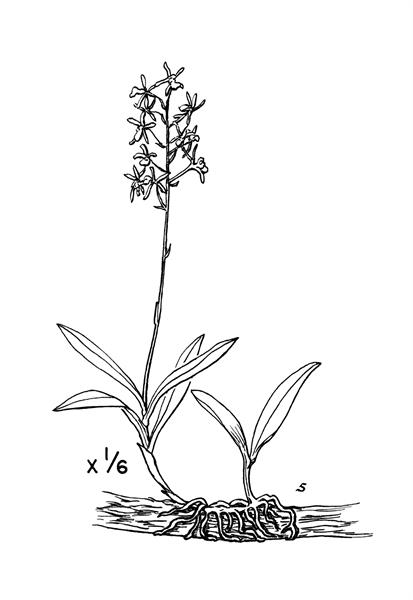 © Radford, Ahles and Bell | Original Image ⭷
Feedback
See something wrong or missing on about Epidendrum conopseum? Let us know here: (Please include your name and email if at all complicated so we can clarify if needed.)
Cite as...