Copy permalink to share

Chelidonium diphyllum Michaux. Common name: Celandine-poppy, Woods-poppy. Phenology: Mar-Jun. Habitat: Moist forests over calcareous rocks (such as limestone). Distribution: S. QC, w. PA, s. MI, and WI, south to sw. VA, e. TN, nw. GA, sc. TN, and AR; introduced elsewhere from horticultural use.

Origin/Endemic status: Native

Synonymy : = Peng et al (2024); = n/a — RAB, Tat; = Stylophorum diphyllum (Michx.) Nutt. — Ar, C, Can, F, FNA3, G, Il, K4, Mi, Mo3, NS, Pa, POWO, S, S13, Tn, Va, W, WV. Basionym: Chelidonium diphyllum Michx. 1803

Links to other floras: = Stylophorum diphyllum - FNA3

Show in key(s)

Show parent genus | Show parent in key(s)

Heliophily : 2

Your browser does not support SVGs

Hover over a shape, letter, icon, or arrow on the map for definition or see the legend.

image of plant© Gary P. Fleming | Original Image ⭷
image of plant© Joey Shaw source | Original Image ⭷
image of plant© Alan Cressler: Stylophorum diphyllum, Calloway Sinks, Sharp-Bingham Mountain Preserve, The Nature Conservancy, Jackson County, Alabama 2 by Alan Cressler source | Original Image ⭷
image of plant© Bruce A. Sorrie | Original Image ⭷
image of plant© Keith Bradley | Original Image ⭷
image of plant© Gary P. Fleming | Original Image ⭷

Feedback

See something missing or incorrect about Chelidonium diphyllum? Let us know here:

  1. Please include your name and if possible, email in case when need to clarify what you wrote.
  2. If you opt out of including email, please be as specific as possible (e.g., which photo is incorrect?)
  3. Please do not submit questions asking to identify plants or about horticultural topics (e.g., how do I control an invasive plant in my garden?). Instead, those questions can be submitted here for the Carolinas region only.
  4. Please do not send us feedback about unkeyed species as this work is ongoing.
  5. Please allow time for flora edits to show in our next data release. We greatly appreciate your feedback but may require extra time to research complicated taxonomic issues.

Horticultural Information

NCBG trait

Intro: Erect, rhizomatous perennial of moist forests over calcareous rocks, such as limestone.

Stems: Stems hairy and often with white-waxy coating, exuding a yellow-orange sap when broken.

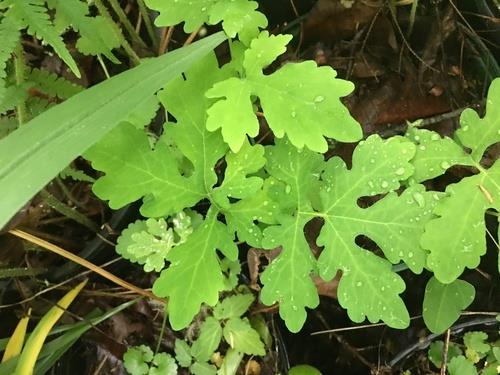
Leaves: Leaves basal (an additional pair on stem just below inflorescence, petiolate, broadly oblong to oval, to 6 in. long, pinnately divided almost to the mid-vein into 5-7 bluntly lobed/toothed segments, smooth and dark green above and silvery hairy beneath, exuding a yellow-orange sap.

Inforescence:

Flowers: Flowers single or 2-4 in an umbel terminating the stem; yellow; 1¼-2¼ in. wide; consisting of 4 overlapping round petals, 2 light green very hairy sepals (these drop early), numerous golden yellow stamens and an ovary with a single stout style and knobby stigma.

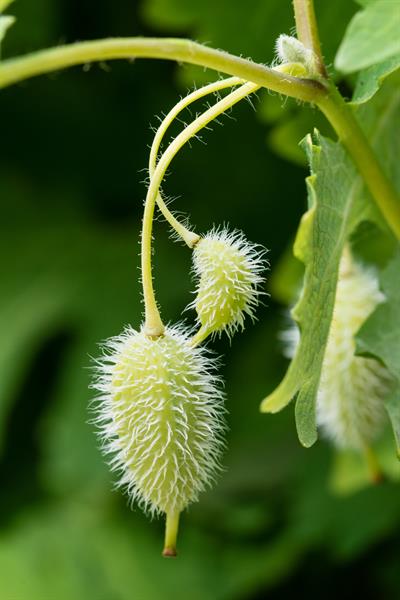
Fruits: Fruit a densely hairy, nodding, oval capsule.

Comments:

Height: 12-18 in.

plant sale text:

bloom table text:

description: Erect, rhizomatous perennial of moist forests over calcareous rocks, such as limestone.

stems: Stems hairy and often with white-waxy coating, exuding a yellow-orange sap when broken.

leaves: Leaves basal (an additional pair on stem just below inflorescence, petiolate, broadly oblong to oval, to 6 in. long, pinnately divided almost to the mid-vein into 5-7 bluntly lobed/toothed segments, smooth and dark green above and silvery hairy beneath, exuding a yellow-orange sap.

inflorescence:

flowers: Flowers single or 2-4 in an umbel terminating the stem; yellow; 1¼-2¼ in. wide; consisting of 4 overlapping round petals, 2 light green very hairy sepals (these drop early), numerous golden yellow stamens and an ovary with a single stout style and knobby stigma.

fruits: Fruit a densely hairy, nodding, oval capsule.

comments:

cultural notes:

germination code:

native range: eastern United States


0 unsaved edits on this page.