 Quercus shumardii Buckley. Subgenus: Quercus. Section: Lobatae. Subsection: Coccineae. Shumard Oak. Phen: Apr; Sep-Oct (of the second year). Hab: Moist and fertile soils of bottomlands and moist slopes, also in xeric sites over calcareous rocks (such as limestone). Dist: S. ON, w. NY, sc. PA, west through OH, s. MI, IN, s. IL, MO, and e. KS south to n. peninsular FL and TX.
Origin/Endemic status: Native
Taxonomy Comments: A number of varieties have been recognized in Q. shumardii, and the morphological and habitat variation needs additional study. Var. schneckii (Britton) Sargent is apparently distributed in calcareous uplands west of the Blue Ridge, especially on dry limestone slopes. It is allegedly distinguished by the acorn cups rounded to turbinate below (vs. flattened and saucer-shaped in var. shumardii). Hess & Stoynoff (1998) tentatively concluded that no varieties should be recognized within Q. shumardii. Additional study is needed.
Synonymy: = Fl2, NcTx, NY, Pa, RAB, S, Tx, Va, W, WH3, Mummaw (2018); = n/a – Tat; = Quercus schneckii Britton – S13; = Quercus shumardii Buckley var. shumardii – Ar; < Quercus shumardii Buckley – C, FNA3, K3, K4, Mi, Wu et al (2023); > Quercus shumardii Buckley var. schneckii (Britton) Sarg. – GrPl, Il, K1, WV, misapplied; >< Quercus shumardii Buckley var. schneckii (Britton) Sarg. – F, G, misapplied; > Quercus shumardii Buckley var. shumardii – GrPl, Il, K1, WV; >< Quercus shumardii Buckley var. shumardii – F, G
Wetland Indicator Status:
- Atlantic and Gulf Coastal Plain: FAC
- Eastern Mountains and Piedmont: FAC (taxonomic split from wetland indicator species)
- Great Plains: FAC (taxonomic split from wetland indicator species)
- Midwest: FACW (taxonomic split from wetland indicator species)
- Northcentral & Northeast: FACW (taxonomic split from wetland indicator species)
Heliophily: 6
Hover over a shape, letter, icon, or arrow on the map for definition or see the legend.
 © Aidan Campos source | Original Image ⭷
 © Richard & Teresa Ware CC-BY-NC, permission granted to NCBG | Original Image ⭷
 © Scott Ward | Original Image ⭷
 © Scott Ward | Original Image ⭷
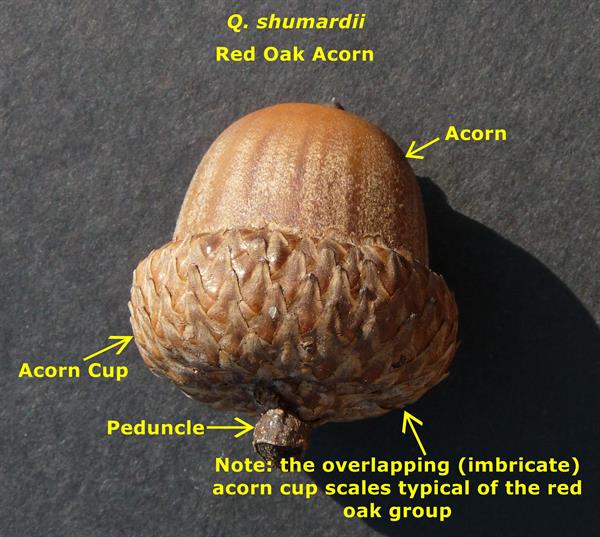 © Richard & Teresa Ware CC-BY-NC, permission granted to NCBG | Original Image ⭷
 © Richard & Teresa Ware CC-BY-NC, permission granted to NCBG | Original Image ⭷
 © Scott Ward, some rights reserved (CC BY), uploaded by Scott Ward source CC-BY | Original Image ⭷
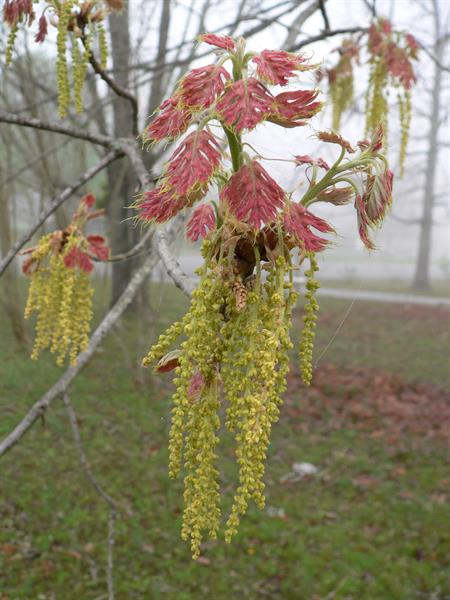 © Richard & Teresa Ware CC-BY-NC, permission granted to NCBG | Original Image ⭷
 © Scott Ward, some rights reserved (CC BY), uploaded by Scott Ward source CC-BY | Original Image ⭷
 © Gary P. Fleming | Original Image ⭷
 © Erik Danielson source | Original Image ⭷
 © Scott Ward | Original Image ⭷
 © Bruce A. Sorrie | Original Image ⭷
 © Bruce A. Sorrie | Original Image ⭷
 © Erik Danielson source | Original Image ⭷
 © Bruce A. Sorrie | Original Image ⭷
 © Bruce A. Sorrie | Original Image ⭷
 © Aidan Campos source | Original Image ⭷
Feedback
See something wrong or missing on about Quercus shumardii? Let us know here: (Please include your name and email if at all complicated so we can clarify if needed.)
Cite as...