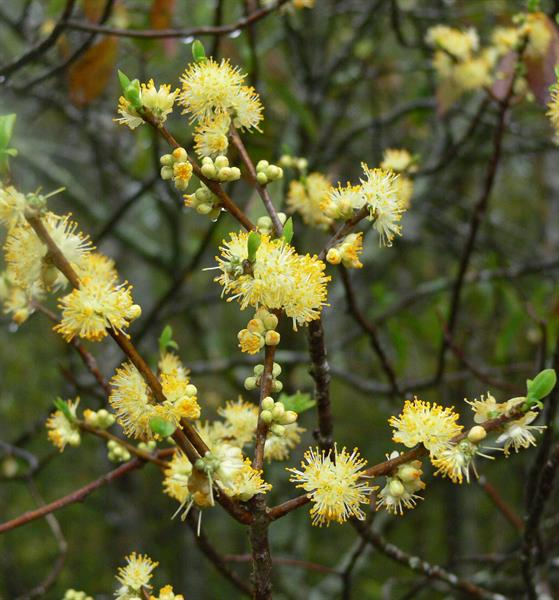
 Symplocos tinctoria (Linnaeus) L'Héritier. Subgenus: Symplocos. Section: Barberina. Sweetleaf, Horsesugar, Dyebush. Phen: Mar-May; Aug-Sep. Hab: Moist bottomland forests, pocosin edges, mesic forests, ridgetop pine and oak/pine forests, pine flatwoods, longleaf pine sandhills. Dist: DE south to n. FL and west to e. TX and se. OK. The range in our area is discontinuous and interesting, the species is rather abundant in the Coastal Plain throughout our area, and in the Mountains of NC and SC (absent from the VA mountains!), but present in the Piedmont only near its borders with the other provinces and in scattered sites in the central Piedmont. Plants in the part of the distribution in the Southern Appalachians have been described as var. ashei Harbison on the basis of hairier leaves, stems, and fruits; the correlation of morphology and biogeography is suggestive of varietal distinction reflecting past history of the species in our area (see Hardin 1966).
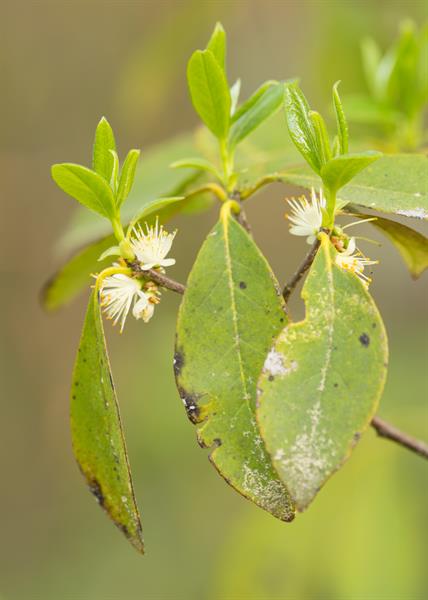
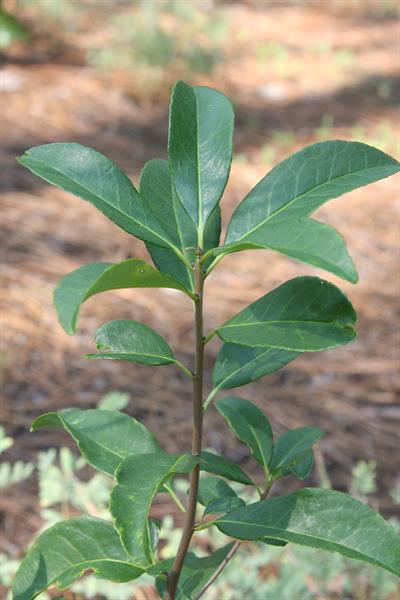
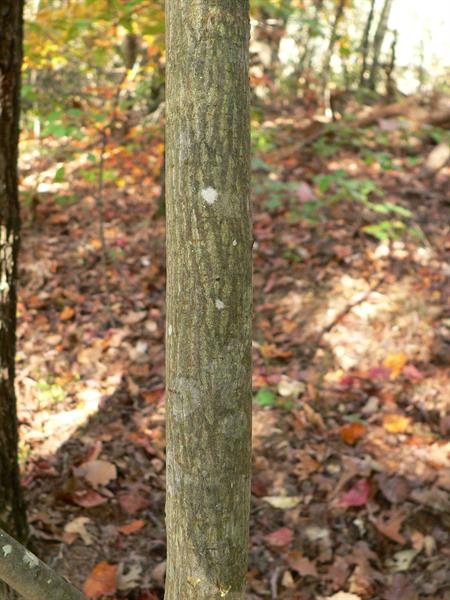
ID notes:The leaves have a subcoriaceous and rather evergreen appearance (even resembling Kalmia latifolia), but are only semi-evergreen or tardily deciduous. As the name implies, the leaves are somewhat sweet (especially near the midvein), but the sweetness seems variable from plant to plant, season to season, and taster to taster. Whether sweet or not, the ‘green apple’ taste is distinctive and is helpful (once learned) in distinguishing this rather nondescript shrub or small tree. Where protected from fire, S. tinctoria can reach considerable size, to at least 20 cm in diameter and 12 m tall, with longitudinally striped bark.
Origin/Endemic status: Endemic
Taxonomy Comments: Var. ashei, with mainly or strictly montane distribution, needs additional taxonomic consideration and may warrant recognition at variety rank; see Hardin (1966) and Harbison (1931).
Synonymy: = Ar, C, Fl5, FNA8, GW2, K1, K3, NY, RAB, S, Tat, Tn, Tx, Va, W, WH3, Hardin (1966); > Symplocos tinctoria (L.) L'Hér. var. ashei Harb. – Harbison (1931); > Symplocos tinctoria (L.) L'Hér. var. pygmaea Fernald – F, G; > Symplocos tinctoria (L.) L'Hér. var. tinctoria – F, G, Harbison (1931)
Wetland Indicator Status:
- Atlantic and Gulf Coastal Plain: FAC
- Eastern Mountains and Piedmont: FAC
- Great Plains: FAC
- Midwest: FAC
- Northcentral & Northeast: FAC
Heliophily: 5
Hover over a shape, letter, icon, or arrow on the map for definition or see the legend.
 © Keith Bradley | Original Image ⭷
 © Bruce A. Sorrie | Original Image ⭷
 © Bruce A. Sorrie | Original Image ⭷
 © Keith Bradley | Original Image ⭷
 © Mark Peifer, characteristic fall blackish tinge. Middle Mountain, Randolph Co., NC | Original Image ⭷
 © Scott Ward | Original Image ⭷
 © Joey Shaw source | Original Image ⭷
 © Gary P. Fleming | Original Image ⭷
 © Alan Cressler: Symplocos tinctoria, Paulk's Prairie Wildlife Management Area, Glynn County, Georgia 1 by Alan Cressler source | Original Image ⭷
 © Scott Ward | Original Image ⭷
 © Keith Bradley | Original Image ⭷
 © Erik Danielson source | Original Image ⭷
 © Richard & Teresa Ware CC-BY-NC, permission granted to NCBG | Original Image ⭷
 © Gary P. Fleming | Original Image ⭷
 © Radford, Ahles and Bell | Original Image ⭷
Feedback
See something wrong or missing on about Symplocos tinctoria? Let us know here: (Please include your name and email if at all complicated so we can clarify if needed.)
Cite as...