 Melanthium parviflorum (Michaux) S. Watson. Common name: Mountain Bunchflower. Phenology: Jul-early Sep; Aug-Oct. Habitat: Moist to rather dry forests, up to at least 1700 meters, most frequent in oak forests at middle elevations. Distribution: A Southern Appalachian endemic: e. and sc. WV and KY south to VA, w. NC, e. TN, n. GA, and n. AL.
Origin/Endemic status: Endemic
Synonymy ⓘ: = F, FNA26, K4, NS, POWO, WV; = Veratrum parviflorum Michx. — C, G, RAB, S, S13, Tn, Va, W, Zomlefer (1997a). Basionym: Veratrum parviflorum Michx. 1803
Links to other floras: = Melanthium parviflorum - FNA26
Show parent genus | Show parent in key(s)
Heliophily ⓘ: 4
Hover over a shape, letter, icon, or arrow on the map for definition or see the legend.
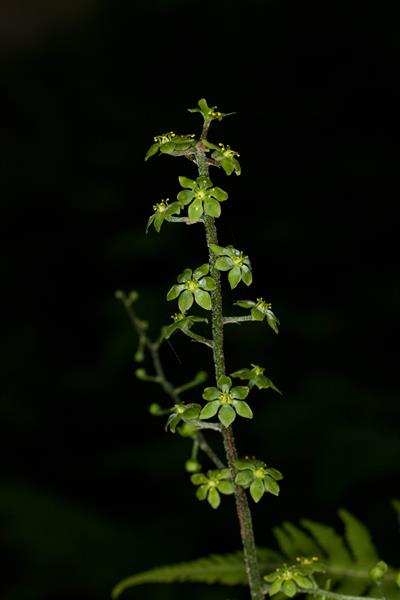 © John Gwaltney | Original Image ⭷
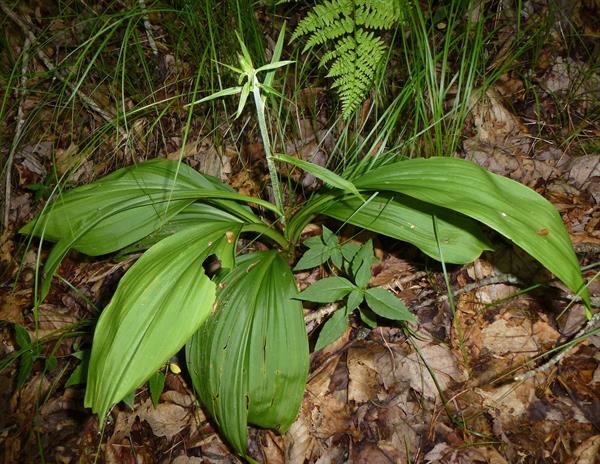 © Edwin Bridges | Original Image ⭷
 © Bruce A. Sorrie | Original Image ⭷
 © Richard & Teresa Ware CC-BY-NC, permission granted to NCBG | Original Image ⭷
 © Scott Ward | Original Image ⭷
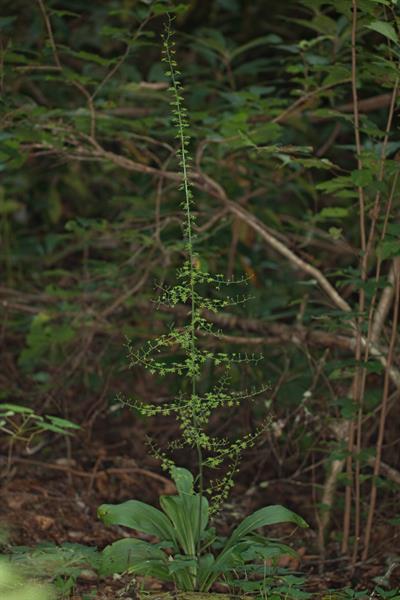 © John Gwaltney | Original Image ⭷
 © Scott Ward | Original Image ⭷
 © John Gwaltney | Original Image ⭷
 © John Gwaltney | Original Image ⭷
 © Scott Ward | Original Image ⭷
 © John Gwaltney | Original Image ⭷
 © John Gwaltney | Original Image ⭷
Feedback
See something wrong or missing on about Melanthium parviflorum? Let us know here: (Please include your name and email if at all complicated so we can clarify if needed.) We greatly appreciate feedback, and will include updates from you in our next webapp update, which can take a few months. If a species is not keyed, that's because keying is ongoing. Please don't send us feedback about unkeyed species.
Horticultural Information
Intro: Erect perennial of moist (sometimes drier) hardwood forests, most frequent in oak forests at middle elevations.
Stems: Stems mostly unbranched, hollow, thickened at the base, hairy.
Leaves: Leaves mostly basal, petiolate, elliptic to oblong-oval, 7-14 in. long, with prominent parallel veins, slightly pleated and smooth; stem leaves few and greatly reduced.
Inforescence:
Flowers: Flowers in an open panicle, 8-30 in. long; green; about 1/2 in. wide; consisting of 6 spreading, oval to diamond-shaped, hairless tepals that taper at the base but are not truly "clawed."
Fruits: Fruit a 3-lobed capsule with 3 persistent, beak-like styles.
Comments:
Height: 1-5 ft.
plant sale text:
bloom table text:
description: Erect perennial of moist (sometimes drier) hardwood forests, most frequent in oak forests at middle elevations.
stems: Stems mostly unbranched, hollow, thickened at the base, hairy.
leaves: Leaves mostly basal, petiolate, elliptic to oblong-oval, 7-14 in. long, with prominent parallel veins, slightly pleated and smooth; stem leaves few and greatly reduced.
inflorescence:
flowers: Flowers in an open panicle, 8-30 in. long; green; about 1/2 in. wide; consisting of 6 spreading, oval to diamond-shaped, hairless tepals that taper at the base but are not truly "clawed."
fruits: Fruit a 3-lobed capsule with 3 persistent, beak-like styles.
comments:
cultural notes:
germination code:
native range:
0 unsaved edits on this page.