 Cuscuta Linnaeus. Dodder.
A genus of about 200 species, parasitic, achlorophyllose annual or perennial herbs, nearly cosmopolitan. Variously treated as a monogeneric family, or as a component of the Convolvulaceae; Neyland (2001) and Stefanović, Krueger, & Olmstead (2002) provide molecular evidence for the treatment of Cuscuta as a derived member of Convolvulaceae. Hadač & Chrtek (1970) suggested that Cuscuta should be separated into 4 genera based on chromosome number, morphology, and distribution; if followed, all our native species would be in Grammica and Cuscuta, with Monogynella represented by a few introduced species.
Key advice:Corolla measurements are from the base to the sinuses of the corolla. The infrastaminal scales are transparent structures at the base of the stamens.
Ref: Costea & Nesom (2023) In Flora of North America Editorial Committee (2023c); Costea et al. (2023); Costea, Nesom, & Stefanović (2006a); Costea, Nesom, & Stefanović (2006b); Costea, Nesom, & Stefanović (2006c); Floden & Brant (2018); Gandhi, Thomas, & Hatch (1987); Hadač & Chrtek (1970); Musselman (1986); Neyland (2001); Spaulding (2013a); Stefanović, Krueger, & Olmstead (2002); Williams, Tippery, & Les (2022); Yuncker (1921); Yuncker (1965). Show full citations.
Hover over a shape, letter, icon, or arrow on the map for definition or see the legend. Data for arrows not developed for genera and families which may have species only occurring outside the flora area.
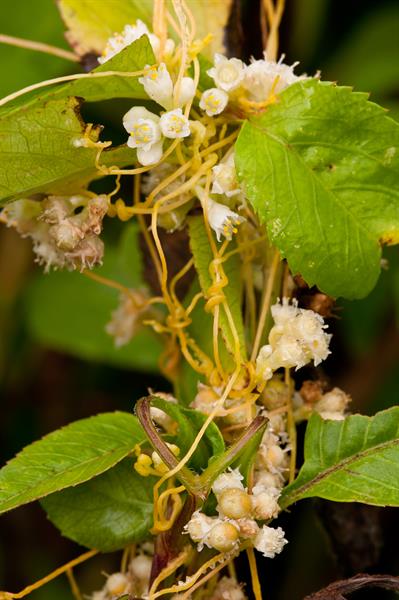 © Keith Bradley | Cuscuta pentagona | Original Image ⭷
 © Gary P. Fleming | Cuscuta coryli | Original Image ⭷
 © Richard & Teresa Ware | Cuscuta harperi CC-BY-NC, permission granted to NCBG | Original Image ⭷
 © Keith Bradley | Cuscuta compacta | Original Image ⭷
 © Gary P. Fleming | Original Image ⭷
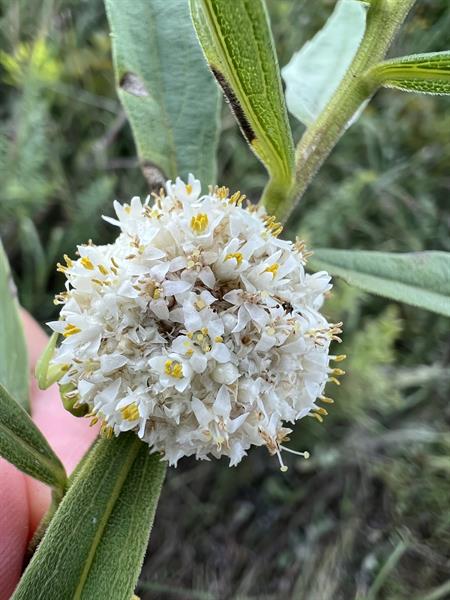 © Nathan Aaron, some rights reserved (CC BY), uploaded by Nathan Aaron | Cuscuta glomerata source | Original Image ⭷
 © Stan Gilliam | Original Image ⭷
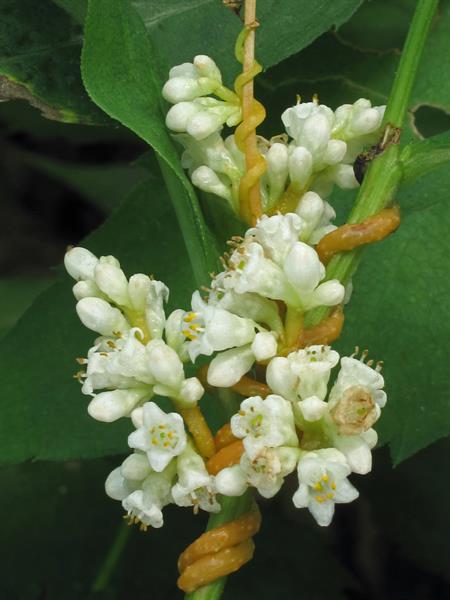 © Alan M. Cressler | Cuscuta rostrata | Original Image ⭷
 © Keith Bradley | Cuscuta americana | Original Image ⭷
 © Gary P. Fleming | Cuscuta compacta | Original Image ⭷
Feedback
See something wrong or missing on about Cuscuta? Let us know here: (Please include your name and email if at all complicated so we can clarify if needed.)
Cite as...