 Lactuca Linnaeus. Lettuce.
A genus of about 75 species, herbs, nearly cosmopolitan (especially north temperate).
ID notes:Distinguished from Sonchus by the presence of cypselae beaks. Lactuca also tends to have fewer florets per head (6-50+). L. serriola can be mistaken for Sonchus, but L. serriola has prickles on the midrib as well as the leaf margins, while the prickles of Sonchus are restricted to the leaf margins.
Key advice:Most species are highly variable in leaf lobing.
Ref: Ballou et al. (2023); Cronquist (1980); McVaugh (1972); Strother (2006r) In Flora of North America Editorial Committee (2006a). Show full citations.
Hover over a shape, letter, icon, or arrow on the map for definition or see the legend. Data for arrows not developed for genera and families which may have species only occurring outside the flora area.
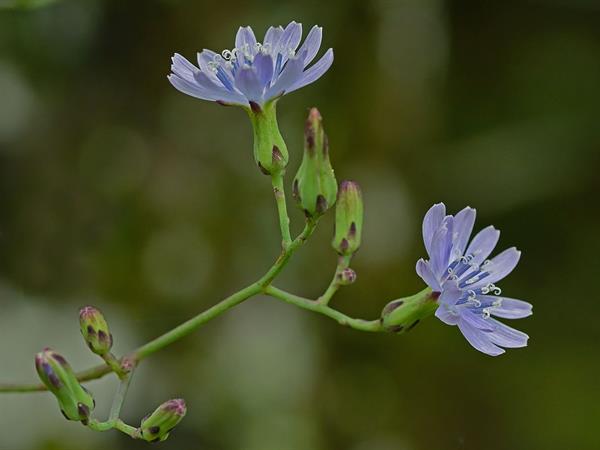 © Gary P. Fleming | Lactuca floridana | Original Image ⭷
 © Gary P. Fleming | Lactuca biennis | Original Image ⭷
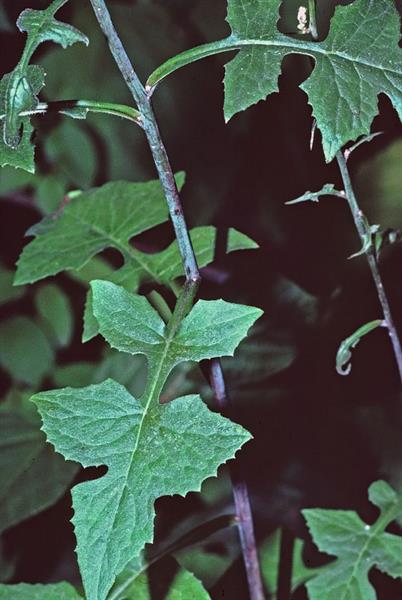 © Gary P. Fleming | Lactuca floridana | Original Image ⭷
 © Bruce A. Sorrie | Lactuca biennis | Original Image ⭷
 © Gary P. Fleming | Lactuca serriola | Original Image ⭷
 © Gary P. Fleming | Lactuca hirsuta | Original Image ⭷
Feedback
See something wrong or missing on about Lactuca? Let us know here: (Please include your name and email if at all complicated so we can clarify if needed.)
Cite as...