https://fsus.ncbg.unc.edu/main.php?pg=show-taxon-detail.php&lsid=urn:lsid:ncbg.unc.edu:taxon:{5969D1F7-2AFE-4EA3-B0E1-BB166FC2BDE9}
 Polystichum Roth. Holly Fern.
A genus of about 500 species, nearly cosmopolitan in distribution.
Ref: Kramer & Green (1990); Wagner (1993) In Flora of North America Editorial Committee (1993b); Zhang & Barrington (2013). Show full citations.
Hover over a shape, letter, icon, or arrow on the map for definition or see the legend. Data for arrows not developed for genera and families which may have species only occurring outside the flora area.
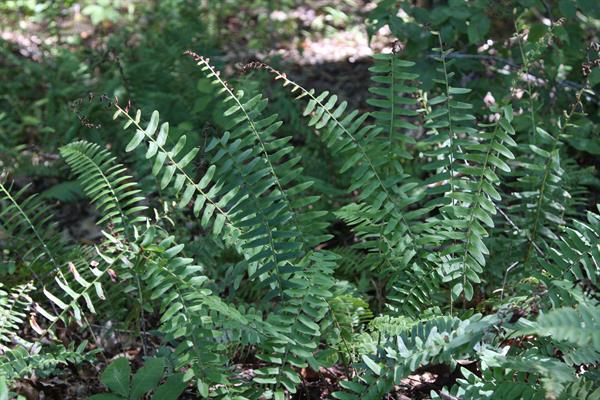 © Bruce A. Sorrie | Polystichum acrostichoides | Original Image ⭷
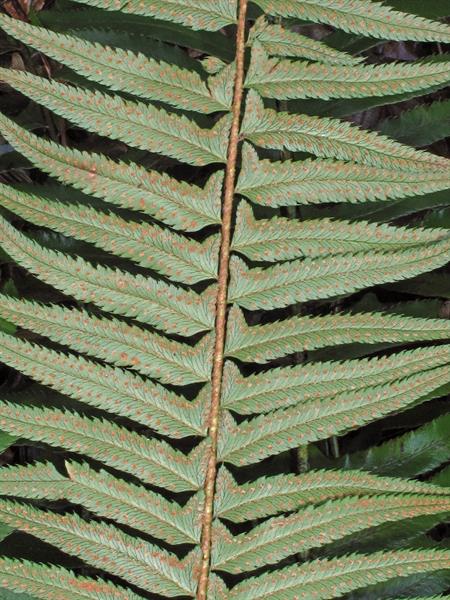 © Alan Cressler: Polystichum munitum, Tryon Creek State Natural Area, Capital Hill, Multnomah County, Oregon 2 by Alan Cressler | Polystichum munitum source | Original Image ⭷
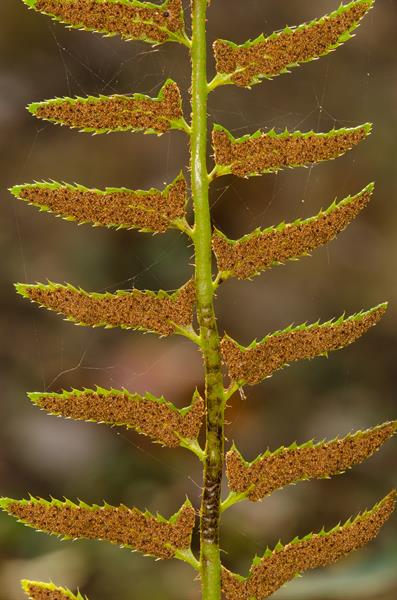 © Keith Bradley | Polystichum acrostichoides | Original Image ⭷
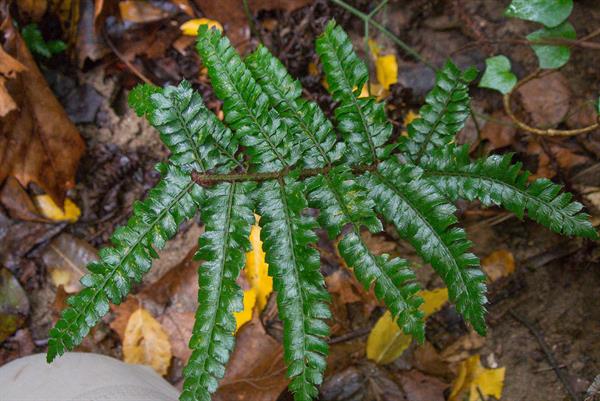 © Erik Danielson | Polystichum polyblepharum source | Original Image ⭷
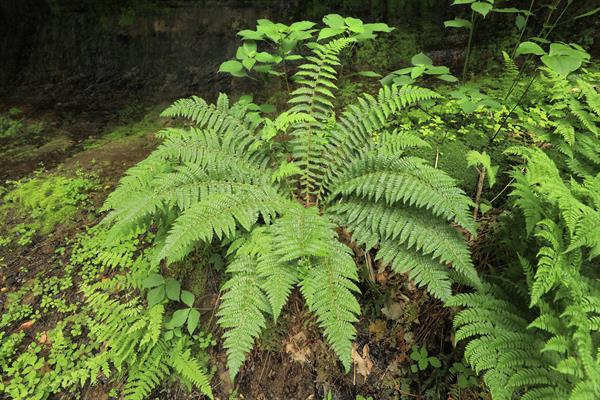 © Alan Cressler: Polystichum braunii, with Cystopteris bulbifera, and Dryopteris intermedia , Laughing Whitefish Falls Scenic Site, Alger County, Michigan 1 by Alan Cressler | Polystichum braunii source | Original Image ⭷
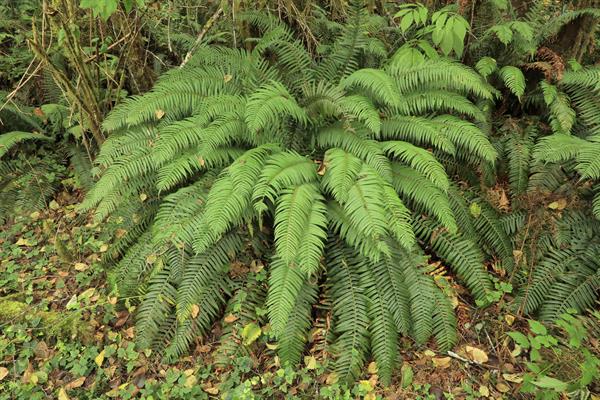 © Alan Cressler: Polystichum munitum, Rain Forest Resort Village, Quinault Rain Forest, Grays Harbor County, Washington 1 by Alan Cressler | Polystichum munitum source | Original Image ⭷
Feedback
See something wrong or missing on about Polystichum? Let us know here: (Please include your name and email if at all complicated so we can clarify if needed.)
Cite as...