 Dryopteridaceae Herter. Wood-fern Family.
A family of about 26 genera and about 2115 species, cosmopolitan in distribution, but concentrated in temperate and montane areas. Here circumscribed (following Smith et al. 2006b, PPG I 2016, and others) to exclude Onocleaceae and Woodsiaceae.
Ref: Kramer & Green (1990); Lellinger (1985); PPG I (2016); Smith (1993b) In Flora of North America Editorial Committee (1993b); Smith et al. (2006b). Show full citations.
Hover over a shape, letter, icon, or arrow on the map for definition or see the legend. Data for arrows not developed for genera and families which may have species only occurring outside the flora area.
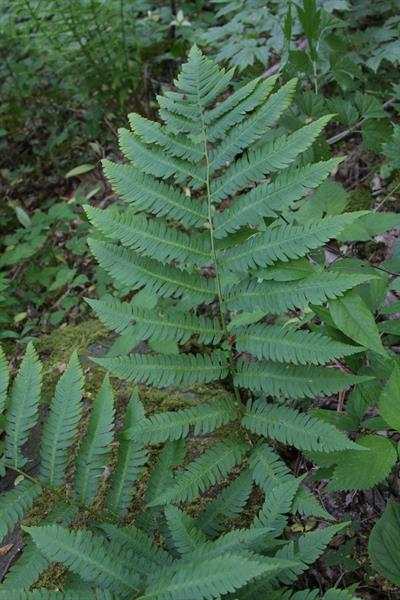 © Bruce A. Sorrie | Dryopteris goldieana | Original Image ⭷
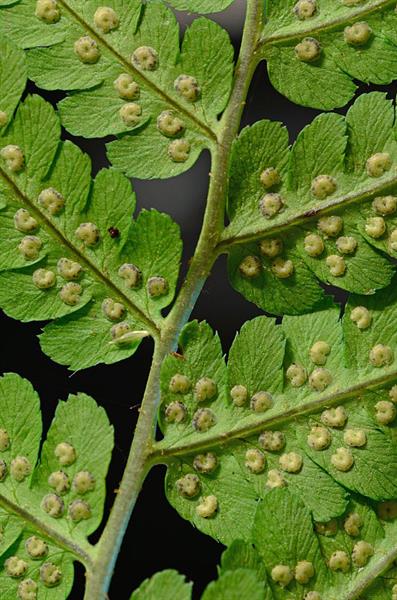 © Gary P. Fleming | Dryopteris goldieana | Original Image ⭷
 © Louis Imbeau, some rights reserved (CC BY), uploaded by Louis Imbeau | Dryopteris source | Original Image ⭷ Warning: was NOT research grade.
 © Scott Ward | Dryopteris | Original Image ⭷
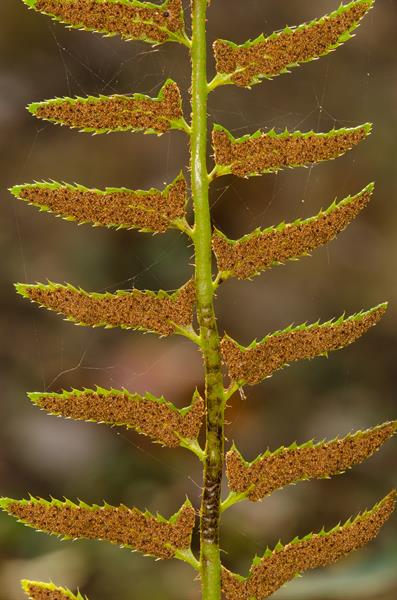 © Keith Bradley | Polystichum | Original Image ⭷
 © Alan Cressler: Ctenitis submarginalis, Cutler Hammock, Miami-Dade County, Florida 4 by Alan Cressler | Ctenitis source | Original Image ⭷
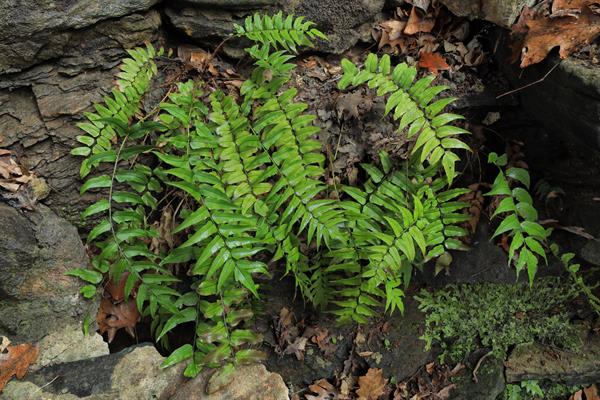 © Alan Cressler: Cyrtomium fortunei (naturalized), South Fork Peachtree Creek, Hahn Woods, Emory University, DeKalb County, Georgia 1 by Alan Cressler | Cyrtomium source | Original Image ⭷
Feedback
See something wrong or missing on about Dryopteridaceae? Let us know here: (Please include your name and email if at all complicated so we can clarify if needed.)
Cite as...