 Solanum Linnaeus. Nightshade, Tomato, Potato, Horse-Nettle.
Contributed by Milo Pyne and Alan S. Weakley
A genus of 1500 (or more) species, trees, shrubs, lianas, and herbs, of tropical and temperate regions of the Old and New World.
ID notes:The color and size of the berry, and the presence (and number) or absence of sclerotic granules (=stone cells) is useful in identification. "These are hardened masses within the fruit pulp that are usually spherical, 0.5-5 mm in diameter, and visible with 10× magnification. In dissected fruits they are generally paler, rounded, and more homogeneous in appearance than the seeds" (Bohs 2023).
Ref: Barboza et al. In Kadereit & Bittrich (2016); Bohs (2023) In Flora of North America Editorial Committee (2023c); Bohs & Olmstead (1997); Harper & Diamond (2021); Hilgenhof et al. (2023); Knapp et al. (2019); Olmstead & Palmer (1997); Särkinen et al. (2018); Schilling (1981); Wahlert, Chiarini, & Bohs (2015). Show full citations.
Hover over a shape, letter, icon, or arrow on the map for definition or see the legend. Data for arrows not developed for genera and families which may have species only occurring outside the flora area.
 © Gary P. Fleming | Solanum sarrachoides | Original Image ⭷
 © Gary P. Fleming | Solanum lycopersicum | Original Image ⭷
 © Aidan Campos | Solanum elaeagnifolium source | Original Image ⭷
 © Bruce A. Sorrie | Solanum carolinense var. carolinense | Original Image ⭷
 © Evan Raskin | Solanum dulcamara | Original Image ⭷
 © Aidan Campos | Solanum americanum source | Original Image ⭷
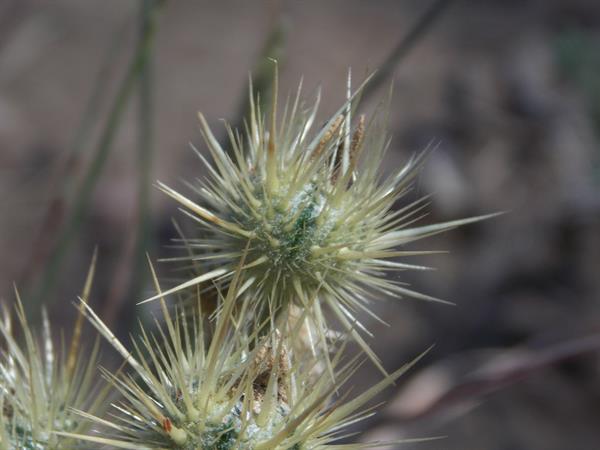 © Aidan Campos | Solanum rostratum source | Original Image ⭷
 © Sonnia Hill | Solanum campechiense | Original Image ⭷
Feedback
See something wrong or missing on about Solanum? Let us know here: (Please include your name and email if at all complicated so we can clarify if needed.)
Cite as...