 Syngonanthus Ruhland. Yellow Hatpins.
A genus of about 200 species, primarily of tropical America, but some in Africa and Madagascar; ours is the only temperate species.
ID notes:Syngonanthus flavidulus is distinguished from all other SEUS Eriocaulaceae by its flattened to even somewhat recurved (the leaf tips curving down into the ground at their tips) rosettes of quite narrow leaves, often with a bluish-green color. All of our other Eriocaulaceae have basal rosettes of leaves that are mostly ascending to spreading, and more of a yellowish-green to deep green (or sometimes stramineous) color. In flower, Syngonanthus has a more "chaffy" looking inflorescence, the bracts appearing dry. In contrast, most other US Eriocaulaceae flower heads are at least somewhat fleshy, and most species have white-clavate hairs obscuring most of the floral parts.
Ref: Andrino et al. (2021); Gomes de Andrade et al. (2010); Kral (1966c); Kral (2000b) In Flora of North America Editorial Committee (2000); Stützel In Kubitzki (1998b). Show full citations.
Hover over a shape, letter, icon, or arrow on the map for definition or see the legend. Data for arrows not developed for genera and families which may have species only occurring outside the flora area.
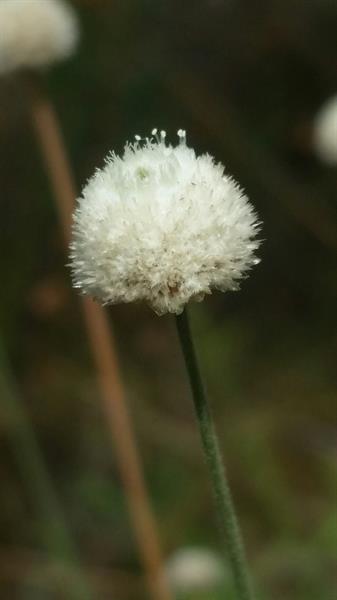 © Jay Horn | Syngonanthus flavidulus source | Original Image ⭷
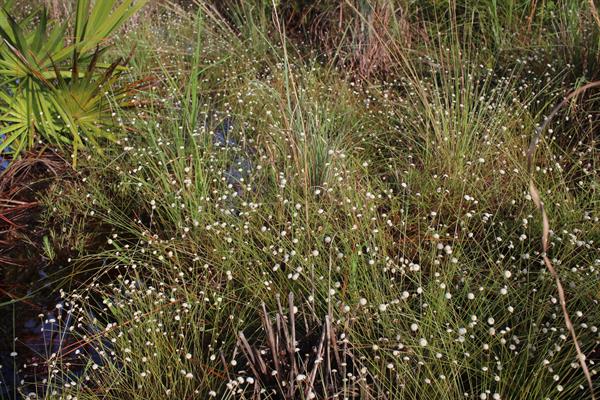 © Scott Ward | Syngonanthus flavidulus | Original Image ⭷
Feedback
See something wrong or missing on about Syngonanthus? Let us know here: (Please include your name and email if at all complicated so we can clarify if needed.)
Cite as...