 Eriocaulaceae Martinov. Pipewort Family.
A family of about 18 genera and 1100 species, of tropical and warm temperate regions (few in cold temperate regions), especially America, and most diverse in n. South America. We follow Andrino et al. (2023) in generic circumscriptions and their creation of an excellent generic system based on molecular evidence and morphology, providing an well-executed taxonomic alternative to "proposals of merging Actinocephalus, Lachnocaulon and Tonina within Paepalanthus …., made by non-Eriocaulaceae experts who are probably unfamiliar with the main morphological features used to distinguish taxonomic entities within the family, would result in a poorly defined, morphologically miscellaneous group lacking diagnosability" (Andrino et al. 2023). Relative to our regional flora this has the effect of retaining Lachnocaulon from being submerged in a hodgepodge Paepalanthus.
Ref: Andrino et al. (2021); Andrino et al. (2023); Kral (1966c); Kral (2000b) In Flora of North America Editorial Committee (2000); Stützel In Kubitzki (1998b). Show full citations.
Hover over a shape, letter, icon, or arrow on the map for definition or see the legend. Data for arrows not developed for genera and families which may have species only occurring outside the flora area.
 © Bruce A. Sorrie | Eriocaulon | Original Image ⭷
 © Gary P. Fleming | Eriocaulon | Original Image ⭷
 © Keith Bradley | Lachnocaulon minus | Original Image ⭷
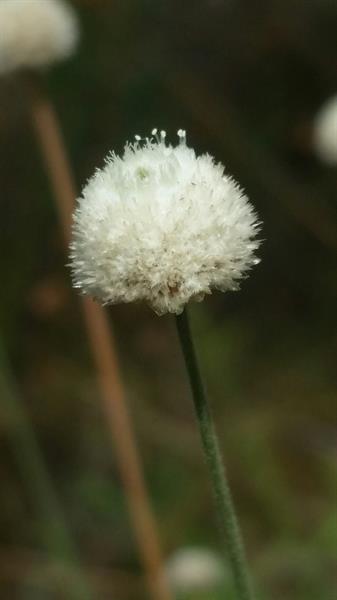 © Jay Horn | Syngonanthus flavidulus source | Original Image ⭷
 © Scott Ward | Eriocaulon compressum | Original Image ⭷
 © Alan M. Cressler | Eriocaulon compressum | Original Image ⭷
Feedback
See something wrong or missing on about Eriocaulaceae? Let us know here: (Please include your name and email if at all complicated so we can clarify if needed.)
Cite as...