 Campanulaceae A.L. de Jussieu. Bellflower Family.
A family of about 80-82 genera and 2000-2400 species, mostly herbs, cosmopolitan. There is controversy about the circumscription of the family, specifically whether subfamily Lobelioideae should be recognized at the family level. Recent phylogenetic studies of the Campanuloideae also suggest that substantial rearrangements of generic boundaries will be needed (Crowl et al. 2014).
Ref: Crowl et al. (2014); Eddie et al. (2003); Lammers In Kadereit & Jeffrey (2007); Mansion et al. (2012); Morin (2020); Rosatti (1986); Shulkina, Gaskin, & Eddie (2003); Yoo et al. (2018). Show full citations.
Hover over a shape, letter, icon, or arrow on the map for definition or see the legend. Data for arrows not developed for genera and families which may have species only occurring outside the flora area.
 © Keith Bradley | Triodanis perfoliata | Original Image ⭷
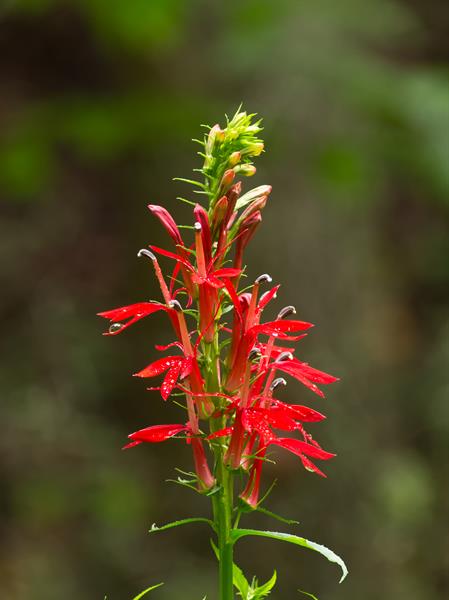 © Jim Fowler | Lobelia | Original Image ⭷
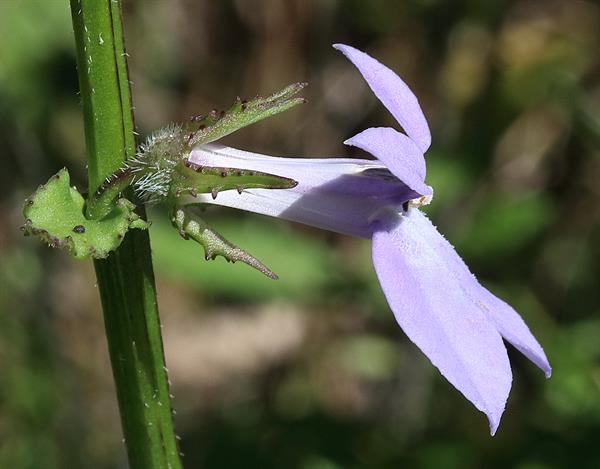 © Floyd A. Griffith | Lobelia | Original Image ⭷
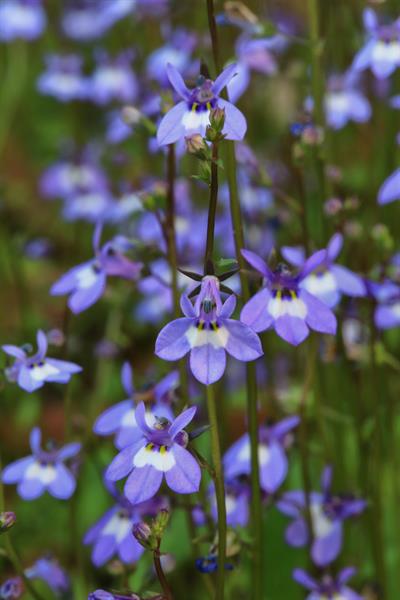 © Alan M. Cressler | Lobelia | Original Image ⭷
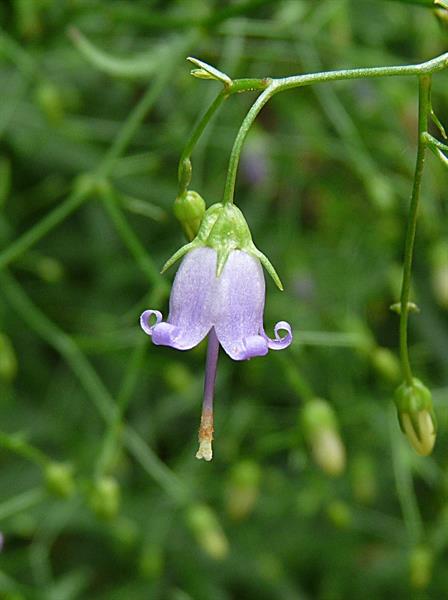 © Richard & Teresa Ware | Campanula CC-BY-NC, permission granted to NCBG | Original Image ⭷
 © Keith Bradley | Campanulastrum | Original Image ⭷
 © Patrick Hacker, some rights reserved (CC BY), uploaded by Patrick Hacker | Legousia source | Original Image ⭷
 © Keith Bradley | Hippobroma longiflora | Original Image ⭷
 © Keith Bradley | Rotanthella floridana | Original Image ⭷
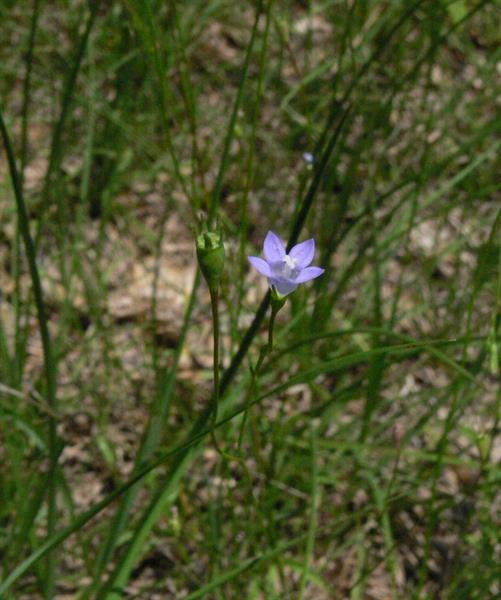 © Bruce A. Sorrie | Wahlenbergia marginata | Original Image ⭷
Feedback
See something wrong or missing on about Campanulaceae? Let us know here: (Please include your name and email if at all complicated so we can clarify if needed.)
Cite as...