 Menispermaceae A.L. de Jussieu. Moonseed Family.
A family of about 72 genera and 450 species, vines, shrubs, trees, and herbs, of tropical, subtropical, and warm temperate areas.
ID notes:The flowers are unisexual and plants dioecious.
Ref: Hoot et al. (2009); Kessler (1993) In Kubitzki, Rohwer, & Bittrich (1993); Lian et al. (2020); Rhodes (1997) In Flora of North America Editorial Committee (1997); Wang et al. (2009). Show full citations.
Hover over a shape, letter, icon, or arrow on the map for definition or see the legend. Data for arrows not developed for genera and families which may have species only occurring outside the flora area.
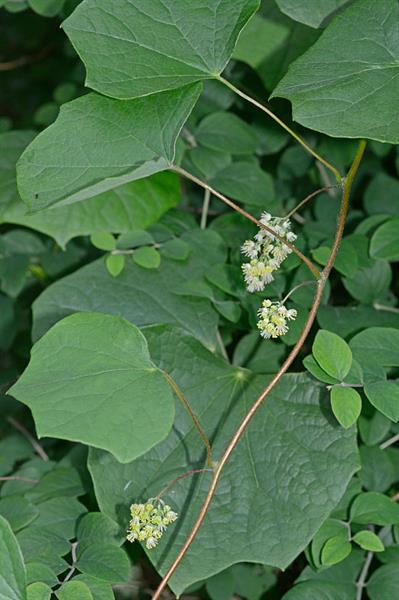 © Gary P. Fleming | Menispermum canadense | Original Image ⭷
 © Alan Cressler: calycocarpum lyonii, ridge ferry park, rome, floyd county, georgia 1 by Alan Cressler | Calycocarpum source | Original Image ⭷
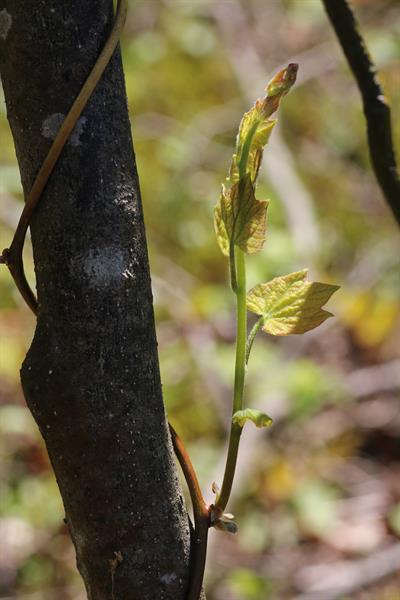 © Scott Ward | Menispermum canadense | Original Image ⭷
 © Alan Weakley | Calycocarpum source | Original Image ⭷
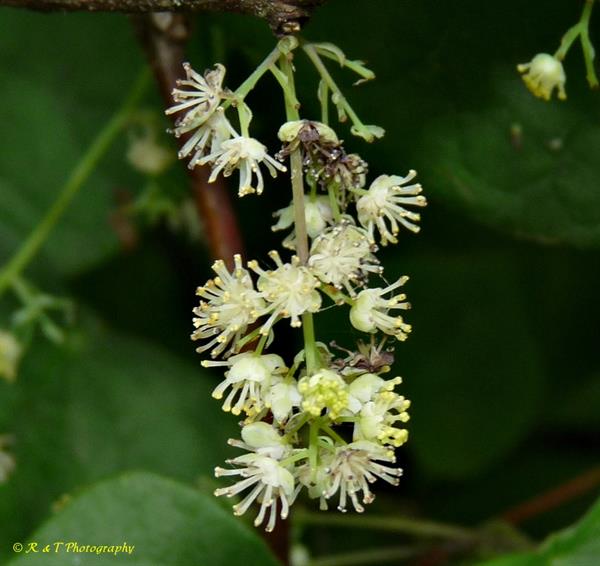 © Richard & Teresa Ware | Menispermum canadense CC-BY-NC, permission granted to NCBG | Original Image ⭷
 © Bruce A. Sorrie | Nephroia | Original Image ⭷
 © Aidan Campos | Nephroia source | Original Image ⭷
 © Aidan Campos | Nephroia source | Original Image ⭷
Feedback
See something wrong or missing on about Menispermaceae? Let us know here: (Please include your name and email if at all complicated so we can clarify if needed.)
Cite as...